


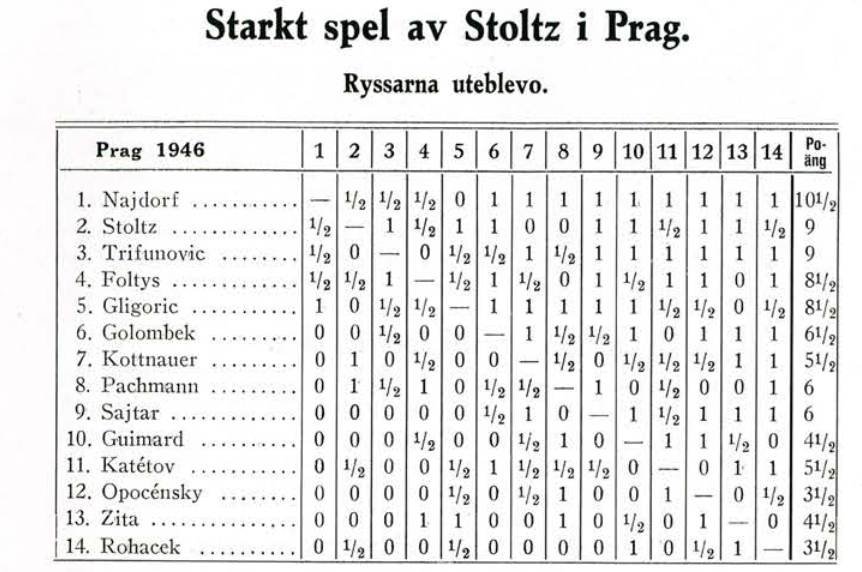
Stoltz played a good tournament in Prague 1946, placing equal second in a strong field
The game we will study today is a very cool Accelerated Dragon in which Stoltz demonstrates concepts that would only become commonplace 30-40 years later, most notably in the games of the great Danish player Bent Larsen. It was played against a player with such an attacking style in his youth that he was nicknamed “Typhoonovic”!
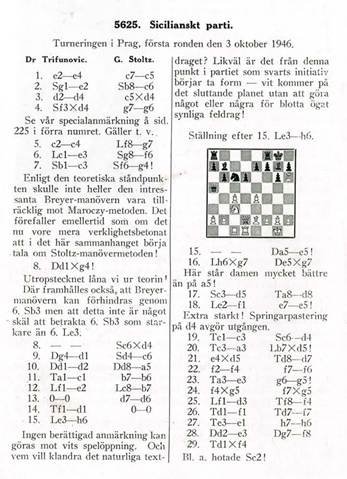
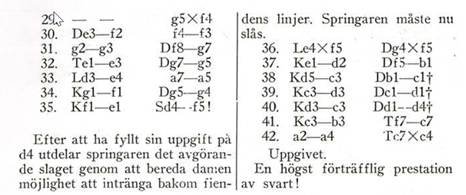
All the material above from the wonderful archive Tidskrift för Schack (https://schack.se/forbundet/tfs/arkiv/)
As always, As always, comments marked [EB] are translations of annotations by E. Böök in his “Stormästaren Gösta Stoltz bästa partier”
Comments marked [TfS] are from https://tfsarkiv.schack.se/pdf/1946/tfs_1946_10.pdf
Trifunovic,Petar – Stoltz,Gosta [B39]
Prague Treybal Memorial Prague (1), 1946
1.e4 c5 2.Ne2 Nc6 3.d4 cxd4 4.Nxd4 g6 5.c4
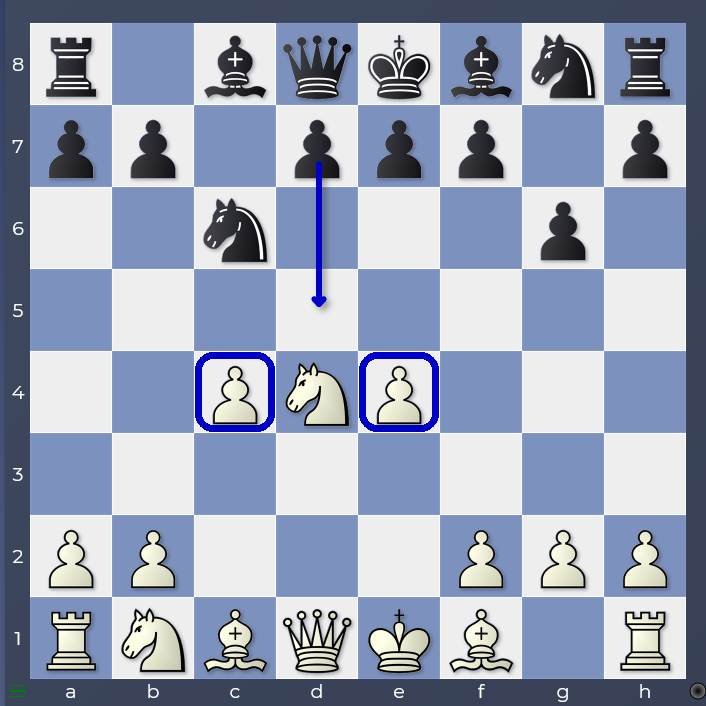
The first game in my database to reach this structure – known as the Maroczy Bind – was in 1904 with the great Geza Maroczy… as Black. So perhaps the opening should be known as the “Maroczy Bound” instead! He played it pretty impressively for a first attempt by the way!
5…Bg7
[EB] 5…Nf6 6.Nc3 Nxd4 7.Qxd4 d6 8.c5 [Some strong modern players such as Ian Nepomniachtchi and MVL have tried this move] 8…Bg7 9.cxd6 0–0 “holds for Black according to theory. The text move gives Black a sound and firm footing”
6.Be3 Nf6 7.Nc3 Ng4
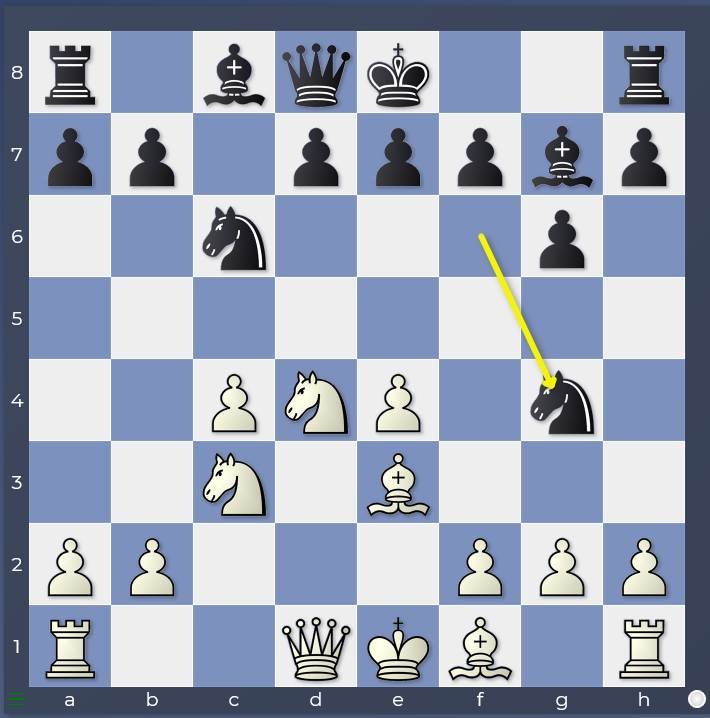
First played by Breyer in 1920 against the strong Yugoslav player Kostic. It proved to be a very successful opening experiment as the white player headed straight for an inferior endgame!
Maroczy’s game went 7…d6 8.Be2 Bd7 9.0–0 0–0 10.h3 Nxd4 11.Bxd4 Bc6 12.Qd3 Nd7
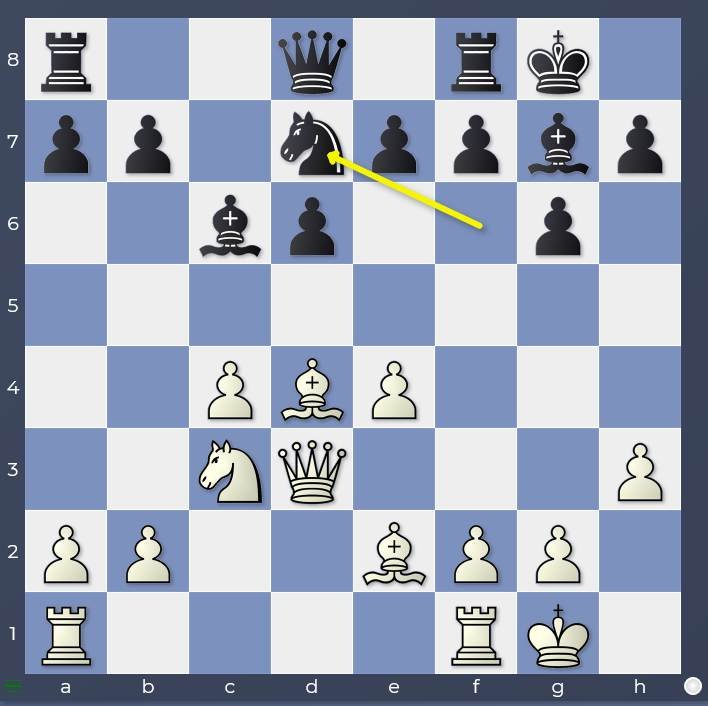
It’s another one of those weird occurrences that a player in the very outing of the line demonstrates what has become the modern way of playing the opening… and yet he is ignored for the next 60 years! 13.Bxg7 Kxg7 14.b4 b6 15.Rfd1 a5 16.a3 axb4 17.axb4 Qc7 18.Nd5 Bxd5 19.Qxd5 Rxa1 20.Rxa1 f5 21.Qe6 Ne5 22.exf5 Rxf5 23.Ra8 Rf8 24.Rxf8 Kxf8 25.c5 dxc5 26.f4 Nf7 27.Bc4 Qxf4 28.bxc5 bxc5 29.Qc8+ Kg7 30.Qxc5 Qe5 31.Qc8 Nd6 32.Qg8+ Kh6 33.Qf8+ Kg5 34.Bf1 Qe3+ 35.Qf2 Qxf2+ 36.Kxf2 Kf4 37.Bd3 Ne4+ 38.Ke2 g5 39.Bc2 h5 40.Bb3 e5 41.Bf7 h4 42.Bc4 Nf6 43.Kf2 Ke4 44.Bf7 Kd3 45.Bg6+ e4 46.Bf5 Kd2 47.Bxe4 Nxe4+ 48.Kf3 Kd3 0–1 Swiderski,R-Maroczy,G Monte Carlo 1904 (4)
8.Qxg4
8.Nxc6 Nxe3 9.Nxd8 Nxd1 10.Nxd1 Kxd8 11.Rc1 b6 (66) ½–½ Kostic,B-Breyer,G Goteborg SSK 40th Anniversary Group A Gothenburg 1920 (1)
8…Nxd4 9.Qd1
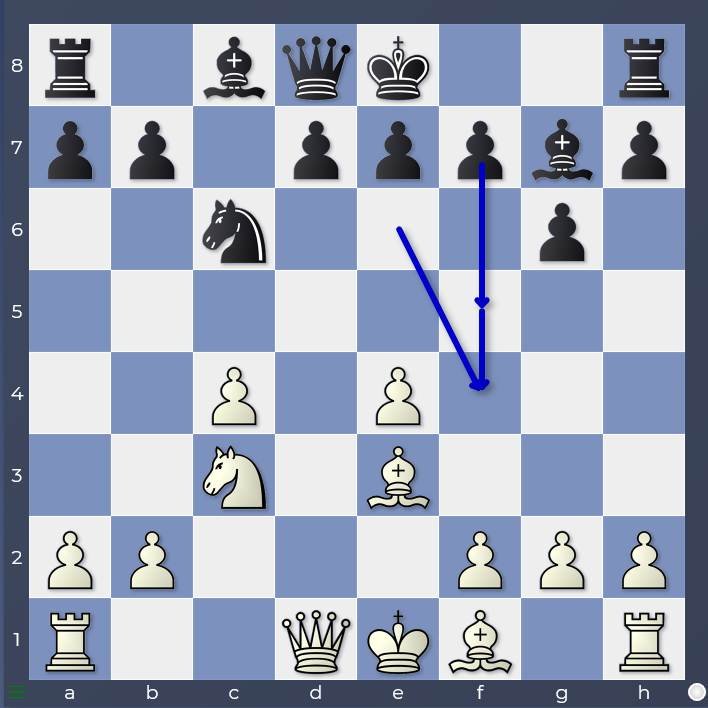
9…Nc6
[EB] “Stoltz follows older patterns. A simpler but hardly better move is 9…Ne6 not to mention Bronstein’s clever idea to support the knight with 9…e5, aiming to capitalise on rapid development to compensate for the eventual loss of a pawn”
This was the way they played it in the early days, but Stoltz was only the second player to try 9…Ne6 – a much more popular move nowadays – and the first to play it in the modern way by combining it (as he did with 9…Nc6 in this game) with the development of the black queen to a5. This is a system that is particularly associated with the great Danish player Bent Larsen. The knight on e6 is more active than on c6, allowing the light-squared bishop to move to the a8–h1 diagonal while helping to fight for the f4–square and supporting a later …f5–f4.
a) 9…Ne6 10.Rc1 (10.Qd2 Qa5 11.Nd1 Qxd2+ 12.Kxd2 b6 13.Rc1 Bb7 14.f3 f5 (46) 0–1 Fred,A-Stoltz,G Zonal Marianske Lazne 1951 (4)) 10…Qa5 11.Qd2 d6 12.Be2 Bd7 13.0–0 Bc6 14.f3 0–0 15.a3 f5 16.exf5 Qxf5
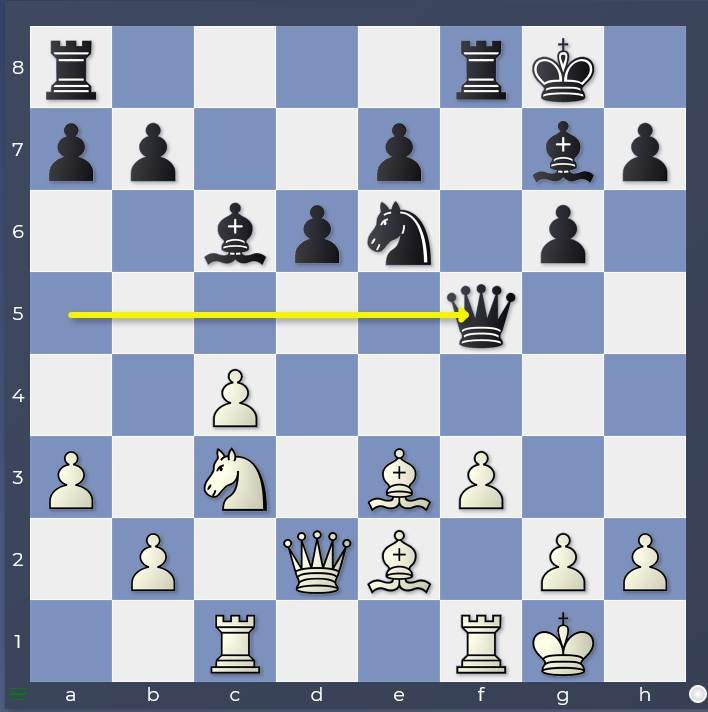
(42) ½–½ Andric,D-Stoltz,G Belgrade 1952 (5);
b) 9…e5 is the second-most popular move in the position and like 9…Ne6 is still seen at the elite level from time to time. It has something of the Kalashnikov Sicilian (1.e4 c5 2.Nf3 Nc6 3.d4 cxd4 4.Nxd4 e5 5.Nb5 d6 6.c4) where Black cedes a weak d5–square and backward d6–pawn in return for activity and a square on d4.
10.Qd2 Qa5 11.Rc1
[EB] “It is possible that White need not be afraid of a doubled c-pawn and can calmly continue the development with 11.Be2. If anyone stands to gain from playing aggressively it is White, and in that case the rooks should be on d1 and f1”
In general, the engines see achieving …Bxc3 in such positions as more desirable for Black than for White. The engines still consider the position after 11.Be2 Bxc3 12.bxc3 as better for White (0.49) but whereas Black has a simple plan of lining up on the c4–pawn with …d6, …Be6 and …Rc8 (with the restraining moves …b6 and …f6 if necessary) White needs to play with great energy to keep his advantage. There simply is no reason to allow this. 11.Rc1 maintains White’s space advantage and leaves Black with minimal counterplay. The engines give White 0.93 in this position.
11…b6 12.Be2 Bb7 13.0–0 d6 14.Rfd1 0–0
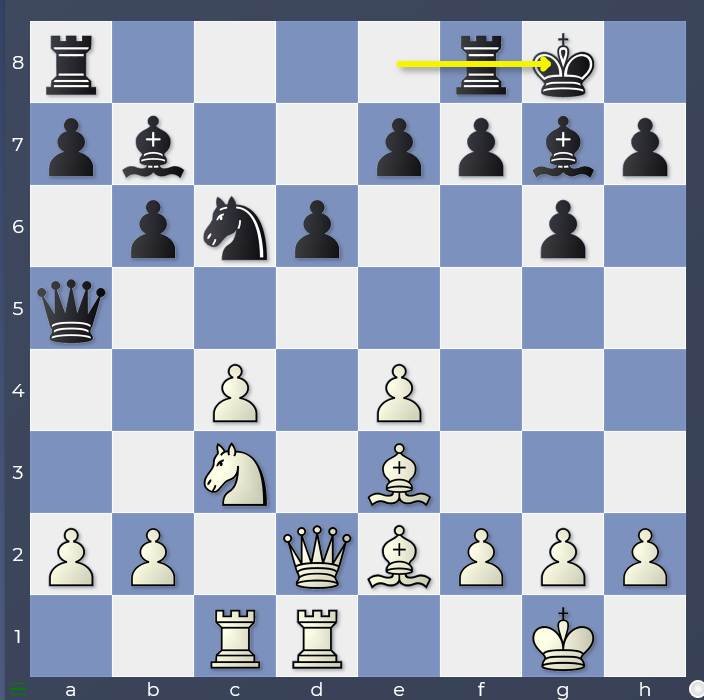
15.Bh6 [EB] “White exchanges off his ‘better’ bishop in order to weaken Black’s position, The result is that Black will soon have a strong outpost on the queen’s file in the centre and that White never comes to a kingside attack”
It’s always a dilemma when facing Dragon-type systems with Black’s dark-squared bishop poised on g7: exchange or not? By exchanging the bishop, you nullify a strong black piece but you also simplify the position and free Black’s cramped position a little more while losing some control of the squares around the “binding” pawns c4 and e4. Here however, the choice is not too difficult: the black queen is awkwardly-placed on a5 and quite short of squares and there are no signs that Black will be able to make any use of the bishop’s power to create counterplay on the queenside. It would be much better to try and squeeze the queen some more with moves like 15.a3 and then f4. After the exchange, Black’s queen is redeployed and the white central dark squares – d4 in particular – miss the protection of the dark-squared bishop.
15…Qe5 16.Bxg7 Qxg7 17.Nd5
[EB] “White doesn’t realise the danger. He should have played 17.Nb5 in order to neutralise the white knight”
This is also the move the engines want as driving the knight away with …a6 weakens the b6–pawn and renders it vulnerable to attack by Nd5 or Qe3.
17…Rad8 18.Bf1
This is the move that wastes White’s remaining slight advantage, However, to find the correct prophylactic move, White would have to anticipate Black’s hidden and surprising idea. I suspect that this may have been one of the first expositions of a Black strategy that is now well-known from openings like the Sveshnikov and the Kalashnikov.
18…e5
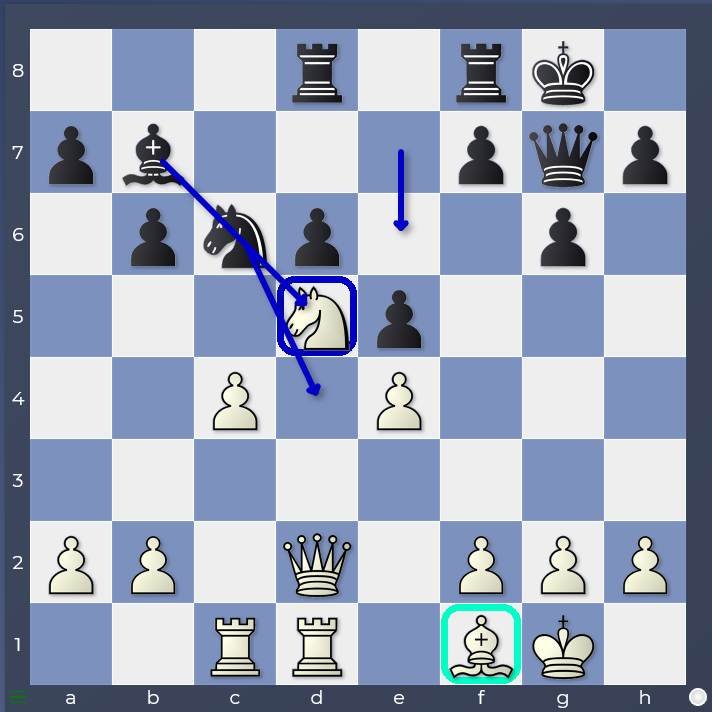
Such a good move! d4 is secured for the knight after which Black threatens to capture on d5 and destroy White’s use of the outpost on d5.
18.Rc3 was the engine move a move earlier to keep a slight advantage, meeting 18…e5 with 19.Ra3
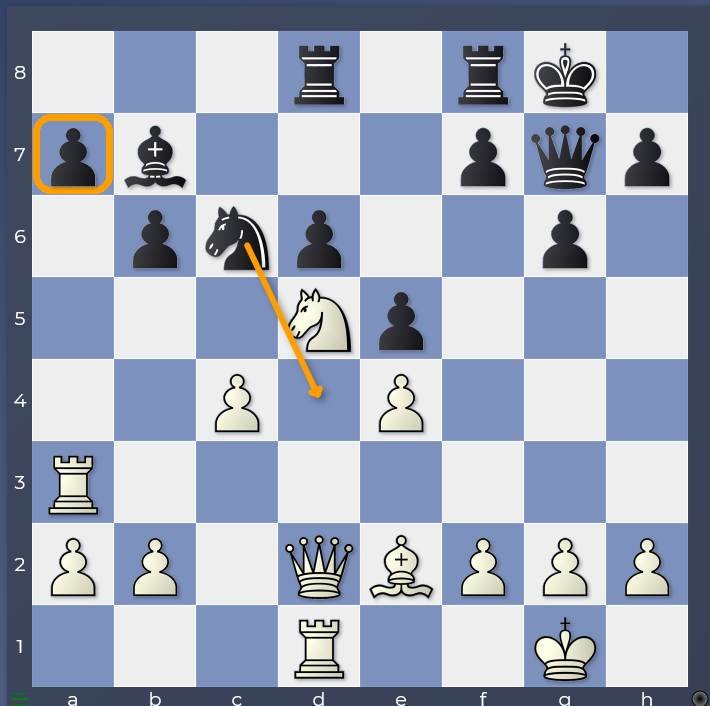
dissuading …Nd4 for the moment due to the hanging a7–pawn. 19…Ba8 preparing …f6 (protecting a7 laterally with the queen on g7) and …Nd4. And now White has several ideas of which the most natural seems to me to be (Note that even 19…Nd4 20.Rxa7 Bxd5 21.exd5 Ra8 22.Rxa8 Rxa8 23.a3 f5 isn’t inconceivable for Black: there is definitely compensation for the pawn in the form of the powerful knight on d4 and the mobile kingside pawns.) 20.Nc3 preparing Nb5 as Black is unable to drive the knight away with …a6 with the bishop on a8 when Black may try 20…f5 before or after a preparatory …Kh8 with a complicated game, albeit still better for White according to the engines.
19.Rc3
[EB] “After 19.Nc3 Nd4 20.f3 f5 21.exf5 gxf5 22.Kh1 Kh8 Black has a strong centre and strong pressure against White’s kingside”
19…Nd4 20.Ra3
At times in my games, I have had the sensation of finding decent ideas but always a move too late! This is a bit of what is happening with Trifunovic who plays the rook to a3 only once Black is perfectly equipped to meet it!
20…Bxd5 21.exd5 Rd7
21…f6 was perhaps the most efficient, but I’m sure Stoltz was thinking of playing …f5 at the moment, perhaps after a preliminary …g5 to stop f4.
22.f4 f6
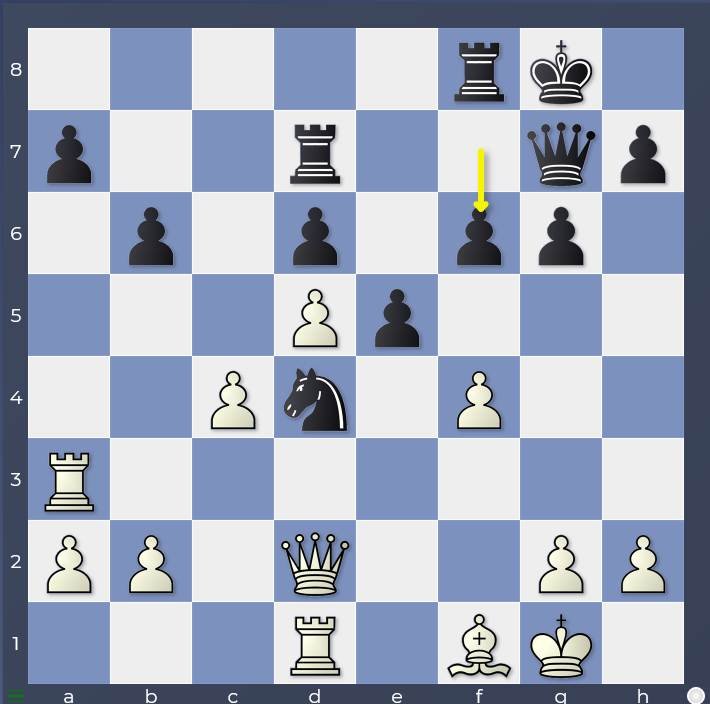
We now start a strange period in which the engines have a constant flow of queries about the moves of both players! It’s not that the moves are bad but the engines are convinced that White MUST play b4 as soon as possible to have a chance of playing c5 and breaking up Black’s solid structure. Equally, the engines want Black to play …a5 to stop b4 and meet a3 with …a4. So bear that in mind in the coming moves! In all fairness, it does seem a little strange that neither side ventured those moves, rather more so from the white side as White has no other source of counterplay.
23.Re3 g5
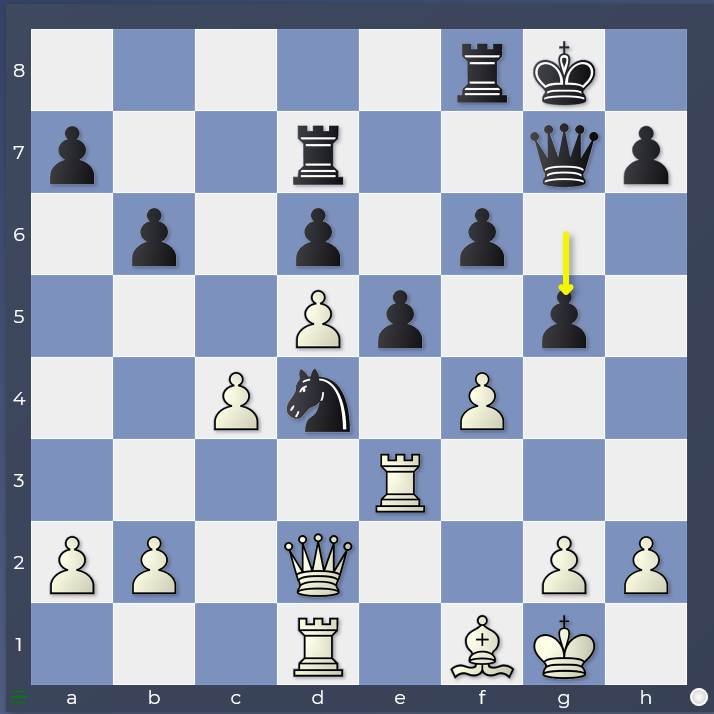
[EB] “Black opens the f-file in a systematic manner”
I like this move! Pretty cool way of opening the f-file!
24.fxg5 fxg5 25.Bd3 Rf4 26.Rf1 Rdf7 27.Ree1 h6
Protecting the g5–pawn to allow Black’s next move
28.Qe3
[EB] “White can do nothing to improve the situation. Black on the other hand threatens with a pawn advance on the kingside. White should have played 28.Be4”
28…Qf8 29.Rxf4
[EB] “Black threatened to play …Nc2 which would also have followed on 29.g3”
This looks like a very risky decision but if followed up aggressively, it’s a good decision.
29.Qc1 [EB] when 29…e4 30.Rxf4 Rxf4 31.Bxe4 Rf1+ 32.Rxf1 Ne2+ 33.Kh1 Nxc1 34.Rxf8+ Kxf8 “loses a pawn”
29…gxf4
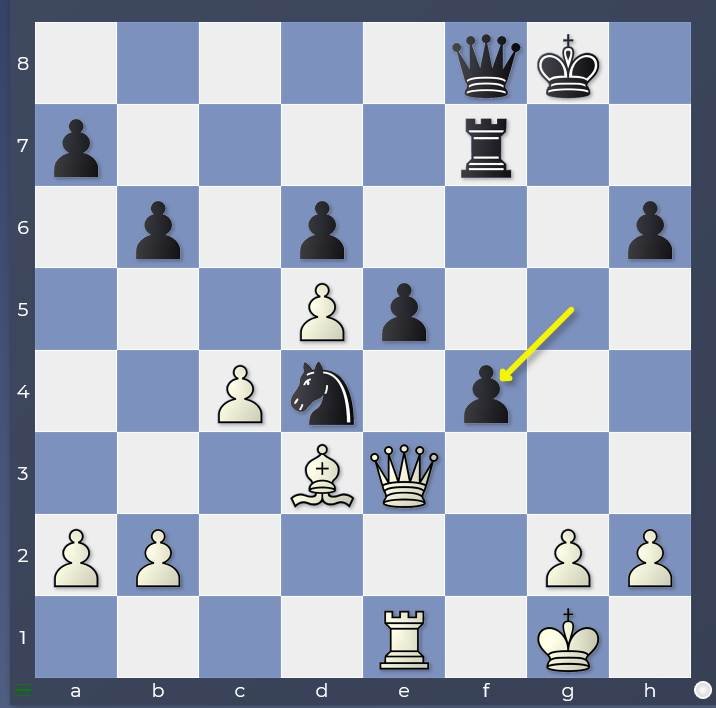
30.Qf2
30.Qh3 keeping the queen active on the third rank and eyeing the h6–pawn and the h3–c8 diagonal was the key. However, it’s important to grasp that 30…f3 should be answered by 31.Kh1 (or 31.Rf1). The point is that after 31…f2 32.Rf1 White is threatening to regroup with Qe3, g3 and Kg2 encircling the pawn on f2 with the white queen able to move threateningly to e4 after g3 …Rf3. Black has no real way to increase the pressure. Trifunovic’s next passive moves however makes the situation very difficult for White.
30…f3
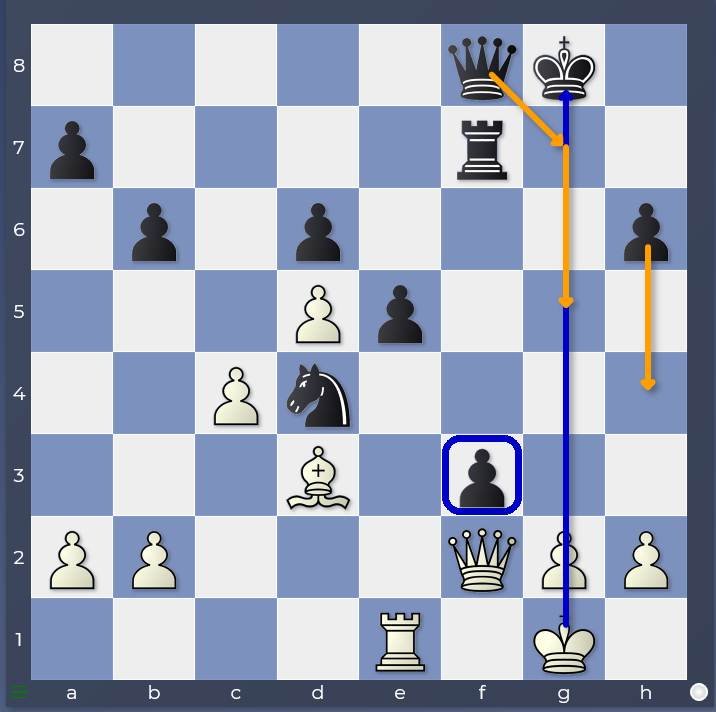
31.g3
The engines considered 30…f3 rushed, preferring a slow build-up with … you guessed it …a5! However, after 31.g3, all is right with the world: White is very restricted and Black can start to gain territory, starting with the transfer of the queen to the h6–c1 diagonal.
31…Qg7 32.Re3 Qg5 33.Be4
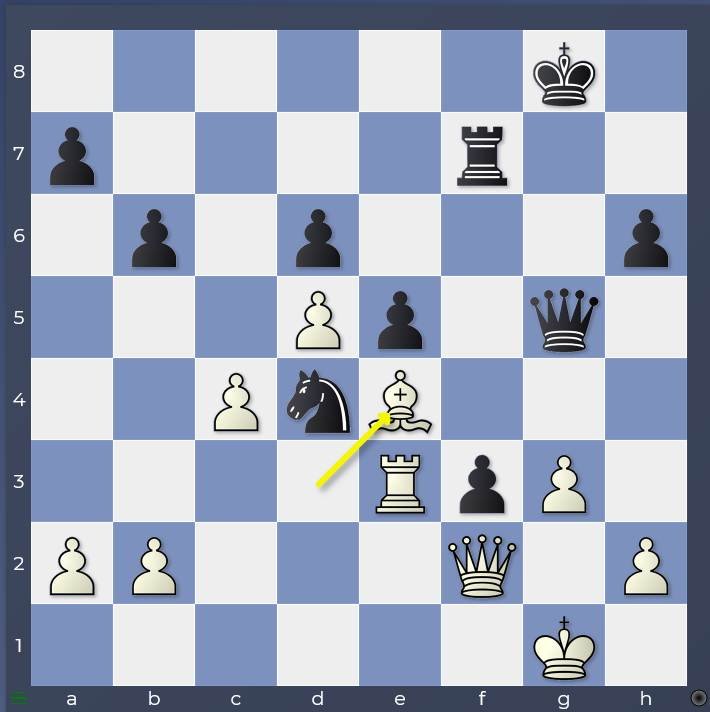
33…a5 [Stoltz finally plays …a5 and the engines don’t like it! The engines think it’s already time to finish things with 33…Rg7 followed by a quick …h5–h4. 34.Bxf3 Rf7 leaves White in a tangle from which there is no escape. 35.h4 Qf6 36.Kg2 Qg7 and White cannot parry …e4 without material loss. 37.Qe1 (37.Qd2 Nf5) 37…Nc2
34.Kf1
[EB] “Black does not need to protect the f-pawn as 34.Bxf3 can be met by” 34…e4
34…Qg4
[EB] “If White had remained passive and played for example 35.a4 “Black would have first played the king to the queenside and after that he would have been able to continue the attacks on the kingside. That would however have required a lot of work” 35…h5 is the engine recommendation however: no waiting around!
35.Ke1 This panicky run for the hills is understandable but it leaves White’s back rank open to invasion after
35…Nf5 36.Bxf5
36.Bxf3 Nxe3 37.Bxg4 Rxf2
36…Qxf5 37.Kd2 Qb1
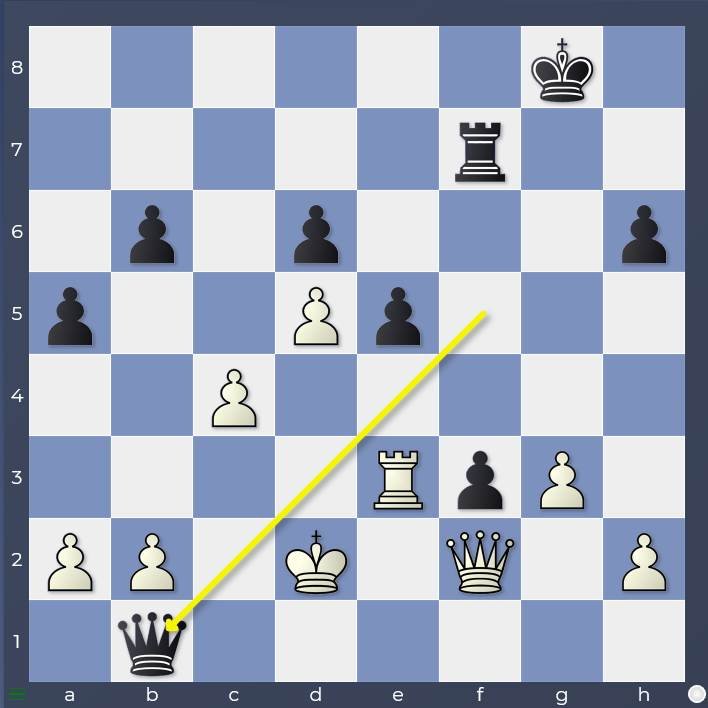
38.Kc3 Qc1+ 39.Kd3
39.Kb3 Qxe3+ [EB] 40.Qxe3 f2
39…Qd1+ 40.Kc3 Qd4+ 41.Kb3 Rc7
is mate in 12!
42.a4 Rxc40–1