


One of the nice side-effects of reading the first part of the fabulous biography of Gideon Stahlberg (“Gideon Stahlberg – An Epoch in Swedish Chess. Volume I. The Musketeer Years 1908-1939”) by Peter Holmgren (Verendel Publishing) was that I developed a strong interest in his compatriot and rival Gosta Stoltz (May 9, 1904 – July 25, 1963). AI informs me that his name is pronounced YUH-stah STULTS which I will endeavour to remember in the accompanying videos!
Looking around for a biography of his games, I came across this unlikely volume (in Swedish, the 1968 second edition) by his friend, the Finnish grandmaster Eero Böök (pronounced EH-roh BURK) which contains 64 annotated games from 1923-1953.

I decided that it would be a nice long-term project to update the book and provide fresh engine-backed annotations to these wonderful games! Judging by how long I spent on this one game, that may turn out to be a very long-term affair indeed but we’ll see how it goes! We start with a glorious King’s Gambit Declined in an opening variation really developed at the start of the 1920s which is still very topical today!
Stoltz,Gosta – Spielmann,Rudolf [C30]
Match Spielmann-Stoltz +4–1=1 Stockholm (4), 09.12.1932
When I first scanned through this game, I lazily assumed that Spielmann had got carried away by the “romantic spirit”, sacrificing a rook unsoundly from a difficult opening after which he stood no chance, However, after further research of the literature of the time and vast amounts of engine analysis, the truth emerged – much more beautiful and complicated than I could ever have imagined!
Within this game:
Comments marked [EB] are translations of annotations by E. Böök in his “Stormästaren Gösta Stoltz bästa partier”
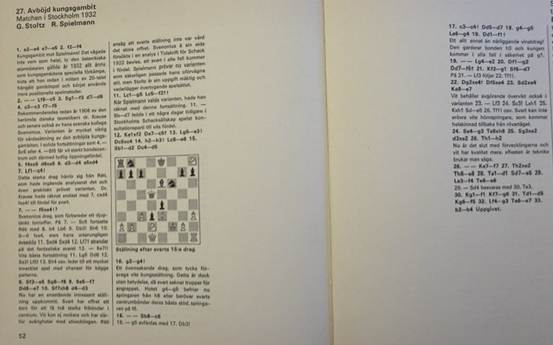
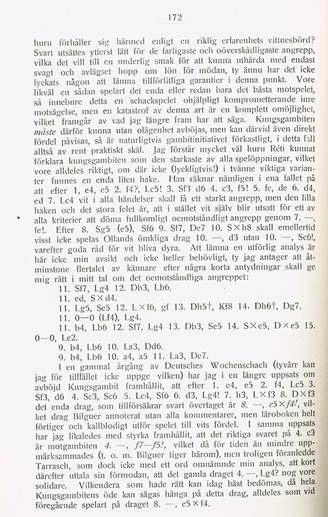
Comments marked [TfS <year>] are taken from the Swedish magazine “Tidskrift for Schack” (1921 (Svenionius’ original article), 1922 (a response from Reti and Spielmann and a riposte from Svenonius) and 1932 (annotations by Spielmann to his loss against Stoltz)) which is happily available online! https://schack.se/forbundet/tfs/arkiv/tidskrift-for-schack–1921/
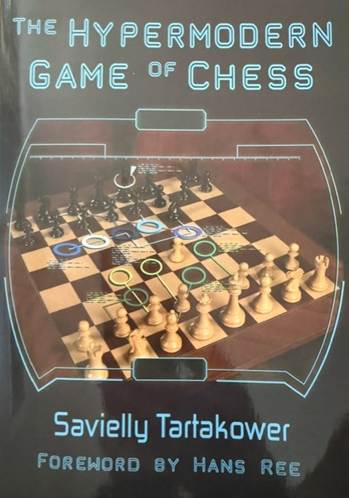
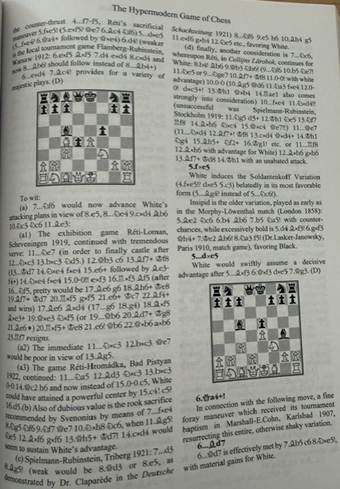
Comments marked [ST] are by Savielly Tartakower in his 1924 book “The Hypermodern Game of Chess”

Comments marked [RS] are from the 1923/1924 article “From the sickbed of the King’s Gambit” (republished in English in the Elk and Ruby book “From Vienna to Munich to Stockholm, A Chess Biography of Rudolf Spielmann”)
Comments marked [IN] are from Ian Nepomniachtchi’s Chessable “Long Live the King’s Gambit” course!
1.e4 e5 2.f4
The King’s Gambit against one of its greatest experts and adherents! Stoltz played the King’s Gambit 15 times in the database scoring a very decent +8 =2 -5
2…Bc5
An inhabitual choice for Spielmann – he hadn’t played this way since 1907! I assumed that he was surprised to be facing the opening, but judging from his comments later in the game, he had seen something very recently and found an interesting improvement! Black develops his bishop outside the pawn chain, preventing White from castling kingside quickly and by using simple tactics (3.fxe5 loses to 3…Qh4+) maintains a presence in the centre with …d6.
3.Nf3 d6 4.c3
This is thought to be the best move even now and is Nepomniachtchi’s recommendation in his Chessable “Long Live the King’s Gambit” course! White aims to set up a strong pawn centre with d4 with gain of tempo on the bishop on c5. Furthermore, d4 will block the a7–g1 diagonal and bring rapid kingside castling back into the equation.
4…f5
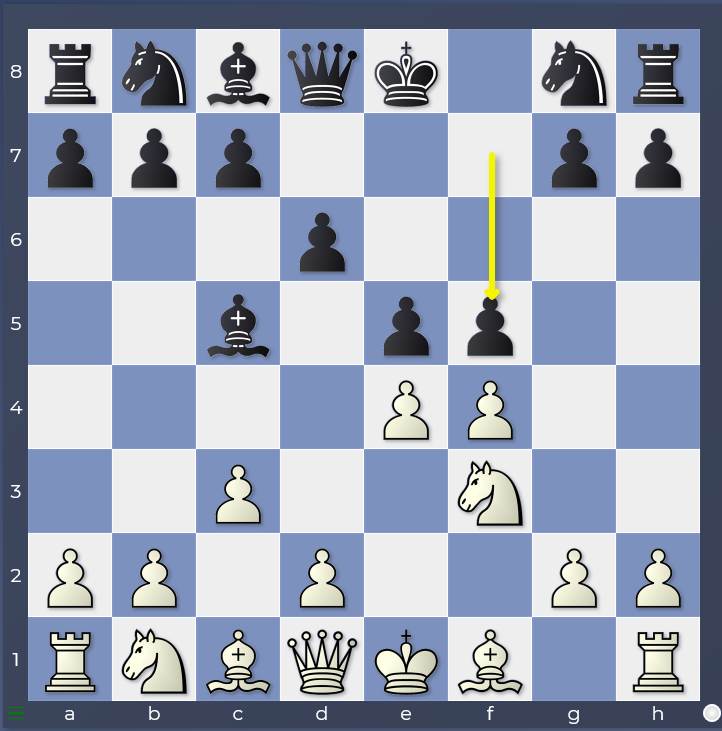
[EB] “Recommended in 1906 by the renowned Danish theorist Dr Krause and later also by his Swedish colleague Svenonius. This variant is very important for this variation of the King’s Gambit Declined as solid continuations such as 4…Nc6 and 4…Nf6 allow White to establish a strong pawn centre and thus realise a clear opening advantage”
Spielmann noted 4…f5 as [RS] “good too” which is still some way short of the 19th century German player Cordel’s description of it as [ST] “the automatic refutation of 4.c3” It makes general positional sense as it strikes at the e4–pawn after White has removed the possibility of supporting it with a knight on c3. However, the position is of course exceptionally tense and it doesn’t take long for the tactics to take a turn for the irrational! Leaving Torch on for a few days of analysis, 4…f5 emerges as the top move (0.10) ahead of 4…Nc6 (0.11) and 4…Nf6 (0.19).

So as not to interrupt the flow of the article too much, we will focus on the game move 5.fxe5 here, but see the theoretical section at the end for a fascinating overview of White’s other main moves: 5.d4 and 5.exf5
5.fxe5 dxe5 6.d4 exd4 7.Bc4
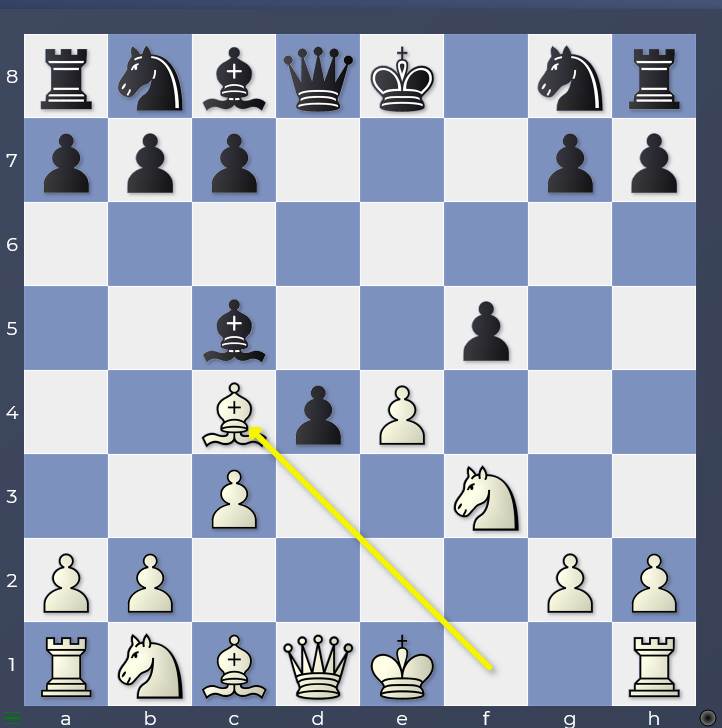
[EB] “This move stems from Reti who had analysed it in detail and also tried it in practice”
It’s a real King’s Gambit attacker’s move of course, bringing the bishop to the a2–g8 diagonal and preventing the black king from castling while teeing up threats such as Ne5 and Qb3. Funnily enough, it wasn’t in the engine top-3 to start with though it gradually works its way up there!
a) 7.cxd4 fxe4 was apparently Krause’s original analysis which is fine for Black (played twice in the database with 2 draws while the engine assesses it as slightly better for Black);
b) 7.Bb5+ hoping to tempt 7…c6 8.Bc4 when …Nc6 is no longer possible, and c) 7.e5 are engine options for White which are equivalent in assessment to 7.Bc4.
7…fxe4
[EB] “A move proposed by Svenonius which sets the stage for a long-planned rook sacrifice” [In fact it seems the move may have been proposed / played first by the Dutch player Dr Olland – see later]
This position has seen some perplexing results in various (old) correspondence games: the best move 8.Nxd4 scored a loss, while the weaker 8.Ne5 scored only wins! Various other black moves had been played before with little success:
1) 7…Nf6 was played a number of times but gifts White a strong centre while not resolving the problem of Black’s king pinned in the centre by the bishop on c4. 8.e5Ne4 9.cxd4Bb4+ and now the engine wants the romantic 10.Nc3 (10.Bd2 was a little tame from the great King’s Gambit player in the game Spielmann,R-Treybal,K CSR-ch 15th Prague 1938) Nxc3 11.bxc3 Bxc3+ 12.Bd2 Bxa1 13.Qxa1 with a massive advantage for White.
2) 7…d3 was tried by the great Akiba Rubinstein. It’s not a terrible move – it prevents White from castling and stops White from establishing a double pawn centre but White stands well after 8.Bg5 Nf6 9.e5 h6 10.Bh4 g5 11.exf6 gxh4 12.Ne5 Qxf6 13.Qh5+ Kf8 14.Ng6+ Kg7 15.Nxh8 which is perfect play according to the engine! Spielmann,R-Rubinstein,A Triberg-B 1921 (4.3);
3) 7…Qe7 was a choice by fairly strong Dutch player from Nijmegen in a blindfold simul(!) against Reti but it doesn’t look right at all. 8.cxd4 Bb4+ 9.Nc3 Nf6 10.e5 Ne4 11.0–0 This game appeared in the 19–02–1921 Utrechtse Courant with light annotations, and repeated in De Locomotief of 16–04–1921 1–0 Reti,R-Mayer Blindfold sim +4–0=0 Nijmegen 1921
4) 7…Nc6 was analysed by Reti [but only appears in the databases from 1951!] It is the engine top move and leads to the first set of crazy variations! Black solidifies the d4–pawn and prevents Ne5 from White but there are other dangers! 8.b4 Bb6 9.Qb3
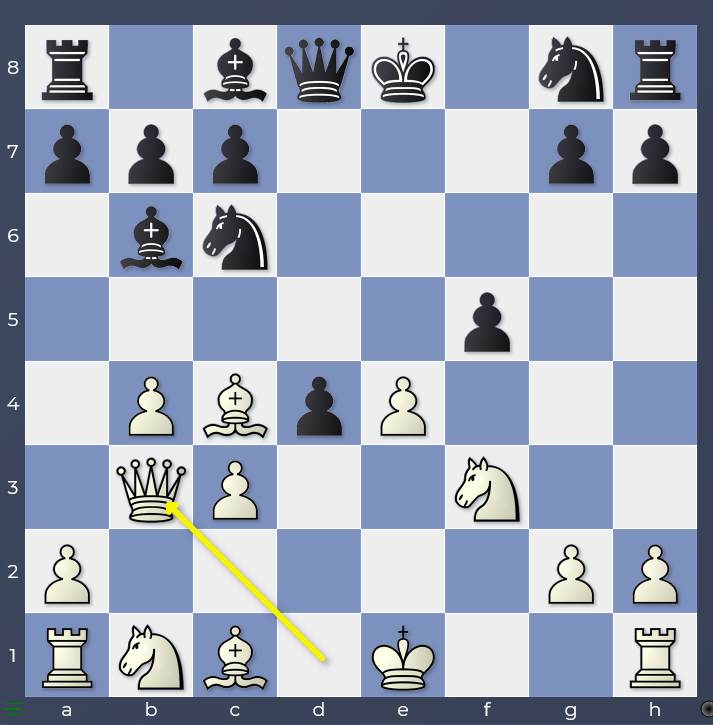
a) 9…Nh6 was Reti’s analysis which was cited by [EB] 10.Bg5 The engine top move (10.0–0 fxe4 11.Bg5 ([EB]11.Nxd4 Nxd4 12.Bf7+ Ke7!! is indeed excellent for Black as too many White pieces are hanging (and there are big discovered check threats) after 13.Bg5+ Kf8 though I’d be rechecking that quite a bit in a practical game!) 11…Qd6 12.Na3 Reti’s analysis 12…Qg6 (12…Bf5 13.Nh4 [EB] “is White’s best continuation and leads to a very closely contested match with chances for both sides”) 13.Rae1 Rf8 threatening …Rxf3 and …Qxg5 is an engine 0.00!) 10…Qd6 11.Nbd2 dxc3 12.Qxc3 Bd4 13.Nxd4 Qxd4 14.Qxd4 Nxd4 15.Rc1 with a good initiative for the pawn;
b) 9…Nf6 was mentioned by Tartakower [ST] but is met – as he also noted – by the incredibly evil 10.b5 when 10…Na5 loses to 11.Bf7+ Ke7 12.Ba3+;
c) 9…fxe4 The engine choice!
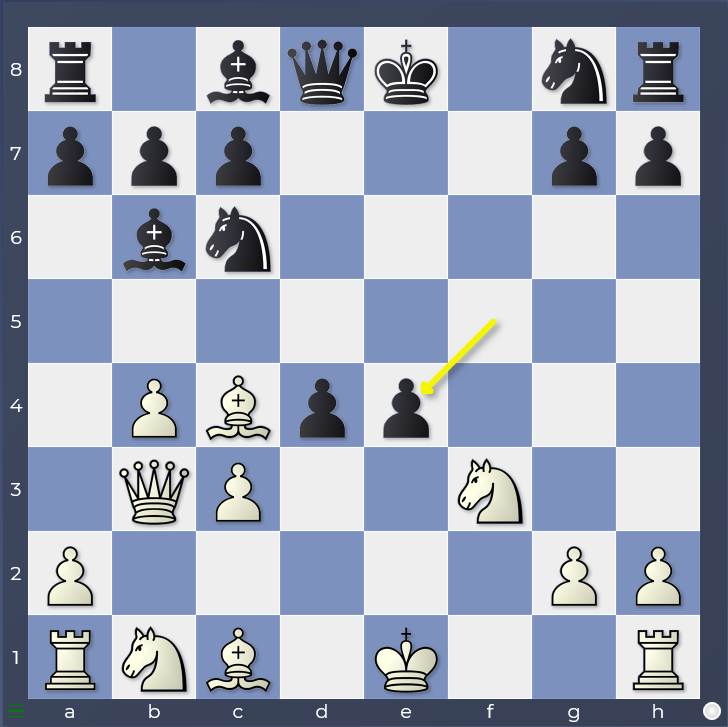
10.Bxg8 Qe7 (10…Qf6 is equivalent but the text is my aesthetic favourite!) 11.Nxd4 Bxd4 (11…Nxd4 12.cxd4 Bxd4 13.Rf1 Bxa1 14.Rf7 Qd6 15.Rf2 is a wonderful engine sequence that carries some danger for Black!) 12.cxd4 Nxd4 13.Qc3 and now a move I can’t remember ever having seen! (13.Qc4 Qh4+ 14.g3 Nf3+ is another line) 13…Ne2
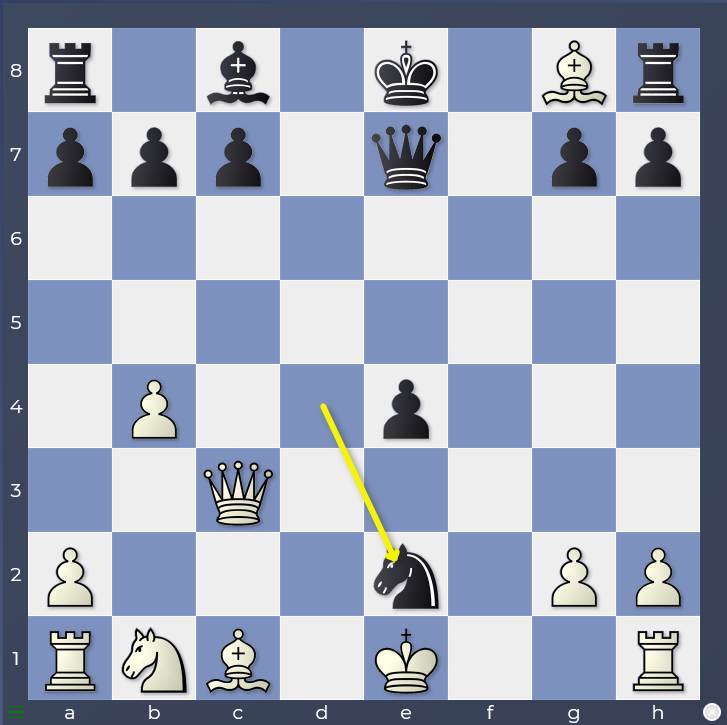
14.Kxe2 Bg4+ 15.Ke1 0–0–0 16.Bb3 Saving the bishop and covering the d1–square! 16…e3 17.Bxe3 Qe4 18.Nd2 Qxg2 Threatening mate on e2 to which White’s only riposte is 19.Be6+ Bxe6 20.Rg1 Qxh2 with a still complicated position where the engines consider Black has enough for the sacrificed material (0.00);
8.Ne5
a) 8.Nxd4 is given as best by the engines but it doesn’t look that amazing as a correspondence game demonstrated. 8…Qh4+ 9.g3 Qe7 10.Bxg8 Best according to the engines. (10.0–0 Nf6 11.Bg5 Nbd7 followed by …h6 is fine for Black though here too the path rapidly becomes fraught after 12.Nd2 h6 13.Bxf6 Nxf6 14.Nxe4 Nxe4 15.Qh5+ Kd8 16.Qd5+ Bd7 17.Rae1 Re8 18.Qxb7 Bxd4+ 19.cxd4 Rc8 20.Rf7 Qxf7 21.Bxf7 Nd6 22.Rxe8+ Bxe8 23.Qxa7 Bxf7) 10…Bxd4 11.cxd4 (11.Qxd4 A mistake after which White is worse! 11…Rxg8 12.Nd2 Nc6 13.Qxe4 Bh3 14.Qxe7+ Nxe7 15.Nb3 0–0–0 and eventually 0–1 Keller,M-Freise,E GER jub50 qJVM53 corr GER corr 1996) 11…Rxg8 12.0–0 Nc6 13.Nc3 Be6 14.Qh5+ g6 15.Qb5 0–0–0 16.Bg5 Qd6 17.Bxd8 Rxd8 gives Black enough compensation for near complete equality (0.07) according to the engines.;
b) 8.Ng5 has also been played but essentially transposes to the game after 8…Nf6 9.Nf7
8…Nf6
8…Qh4+ 9.g3 Qh3 10.cxd4 Bd6 11.Qb3 Bxe5 12.dxe5 Ne7 13.Bf7+ Kd8 14.e6 Qf5 15.Nc3 Nbc6 16.Qd1+ Not a successful game to say the least, but it does make you think that Dr Olland was the first to try 7…fxe4! 1–0 Jacobsen,E-Olland,A Goteborg SSK 40th Anniversary Group B Gothenburg 1920 (4)
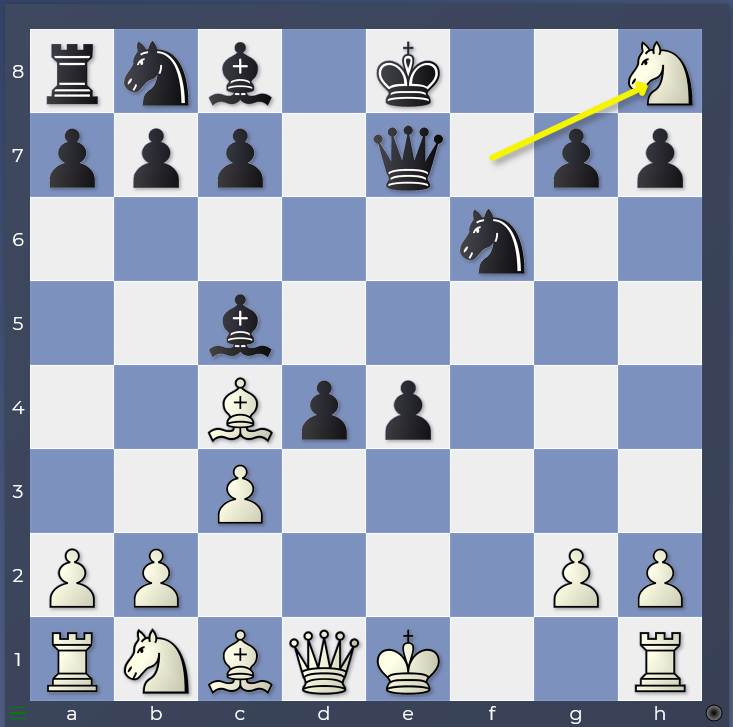
9.Nf7 Qe7 10.Nxh8
10…d3
[EB] “Reti considered that Black’s position was not worth the great material investment. Svenonius for his part attempted in an analysis in the Tidskrift for Schack 1922 [actually October 1921] to prove a win for Black in all cases”.[Note with 10…Nc6 rather than [TfS 1921] “Olland’s pitiful (!) 10…d3” It’s not clear where / whether poor Dr Olland suggested or played 10…d3. I searched a long time in the Dutch newspaper archives on delfer.nl but didn’t find anything.
1) 10…Nc6 Svenonius [TfS 1921] and the engine top move!
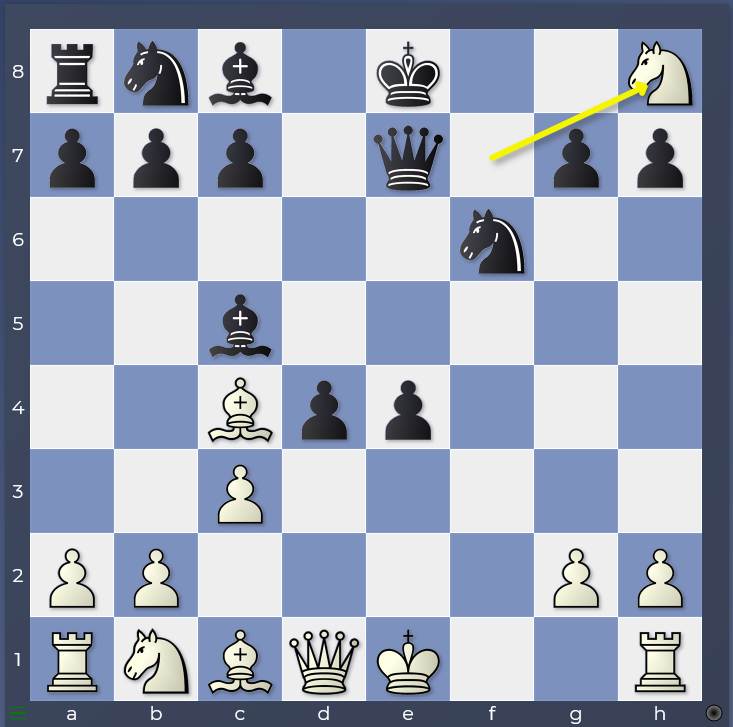
a) 11.b4 was the main focus of attention in the 1920s but it all goes horribly wrong for White! 11…Bb6 12.Nf7 Bg4 13.Qb3 and now 13…e3
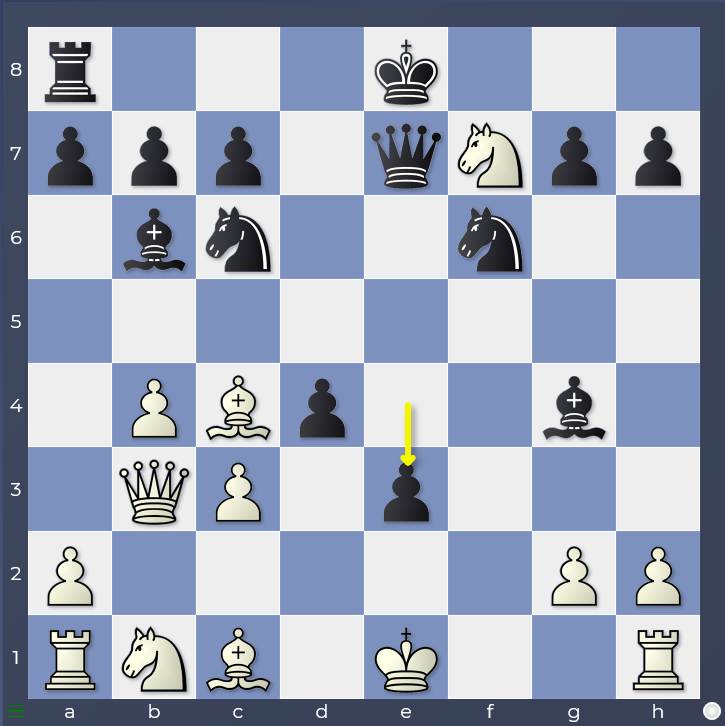
(13…d3 is also very strong as is 13…Bh5!; 13…Ne5 14.Nxe5 Qxe5 15.0–0 d3+ is how Svenonius responds in a letter dated July 1922 [Tfs 1922] with the variation (15…Be2 So far Svenonius’ analysis originally in [TfS 1921] and now Reti and Spielmann in Tidskrift for Schack 3/4 1922 (a letter written February 1922) recommend 16.Bf4 with advantage 😉) 16.Kh1 Qe7 (16…e3 17.Bxd3 0–0–0 is overwhelming for Black according to the engine.) 17.Bf4 “The advance of pawns on the left flank [g-and h-pawns I presume?] will decide the game in Black’s favour”)
14.h3 Bh5 15.Ng5 0–0–0 16.Be2 Nd5 17.Bxh5 Qxg5 18.Bg4+ Kb8 19.0–0 d3 is obviously pretty horrific for White!;
It’s funny though that writing his 1923/1924 article “From the sickbed of the King’s Gambit” (republished in English in the Elk and Ruby book “From Vienna to Munich to Stockholm, A Chess Biography of Rudolf Spielmann”) Spielmann notes that “a famous Swedish theorist considers the move 4…f5 to be a refutation of 4.c3. His highly thoughtful analysis boils down to the following main variation [the current line until 10…fxe4] Svenonius, as well as Teichmann, prefers Black’s position, while Reti stands for White. I adhere to the opinion of the former two” That seems at odds with his coauthorship of the 1922 letter to the Tidskrift for Shack! It must be said that I was surprised to see Spielmann sticking up for the side taking the material in that article. Perhaps the slight sarcasm in the text above shows more an inclination to disagree with the person rather than the conclusions
b) 11.Nf7 Bg4 12.Qb3 Bb6 Svenonius [TfS 1921];
c) 11.cxd4 Nxd4 Svenonius [TfS 1921];
d) 11.0–0 Bg4 Svenonius [TfS 1921];
e) 11.Bg5 – the engine top move!
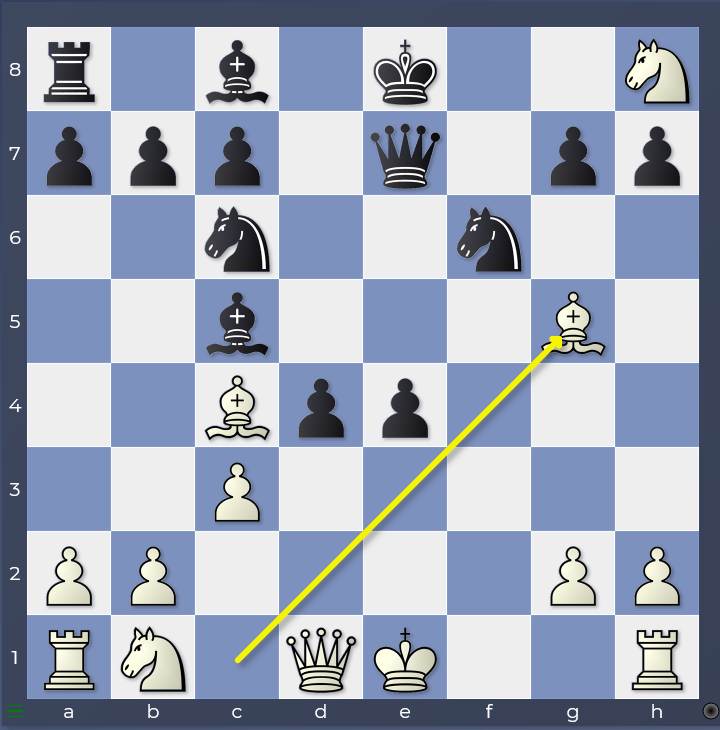
11…Ne5 12.Bxf6 (12.cxd4 Nd3+ is the engine favourite 13.Kf1 Nxb2 14.Bf7+ Qxf7 15.Nxf7 Nxd1 16.dxc5 Kxf7 17.Ke1 Nb2 with a slight advantage for Black (–0.58)) 12…Qxf6 is the engine preference (12…gxf6 13.Qh5+ Kf8 14.Bb3 Bg4
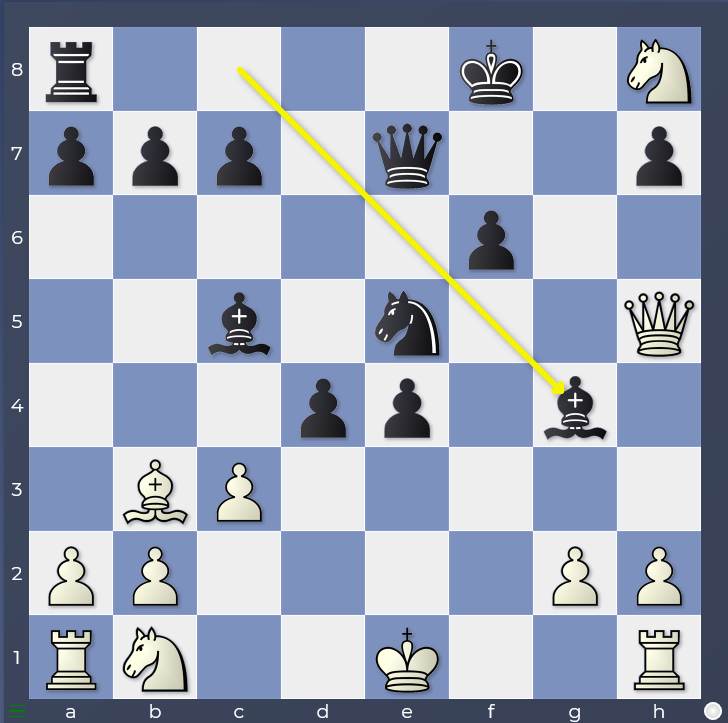
15.Ng6+ was a vicious tactic, though Black really should have spotted it in correspondence chess! 1–0 Zacher,W-Schwarz,B FRG-Cup3 sf87 corr GER corr 1957) 13.Qh5+ g6 14.Qxh7 Be6 (14…Qf4 and; 14…Bf5 are equivalent options (0.00) according to the engines.) 15.Bxe6 Qxe6 16.Nxg6 Nd3+ 17.Kd2
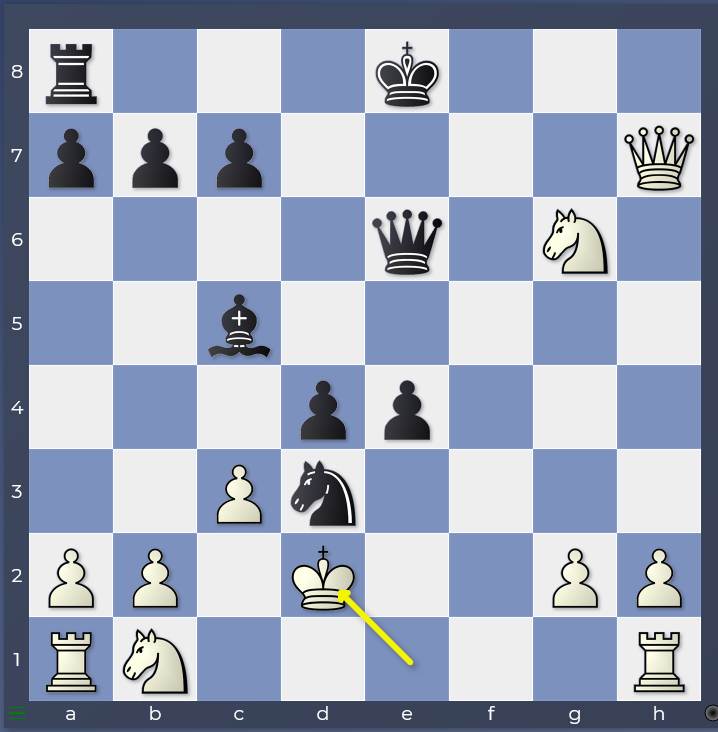
0–0–0 (17…dxc3+ 18.Nxc3 0–0–0 19.Kc2 Qb6 is also a dangerous – but 0.00! – option for Black.; as is 17…e3+) 18.Qh3 dxc3+ 19.Kxc3 Bd4+ 20.Kd2 Qxh3 21.gxh3 Bxb2 22.Nc3 Bxa1 23.Rxa1 Nf4+ 24.Ke3 Nxg6 25.Kxe4 is the engine best line with a small edge for Black.
11.Bg5 Bf2+
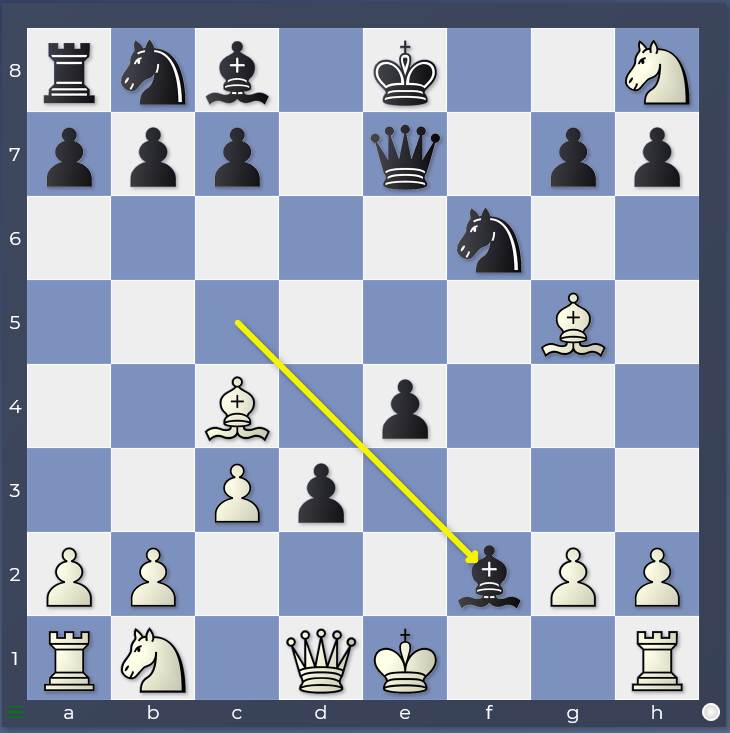
That’s quite a move!!
[EB] “This was planned by Spielmann when electing to play this line.”
By the way, this made me think of another line Spielmann points out after 4.c3 Bg4 5.fe de 6.Qa4+ Nc6 7.Nxe5 (which he ascribes to Teichmann) Qh4+ 8.g3 Bf2+! 9.Kxf2 Qf6+ with [RS] “a wonderful game for Black”
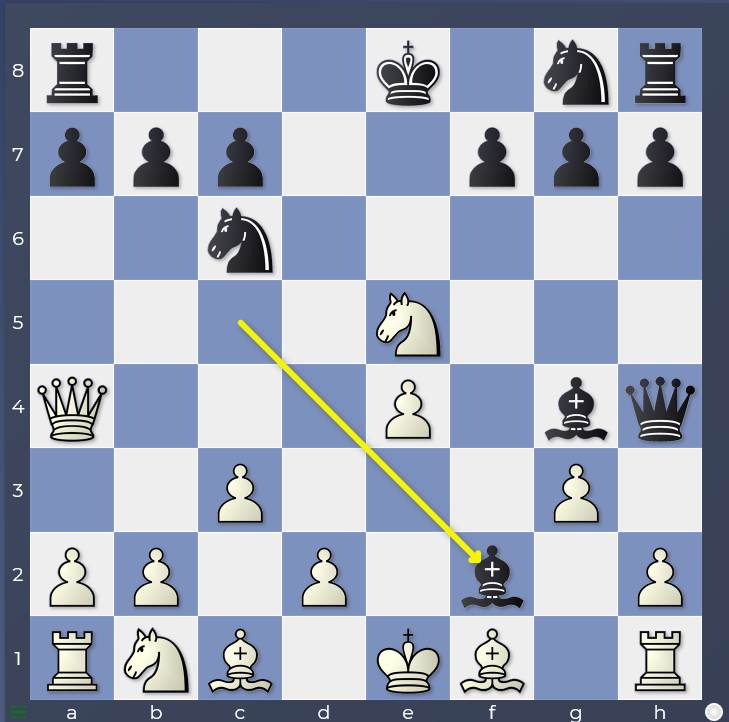
a) 11…Nbd7 [TfS 1932] “was played a few days earlier in a consultation game at Stockholm Chess Club which ended in White’s favour” (Spielmann) It seems therefore that Spielmann was inspired to play this line by an improvement that he thought up to a line he had seen just a few days before!
I haven’t been able to find out how that earlier game went but the engine gives this path to a winning position for White 12.Rf1 Qe5 13.Bf4 Qe7 14.Nd2 b5 15.Bxb5 Bb7 16.Qb3 0–0–0 17.Nf7 Rf8 18.Ng5 c6 19.Bc4 e3 20.0–0–0;
b) 11…Bg4 is not mentioned by any commentators, but it is a decent idea – just 0.77 for White according to the engines and a draw as Black against a grandmaster in human play! 12.Qxg4 Nxg4 13.Bxe7 Bf2+ 14.Kf1 Kxe7 and now the engine gives 15.Nd2 (15.h3 Ne3+ 16.Kxf2 Nxc4 17.Re1 e3+ 18.Rxe3+ Nxe3 19.Kxe3 Nc6 20.Kxd3 Rd8+ 21.Ke2 Rxh8½–½ Westerinen,H (2430)-Norri,J (2395) FIN-ch Helsinki 1992 (5)) 15…Bb6 16.Re1 Ne3+ 17.Rxe3 Bxe3 18.Nxe4 Nc6 19.Nf7 Na5 20.Bxd3 Kxf7 21.Ke2 Bh6 22.Rf1+ Ke7 23.Rf5 with an initiative for White due to Black’s awkward pieces.
12.Kxf2
12.Kf1 Bb6 is quite nasty with the threat of …Qc5 to start with
12…Qc5+
Forking both bishops!
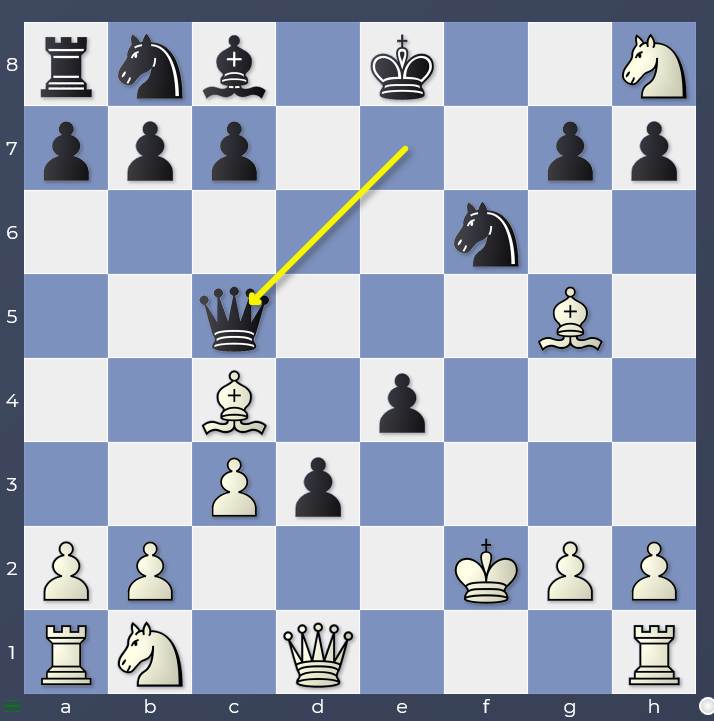
13.Be3
I couldn’t imagine playing any other move (nor Spielmann who commentates [TfS 1932] “Too risky – White must keep the king’s bishop to keep an eye on the dark squares”, but the engines prefer
13.Ke1 Qxg5 14.Qd2 Qc5 15.Na3 It feels very loose to give up the dark squared bishop in this way, but keeping the light-squared bishop allows White to contemplate saving the knight on h8 while the tempo gained for development (Qd2) is useful. Note however that White cannot castle queenside!
13…Qxc4
The knight on h8 is now doomed and the white king is exposed to …Ng4+. I can thoroughly understand why Spielmann was attracted to this continuation. Stoltz – partly forced – however comes up with a strong disruptive plan.
14.h3
Preventing …Ng4+ is essential
14…Be6 15.Nd2
15.g4 immediately was slightly more accurate, keeping the black queen more exposed to Qb3 ideas as well as slightly offside on c4 (compared to d5)
15…Qd5 16.g4
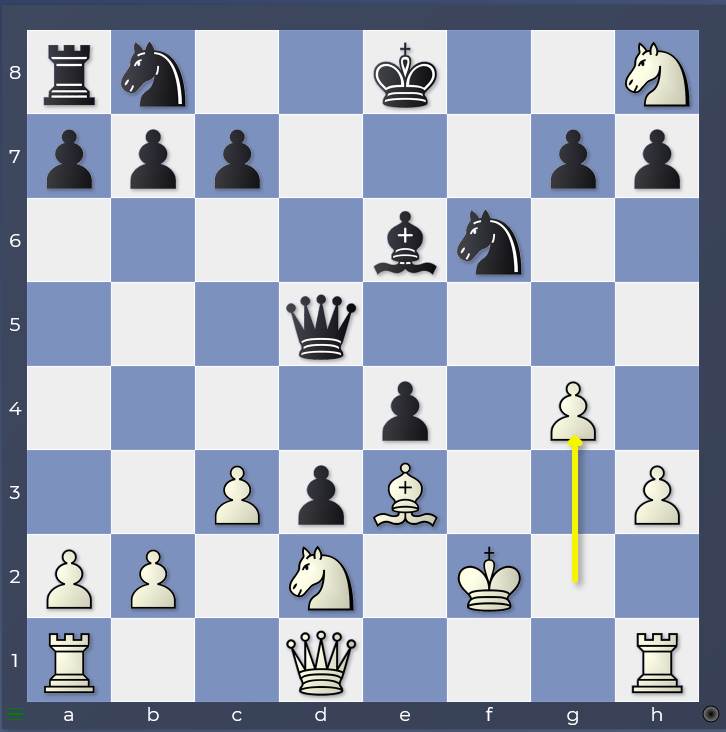
Now less well-timed, but a move with a large shock effect on his opponent! Spielmann commentates (10 years after the original theoretical discussion) that [TFS 1932] “the battle of Reti-Svenonius appears to have been decided in favour of the former” (!)
[EB] “A surprising move which seems to weaken the white king’s position. However, this is irrelevant as Black lacks the pieces to attack. The threat of g4–g5 either frees the knight from h8 or deprives the black central pawns of the support of the knight on f6”
The engines prefer 16.c4 Qf5+ 17.Kg1 followed by Qf1]
16…Nc6
16…g5 17.Qb3 [EB]
17.c4
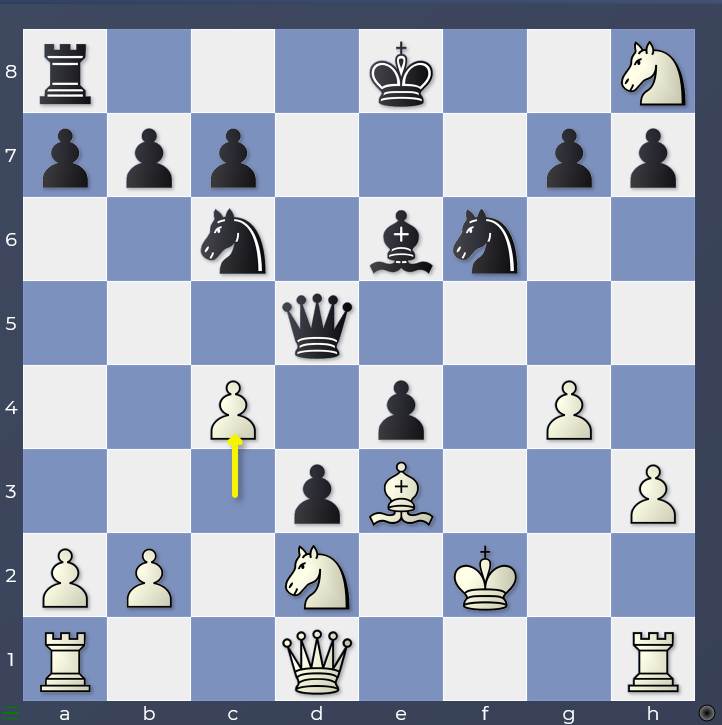
Prepares g4-g5 by taking away the d5-square from the black pieces. The immediate 17.g5 would have allowed 17…Qf5+ followed by …Nd5 [TfS 1932]
17…Qd7
This is the real mistake however, despite all of Spielmann’s ingenuity thereafter
17…Qe5 18.g5 0–0–0 is the engine 0.00 way! I would never have assessed the resulting positions a rook down as equal! 19.Ng6 A neat defensive idea, ensuring that the doomed knight on h8 creates pawn cover for the white king on the g-file! 19…hxg6 20.gxf6 gxf6
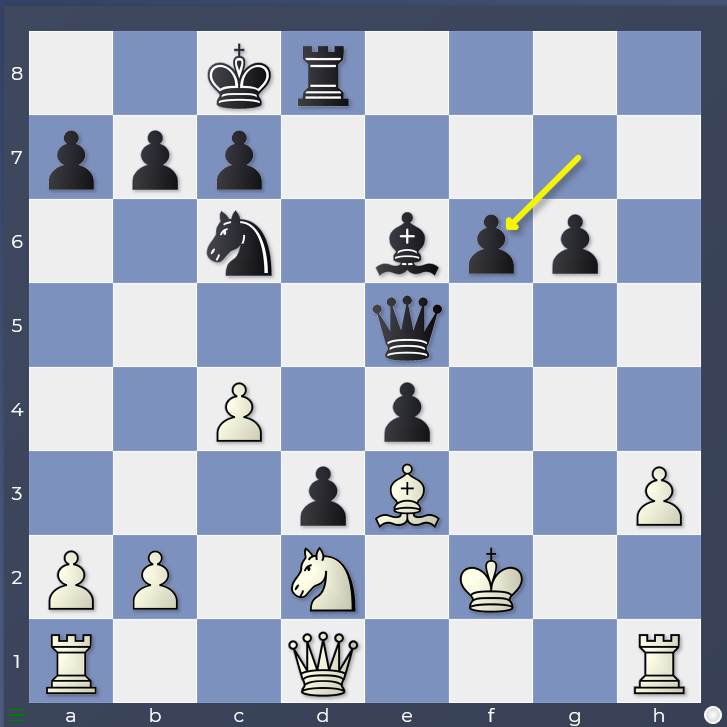
21.Qg1 Qf5+ 22.Kg2 Qh5 23.Qf2 f5 24.h4 Nb4 25.Bg5 Rh8 26.Rh3 Nc2 27.Rg1 f4 28.Qxf4 Qe2+ 29.Kg3 Bxh3 30.Kxh3 e3 31.Qe5 Qh5 32.Rf1 exd2 33.Rf7 Qg4+ 34.Kxg4 d1Q+ 35.Kh3 Qh1+ with a draw by perpetual!
18.g5 Bg4
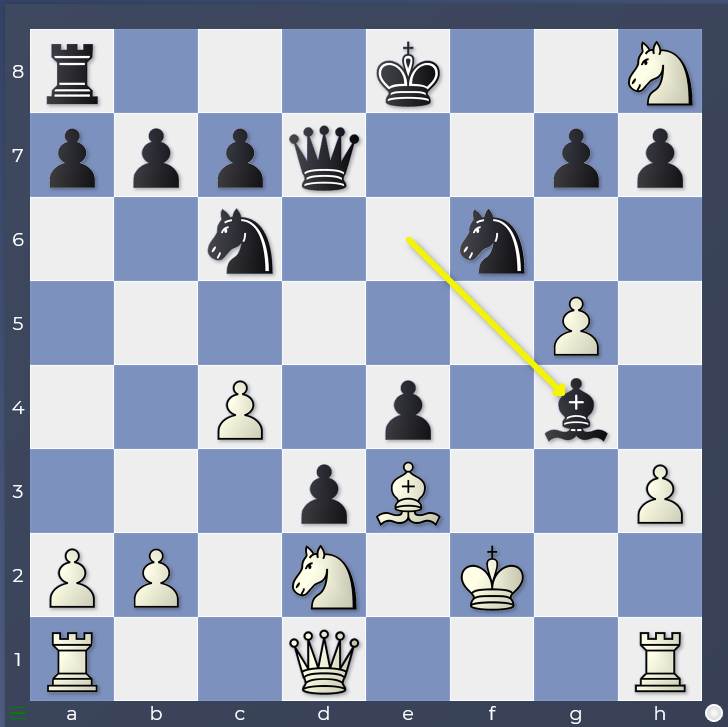
A very ingenious way of preventing the white queen from getting to h5 after the knight moves from f6!
19.Qf1
19.hxg4 Nxg4+ 20.Kg3 Nxe3 21.Qh5+ g6 22.Nxg6 0–0–0 is very strong for Black 23.Nf4 Nd4 with …Nef5+ and …e3 to follow
19…Be2 20.Qg2 Qf5+ 21.Kg1
This excellent sequence of accurate moves from White has left his king safe and Black’s centre on the verge of collapse… and the knight on h8 is still alive with a possible g5–g6 to help it out of corner!
21…Nd7 22.Qxe4+ Qxe4 23.Nxe4 Ke7 24.Ng3 Rxh8 25.Nxe2 dxe2 26.Rh2
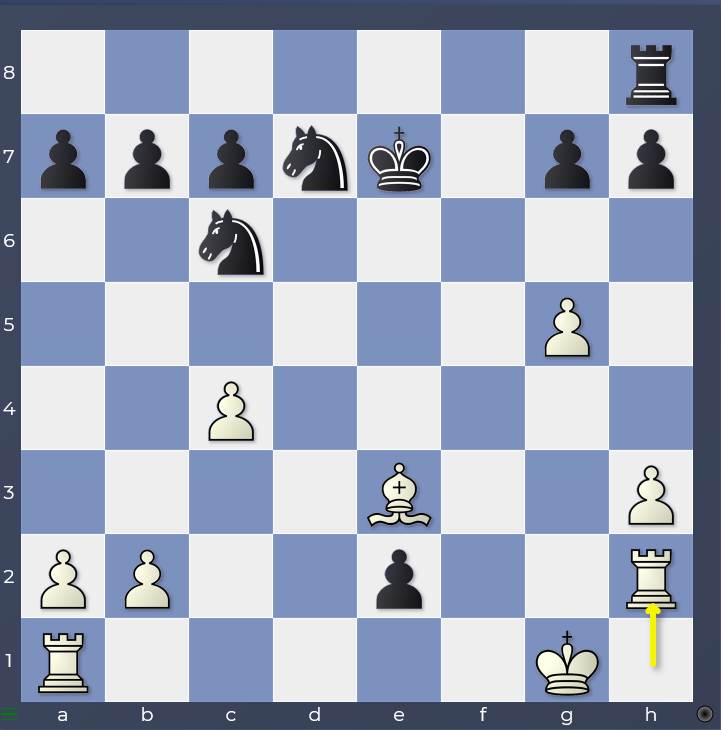
With a completely winning position for White
26…Kf7 27.Rxe2 Re8 28.Rd1 Nde5 29.Bf4 Re6 30.Kf1 Kg6 31.Rd5 Kf5 32.Bg3 Re7 33.b4 1–0
[TfS 1932] “The only game of the match which my opponent played without an error from beginning to end” (Spielmann)
Theoretical section: 1.e4 e5 2.f4 Bc5 3.Nf3 d6 4.c3 f5
5.d4
is the top engine move (0.17 initially) and is recommended by Nepomniachtchi [IN]
5…exd4 6.cxd4 Bb4+ 7.Nbd2 [IN]
and now the top engine lines are quite crazy! Just a taster here:
7…fxe4
The most critical
8.Qa4+ Nc6 9.d5 exf3
is my absolute favourite! (9…b5 is given by Nepomniachtchi as “the only move for Black to keep the balance.” [IN] but that isn’t really the case at all, though it is one of the main moves. Even 9…a5 in fact is not too bad for Black!)
10.dxc6
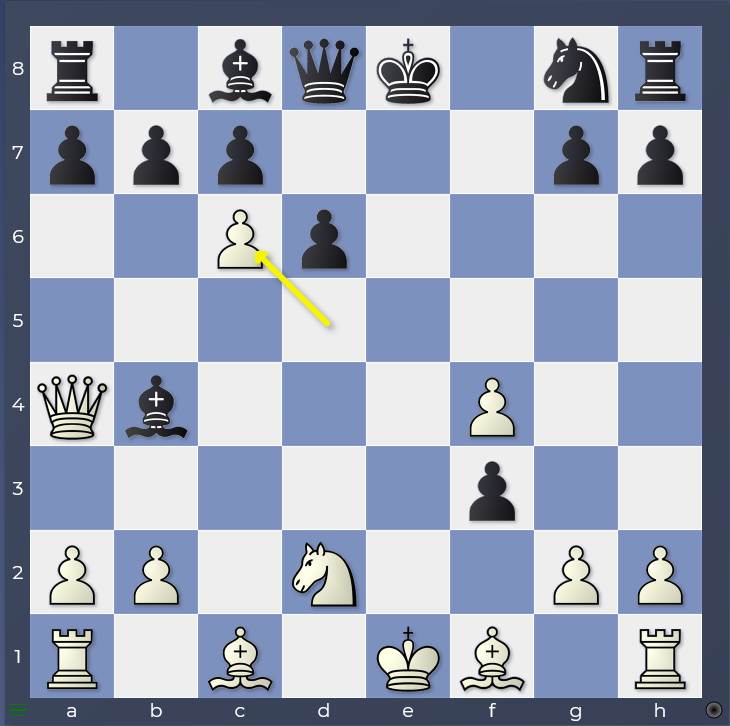
a) 10…a5 11.cxb7+ Bd7 12.bxa8Q Qxa8 was my first thought: isn’t it even stronger to keep the threat of …fxg2!? 13.Bb5The difference: this isn’t possible with the white king on e2! 13…Qe4+ 14.Kd1 and amazingly enough, White is a safe rook up!
b) 10…f2+ 11.Ke2
11.Kxf2 Bc5+ saves the bishop of course!; 11.Kd1 a5 is surprisingly good for Black as 12.cxb7+ Bd7 13.bxa8Q Bxa4+ is CHECK!
11…a5 12.cxb7+ Bd7 13.bxa8Q Qxa8 14.Qc2
A rook sacrifice by Black but White now threatens Qe4+ exchanging off queens!
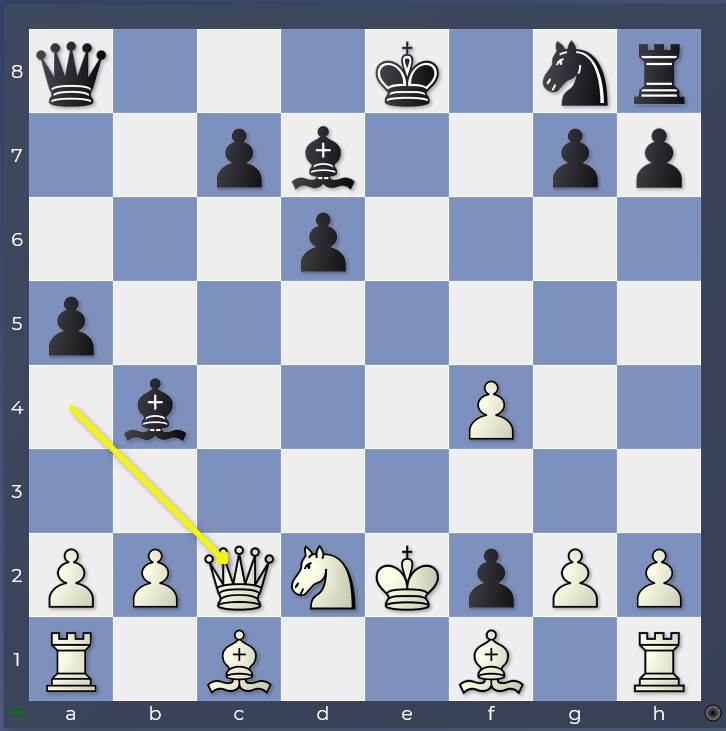
14…Kd8
A ridiculous quiet move, meeting 15.Qe4 with 15…Bc6! The main line (one to enjoy rather than understand!) is
15.h3 Nh6 16.Kxf2 Qa7+ 17.Kg3 Nf5+ 18.Kh2 Qf2 19.Qd3 Qxf4+ 20.g3 Qf2+ 21.Bg2 Bc6 22.Rg1 Re8 23.Nf3 Qxg3+ 24.Kh1 Be4 25.Qf1 d5
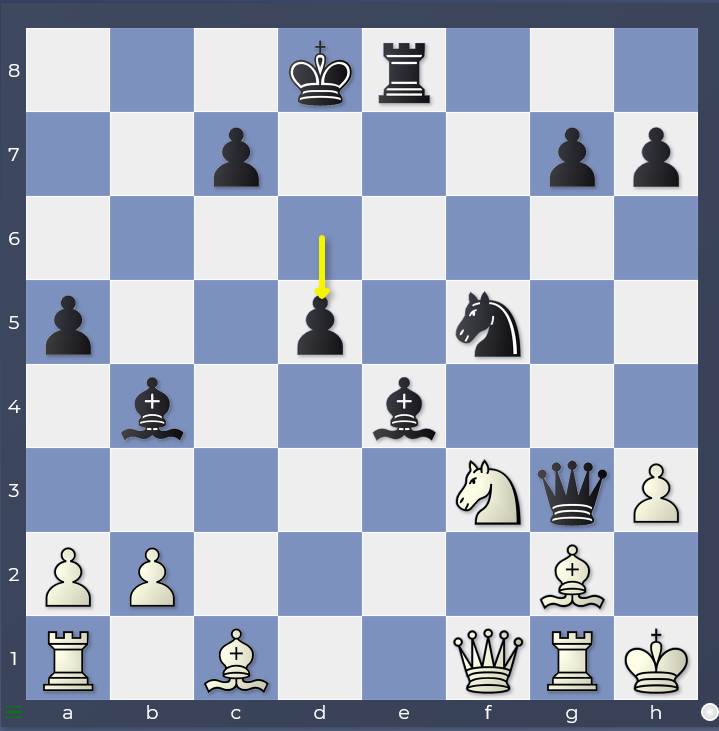
26.Bg5+ Kc8 27.Qa6+ Kb8 28.Rgf1
28.Qb5+ Ka7 29.Qxe8 Bxf3 wins for Black!
28…Rf8 29.Rac1 Bd6 30.Qb5+ Kc8 31.Qa6+
with a draw by perpetual!;
5.exf5
is another decent engine move (0.15 initially, only 6 games played) and is also mentioned by Nepomniachtchi [IN] and he gives the follow-up line
5…Bxf5
5…Qe7 was Tartakower’s move [ST] and it’s also pretty reasonable.
6.fxe5 dxe5 7.d4 exd4 8.cxd4 Qe7+
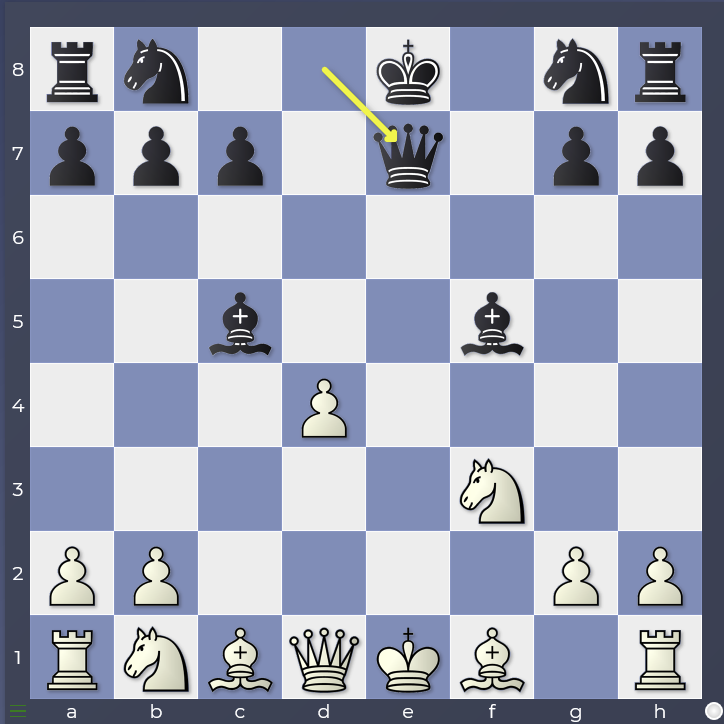
The engine main line is much neater than Nepomniachtchi’s 8…Bb6 [IN] 9.Bg5 Ne7 10.Bb5+ Nbc6 11.Qe2 Qd6 12.Bxc6+ bxc6 13.a4 Ba5+ 14.Nbd2 Qe6 which is essentially equal
9.Kf2 Nf6 10.Bb5+
10.dxc5 leads to a “dull draw” after 10…Ne4+ 11.Kg1 Qxc5+ 12.Qd4 Qxc1 13.Nc3 Qxa1 14.Qxg7 Rf8 15.Nd5 Nc6 16.Nxc7+ Kd8 17.Nd5 Ke8
10…c6 11.Re1 Ne4+ 12.Kg1 cxb5 13.dxc5 0–0
and Black manages to keep the balance.