


Sweden performed very creditably in the 1930 Hamburg Olympiad, coming in 9th after the winners Poland. Stoltz scored 10/17 (+7 = 6 -4) on board 3 (behind Stahlberg and Berndtsson and ahead of Lundin) and this win against the American team was typically exciting!
Stoltz,Gosta – Steiner,Herman [C89]
Olympiad–03 Hamburg (9), 19.07.1930
Comments marked [EB] are translations of annotations by E. Böök in his “Stormästaren Gösta Stoltz bästa partier”
[Tfs] Annotations by E. Jacobson in Tidskrift for Shack 1930/8. This player was the board 5 for Sweden at the Olympiad and only played 1 game!
1.e4 e5 2.Nf3 Nc6 3.Bb5 a6 4.Ba4 Nf6 5.0–0 Be7 6.Re1 b5 7.Bb3 0–0 8.c3 d5 9.exd5 e4
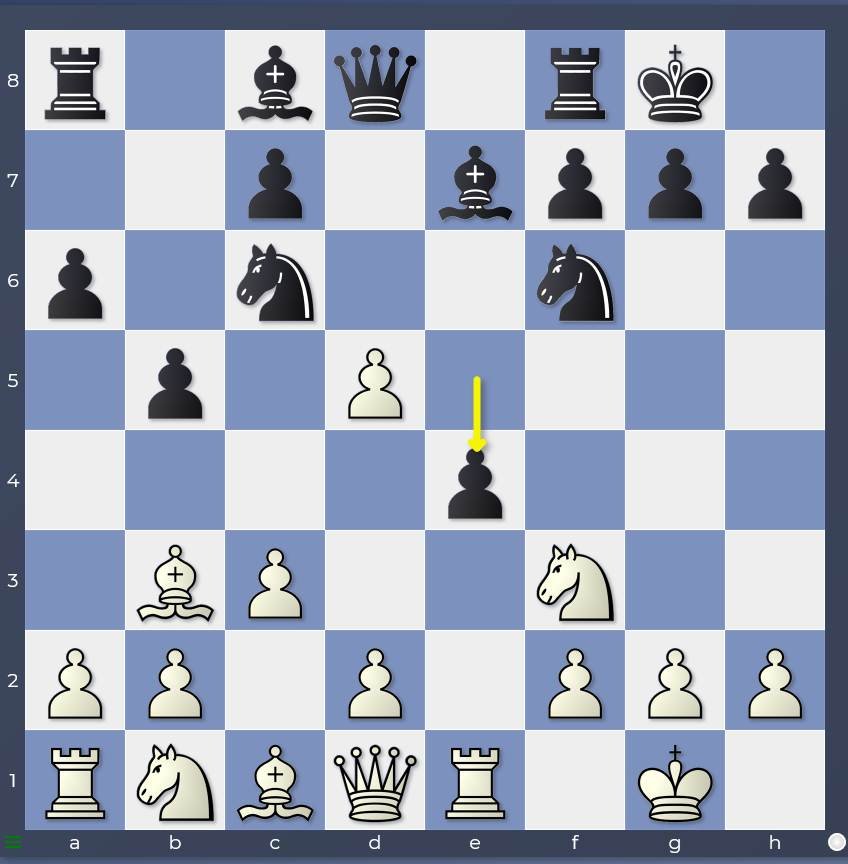
[EB] “Steiner plays a secondary line which is also difficult to refute”
[TfS] “A variant introduced by Steiner with which he has scored a string of brilliant victories”
In the databases, I only see two games of Steiner, with this line: both losses!
10.dxc6
10.Ng5 Na5 is the engine top move. But first:
a) 10…Bd6 [TfS] 11.dxc6 Bxh2+
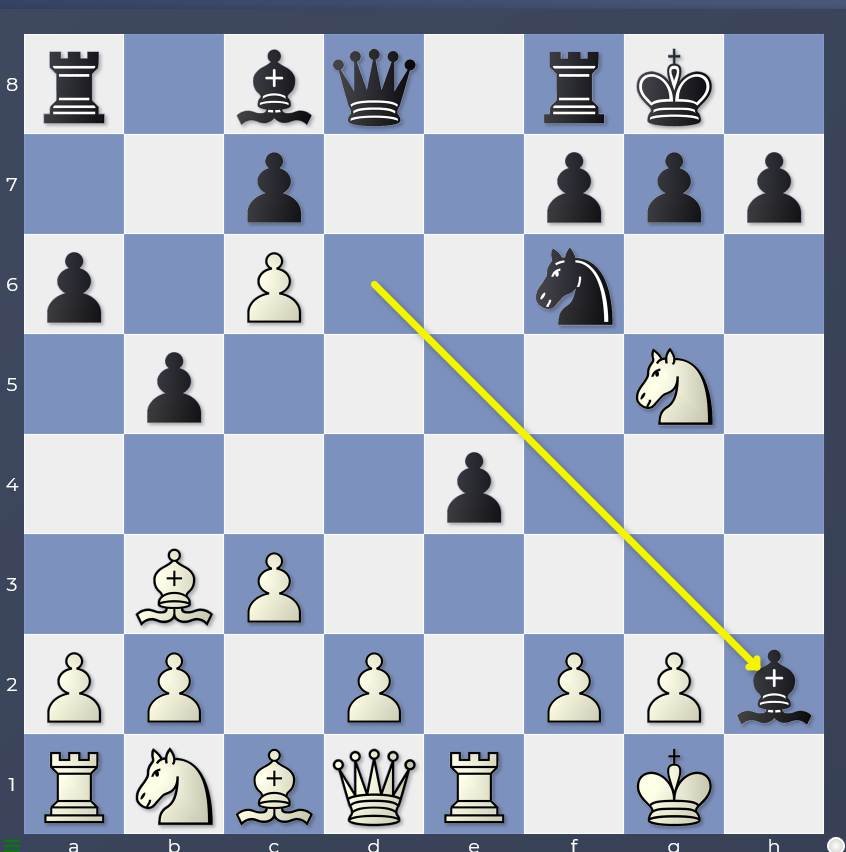
is Jacobson’s wild suggestion and though it would be very scary at faster time limits, it’s short of soundness! 12.Kh1 (even 12.Kxh2 Ng4+ 13.Kg1 Qxg5 14.f3 Qc5+ 15.Re3 is also good for White) 12…Bg4 (12…Ng4 13.Nh3) 13.f3 exf3 14.gxf3 Bg3 15.fxg4 Bxe1 16.Qxe1 Qd3 17.Qe3 Qf1+ 18.Qg1 Qd3
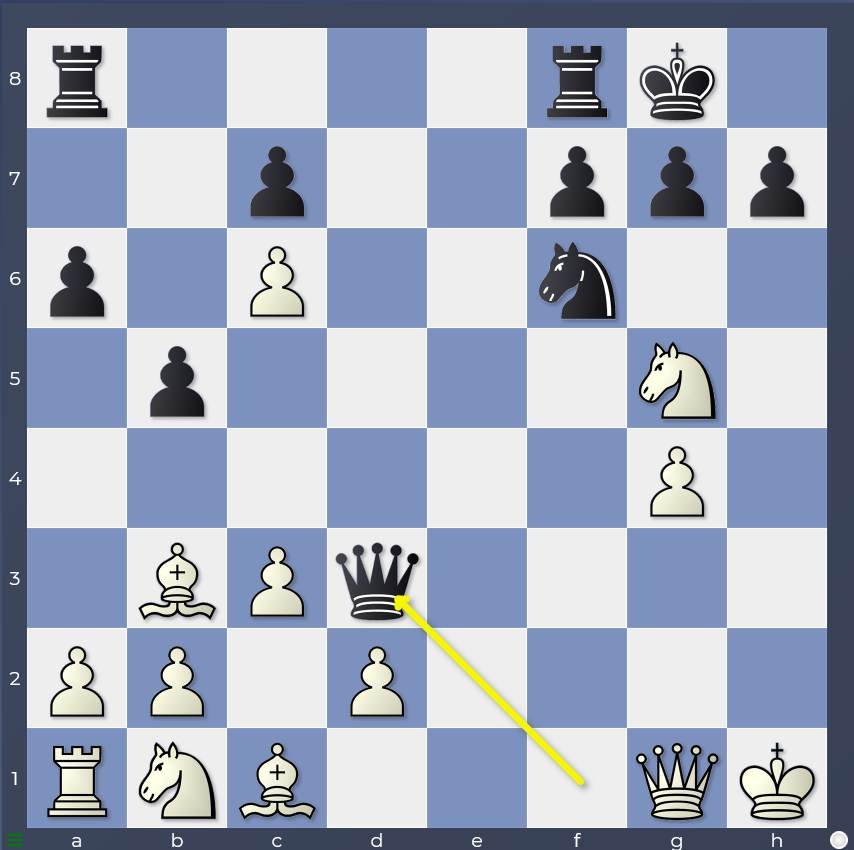
White has 3 pieces for the rook but a problem getting his queenside developed. The engine manages of course! 19.Na3 Rae8 20.Nc2 h6 21.Nb4 Qd6 22.Nf3 a5 23.Qh2 Qxh2+ 24.Kxh2 axb4 25.d4;
b) 10…Ne5 11.Nxe4 Nd3 12.Nxf6+ Bxf6 13.Re3 Bf5 (13…Nxc1 14.Qxc1 Bg5 15.Re1 Bb7 is the engine’s best when White needs to find the surprising 16.Re4 f5 17.Rd4 to fight for the advantage by retaining his two-pawn advantage) 14.Qf3 Qd7 15.Rxd3 Be4 16.Qe2 Qf5 17.Re3 Bxb1 18.d3 Bg5 19.Rxb1 Bxe3 20.fxe3 Rae8 21.e4 a5 22.Be31–0 Fox,M-Steiner,H Bradley Beach 1929 (5);
c) 10…Bg4 has been played a lot and is also not bad. 11.Qc2 (11.f3 exf3 12.gxf3 Nxd5 13.fxg4 Bxg5 14.Qf3 Nde7 is comfortable for Black. White cannot retain the advantage of the two bishops and he should watch out for …Kh8 and …f5 opening the attack against White’s weakened kingside.) 11…Na5 12.Nxe4 Re8 13.d3 Nxb3 14.axb3 Nxd5 with typical Marshall play as in the main line.;
However
d) 10…Na5 is best when after 11.Nxe4 Nxe4 12.Rxe4 Bb7 13.d4 Nxb3 14.axb3 Qxd5
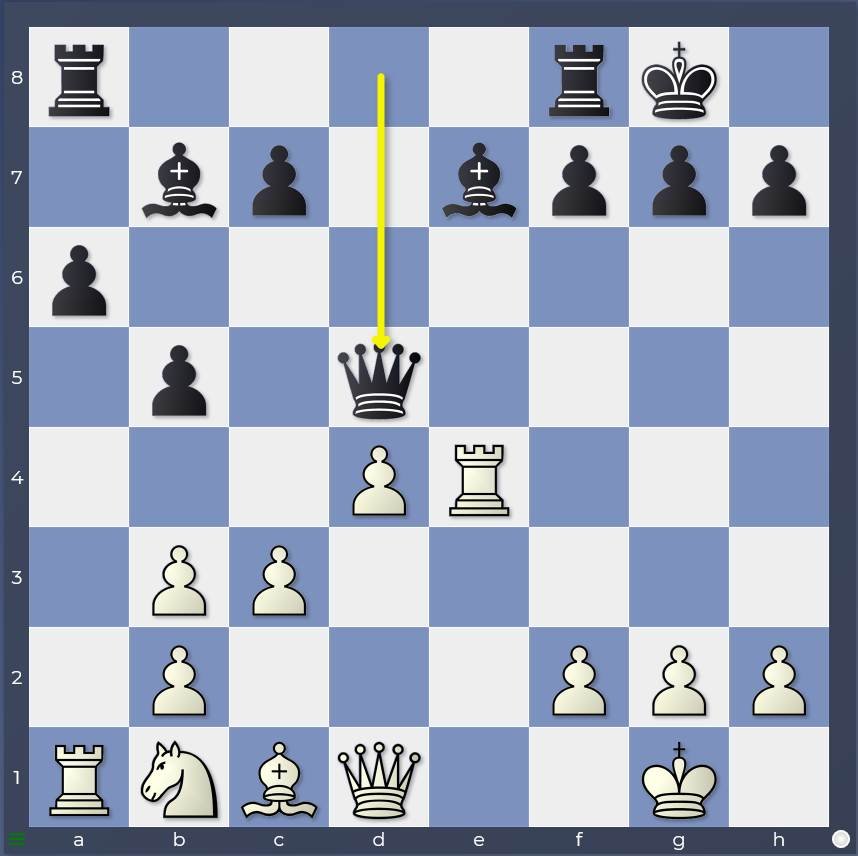
15.Nd2 f5 16.c4 Qf7 17.Re2 Rfe8 leads to a typical Marshall position where Black’s open lines and diagonals, two bishops and lead in development provides full compensation for the pawn.
10…exf3 11.Qxf3
There are better alternatives strangely enough!
a) 11.g3
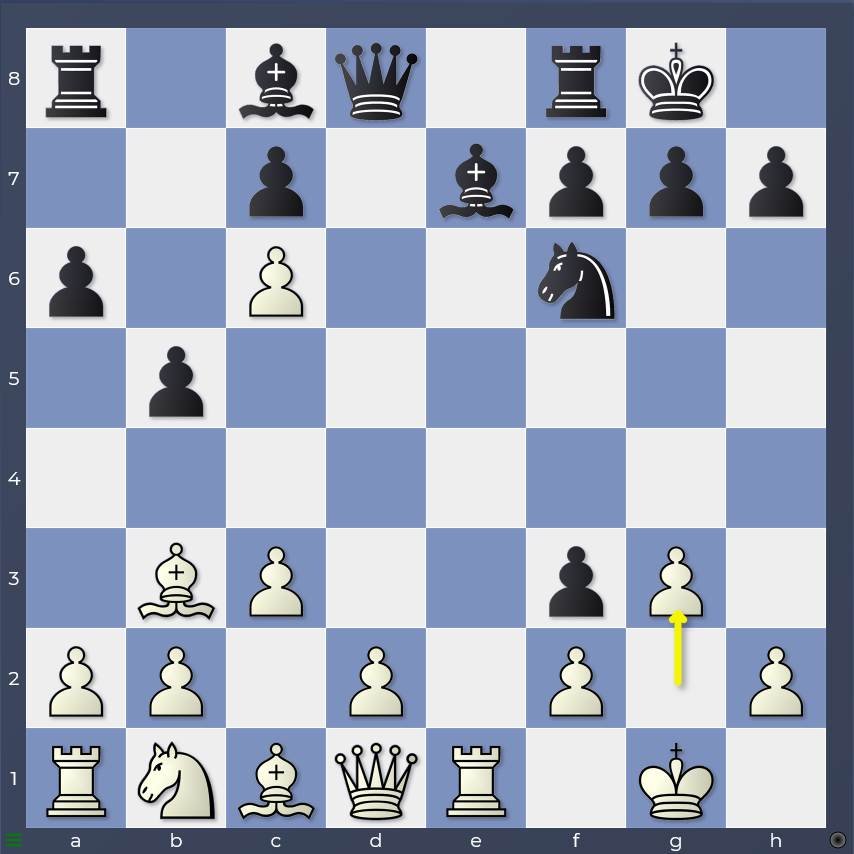
It’s funny that the very first game in this line played in 1893(!) should demonstrate the best refutation of this line… and that it would only be tried again 66 years later! 11…Bg4 12.d4 Re8 is the best engine attempt (12…h5 13.Bg5 Re8 14.Nd2 Nh7 15.Bxe7 Rxe7 16.h3 Bxh3 17.Nxf3 Rxe1+ 18.Qxe1 Qf6 19.Qe3 Bg4 20.Ne5 Ng5 21.f4 Ne6 22.Nxg4 hxg4 23.Bxe6 fxe6 24.Re1 Re8 25.d5 Kf7 26.Qe4 Re7 27.dxe6+ Qxe6 28.Qxe6+ Rxe6 29.Rxe6 Kxe6 30.Kf2 a5 31.Ke3 g6 32.Ke4 a4 33.Kd4 Kf5 34.Kd5 Kf6 35.b4 axb3 36.axb3 Kf5 37.b4 Kf6 38.c4 bxc4 39.Kxc4 Ke6 40.Kc5 Ke7 41.b5 Kd8 42.b6 cxb6+ 43.Kxb6 Kc8 44.c71–0 Walbrodt,C-Conill/Ostolaza/Lopez/Herrera Havana consultation 1893) 13.Bf4 Bd6 14.Rxe8+ Qxe8 15.Bxd6 cxd6 16.d5 Qe5 17.Nd2 Re8 18.a4 g6 19.axb5 axb5 20.h3 Bxh3 21.Nxf3 Qh5 22.Nh4 Bg4 23.Qd4 and White starts to take control.;
[EB] “It is now considered that the energetic” b) 11.d4
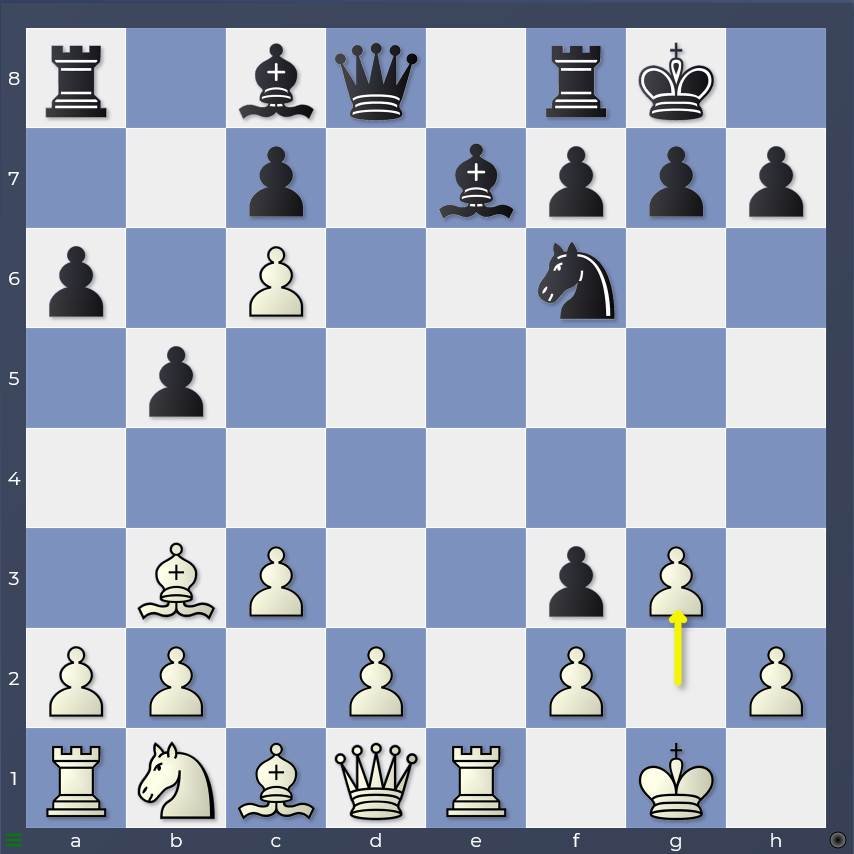
“is stronger” Engines also confirm that the move is strong. 11…fxg2 12.Nd2 (12.Bf4 Bg4 13.Qd3 Nh5 14.Bxc7 Qxc7 15.Qe4 Nf4 16.Qxe7 Qxe7 17.Rxe7 Bf3 0–1 Frere,W-Marshall,F Marshall sim New York 1917) 12…a5 13.Nf3 a4 14.Bc2 Bg4 15.Qd3 g6 16.Re5 Re8 17.Rxb5 Qc8 18.Bg5
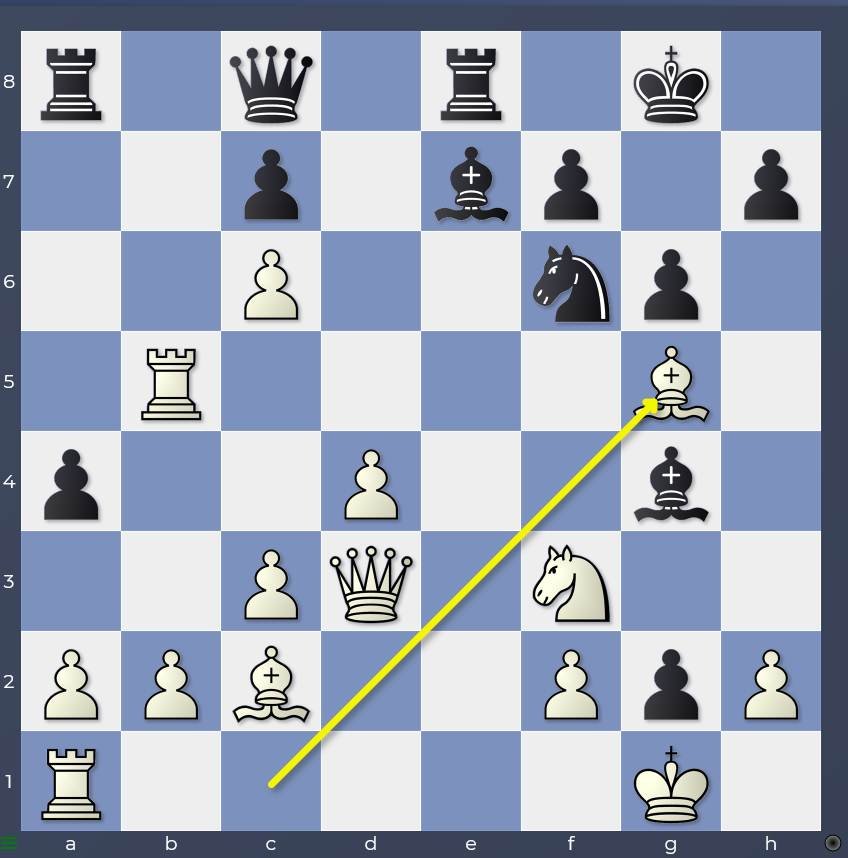
White’s pawn on c6 is incredibly annoying for Black, taking away the useful d7–square from his pieces. The engine gives around +0.8 which is a clear advantage for White but Black might feel there are chances due to the weakened white kingside.
11…Bg4 12.Qg3 Bd6
12…Re8
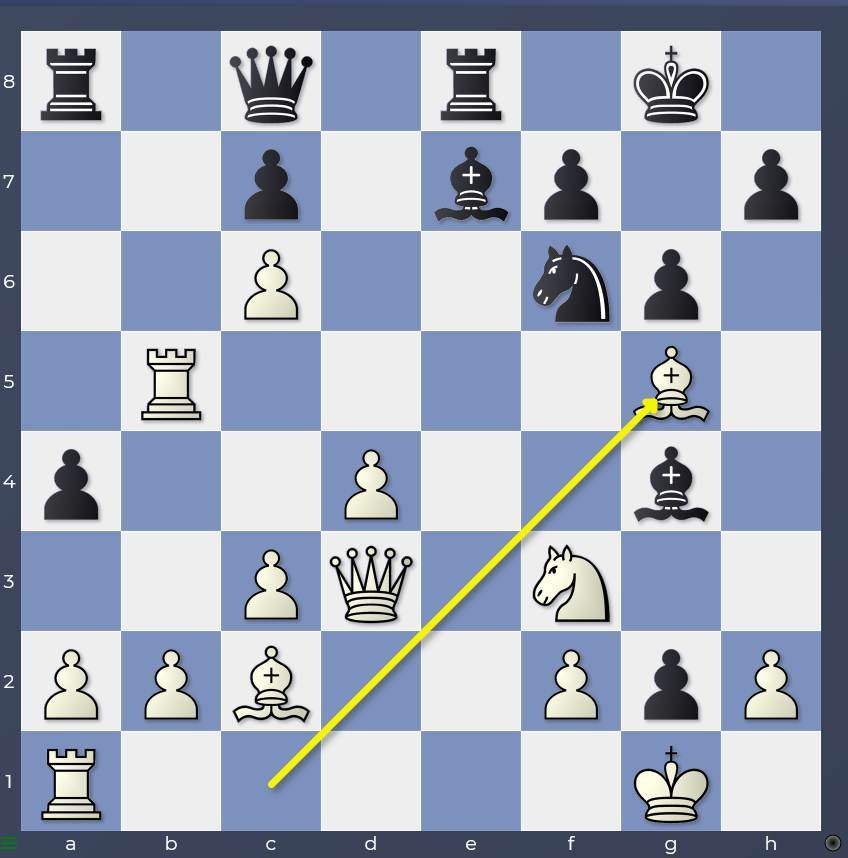
was played in a game I believe I first saw in the wonderful “Chess Secrets I Learned from the Masters” (by the white player). I certainly still remember the joy of seeing 13…Qd3 on the board! Although this is not the top engine move, it’s a very close second!
13.f3
The more sober a) 13…Bd6 is the engine top move, though 13…Qd3 is again a close second! 14.Rxe8+ Qxe8 15.Qf2
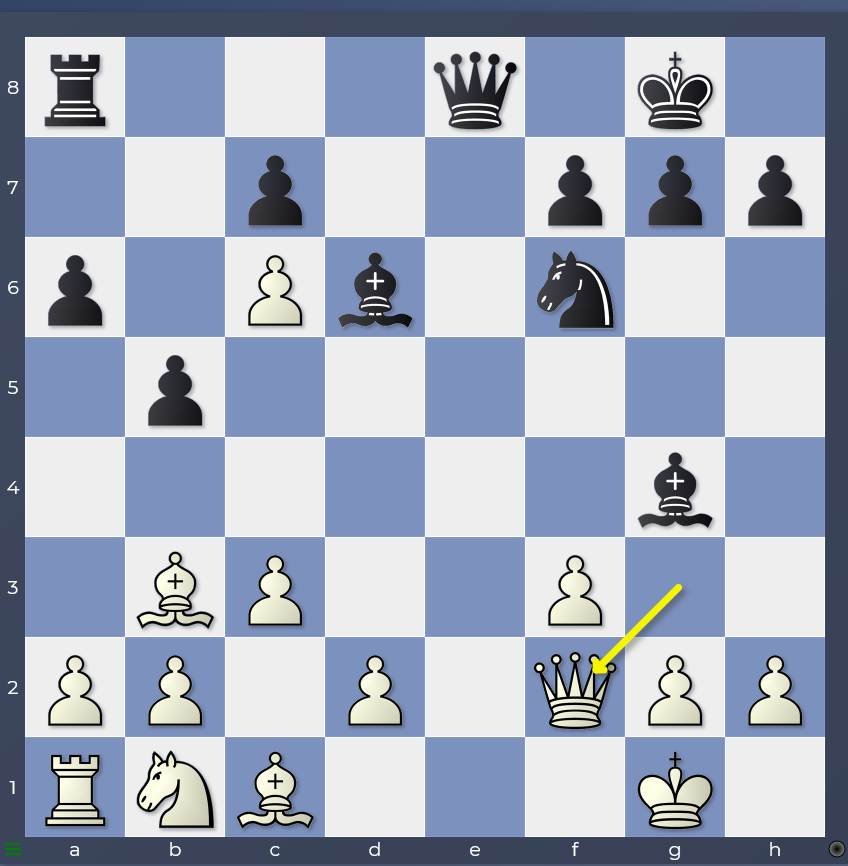
and now 3 moves: 15…Qxc6, 15…Bf5 and 15…a5 lead to 0.00! Black regains one of his two sacrificed pawns and his Marshall-style activity should be enough to hold the balance. For example, 15…a5 16.d4 a4 17.Bc2 Bh5 18.Bg5 Bg6 19.Bxg6 hxg6 20.Nd2 Qxc6 21.a3 Nd5 22.Re1 Re8 As always with such Marshall positions, my initial instinct is simply to think “Where’s my pawn, and what do I have for it?” but the engine is confident!
b) 13…Qd3!!
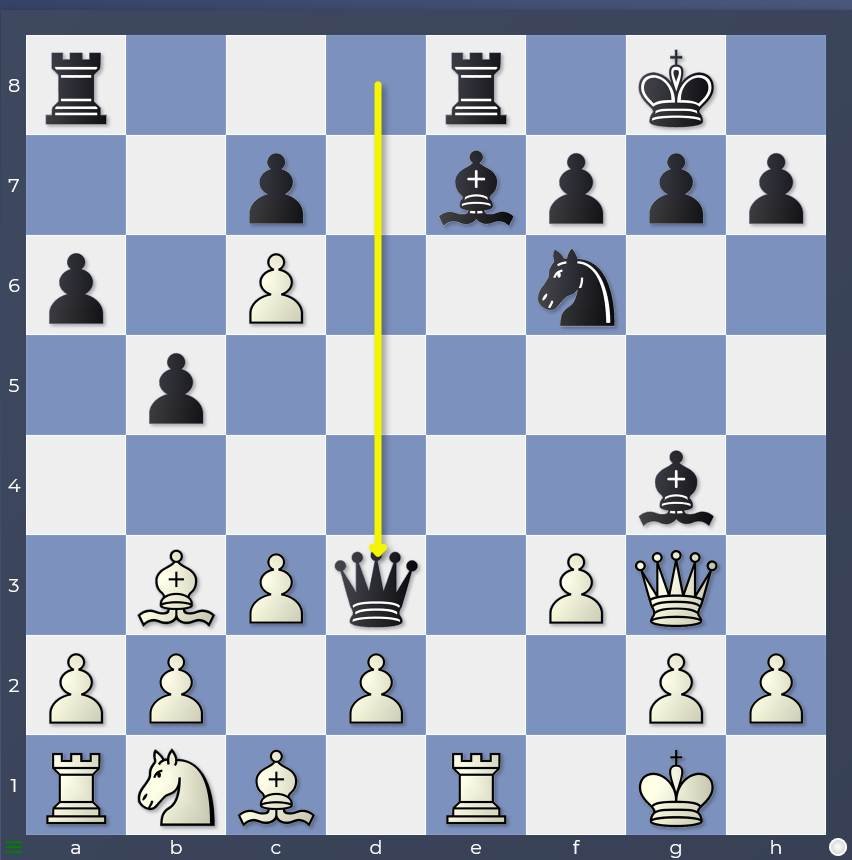
14.fxg4 Bc5+ 15.Re3 Rad8 16.Qf3 side-stepping …Ne4 and targeting the f7–pawn together with the bishop on b3. 16…Nxg4
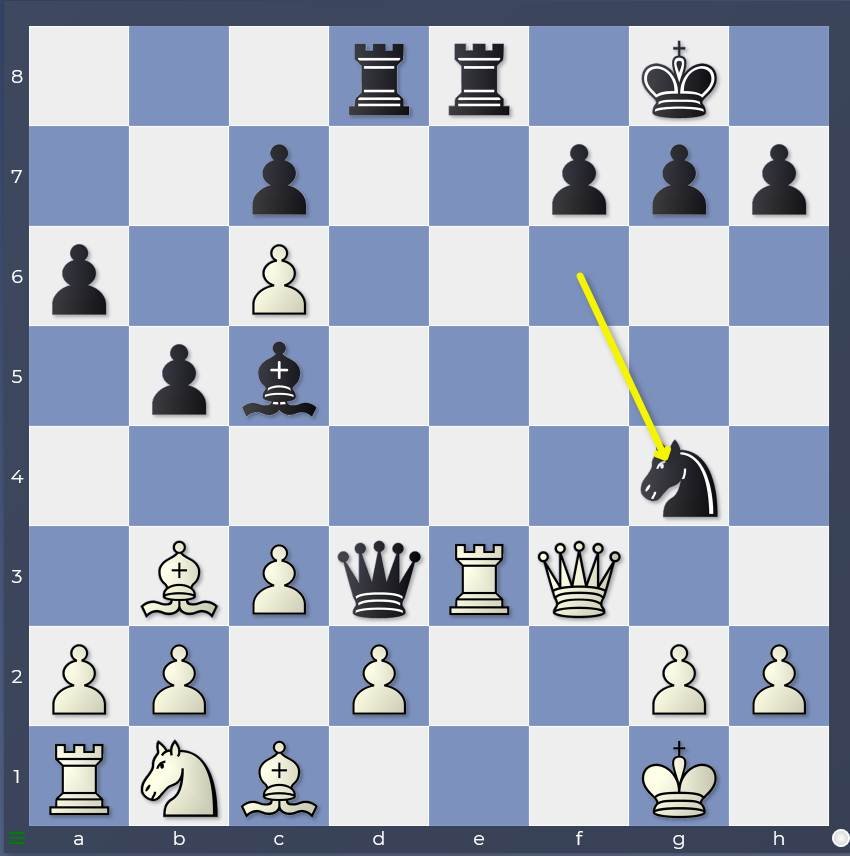
The engine move! (16…a5 17.Na3 Rxe3 18.dxe3 Bxa3 and now 19.g5 (19.bxa3 a4 (and 19…Qxc3 20.Rb1 Qd3 21.Qf5 are the engine route to victory) 20.e4) 19…a4 20.Qf1 axb3 21.Qxd3 Rxd3 22.gxf6 Bd6 23.axb3 gxf6 24.b4 Kg7 25.Kf2 Rd1 26.Ke2 Rg1 27.Kf2 Rd1 28.Ke2 Rg1 29.Kf2 Rd1 30.Ke2½–½ Lasker,E-Marshall,F Western CA-27 Masters Chicago 1926 (3))
a) 17.Qxg4 Rxe3 18.dxe3 Bxe3+ 19.Bxe3 Qxe3+ 20.Kf1 Qc1+ 21.Kf2 Qxb2+ 22.Qe2 Qxa1 23.Qf1 b4 24.Kg3 Rf8 25.Qd3 a5 is in balance according to the engines.;
b) 17.Bxf7+ Kh8 18.Bxe8
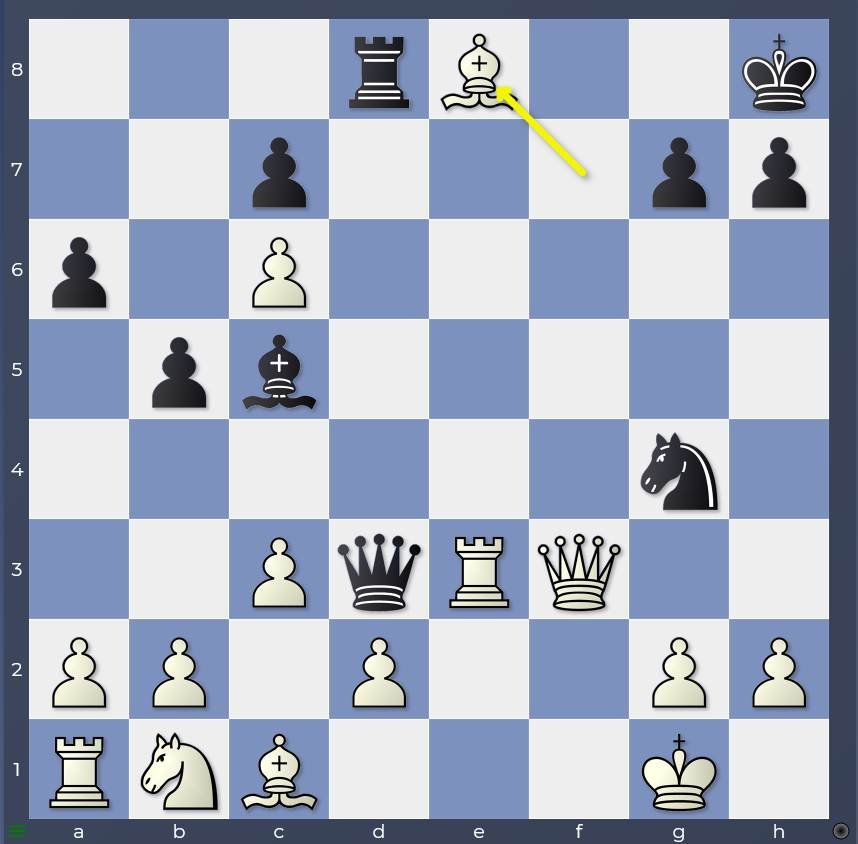
looks pretty strong for White! But… 18…Qc2
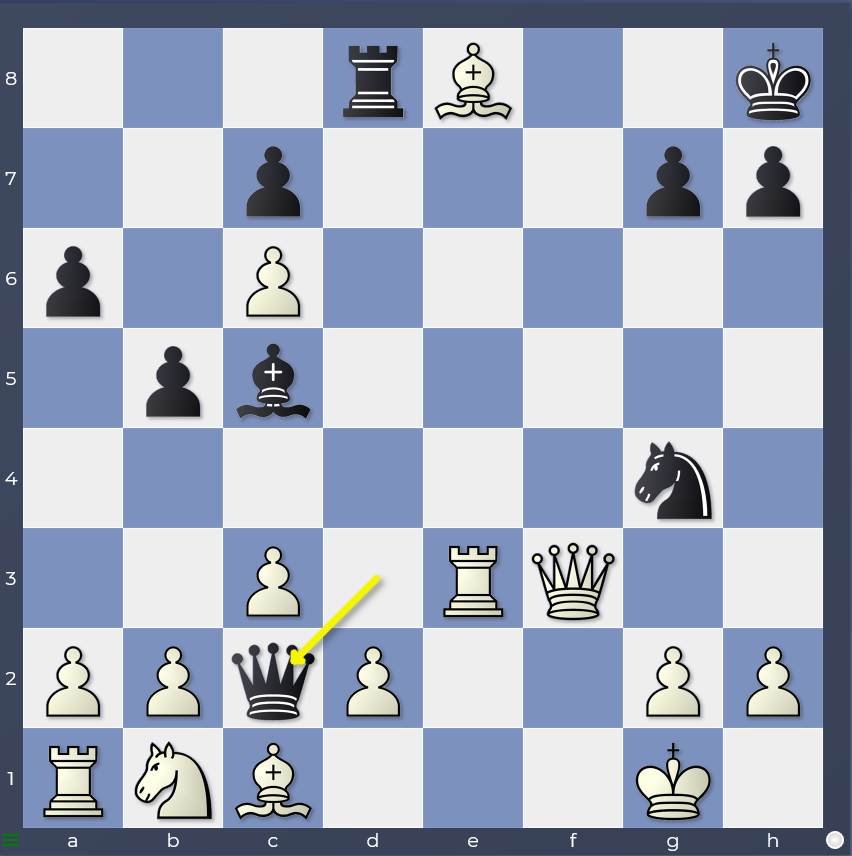
19.Na3 Bxe3+ 20.Kh1 Nf2+ 21.Kg1 Ng4+
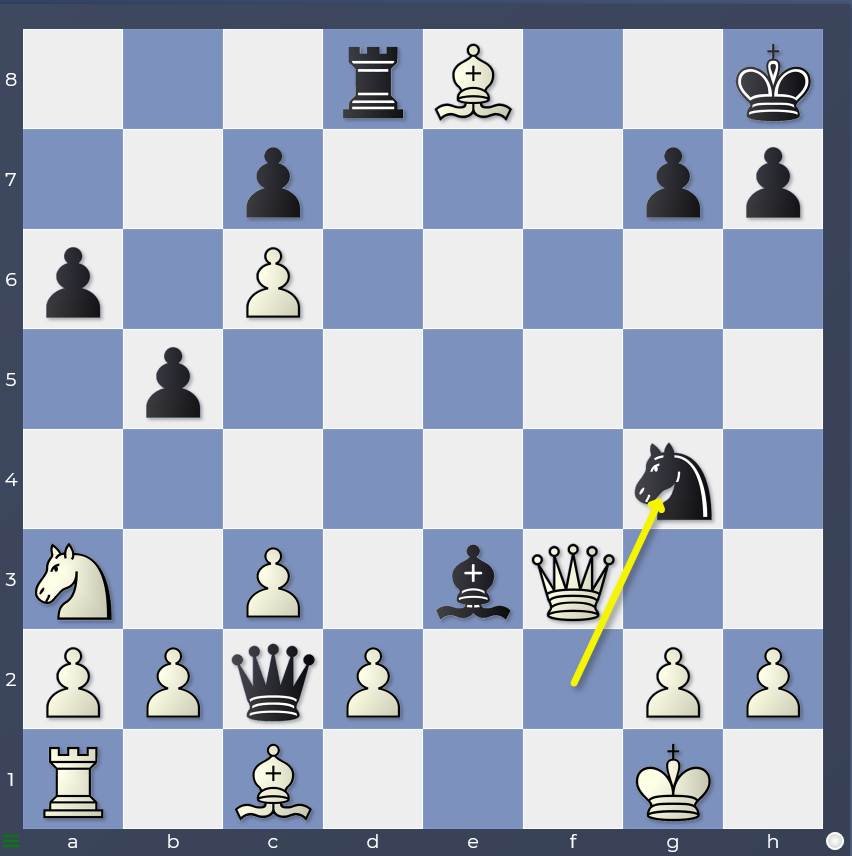
is an amazing draw by repetition!
c) 17.Na3 Re5
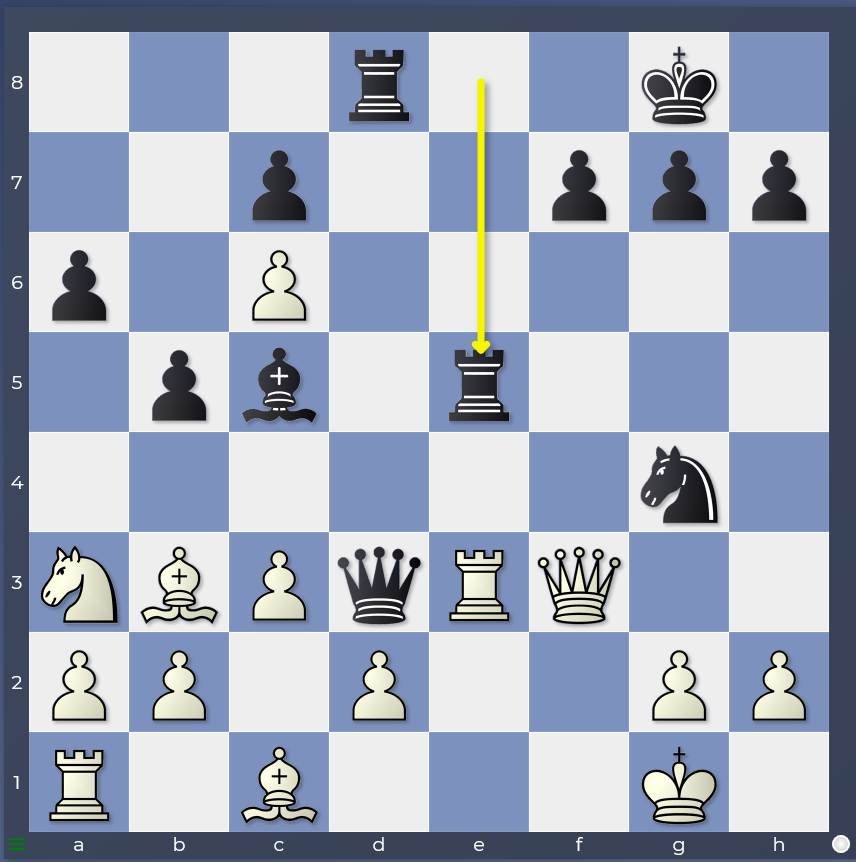
An amazing move, sidestepping the threat of Bxf7+ and threatening …Rf5! 18.Bc2 Nxe3 19.dxe3 (19.Bxd3 Ng4+) 19…Bxe3+ 20.Bxe3 Qxe3+ 21.Qxe3 Rxe3 22.Bb3 Rd2 23.Rf1 h5 24.Rxf7 Kh7 25.Nc2 Ree2 and the engines see enough play for Black with two rooks on the seventh!
13.f4 Re8 14.Re5
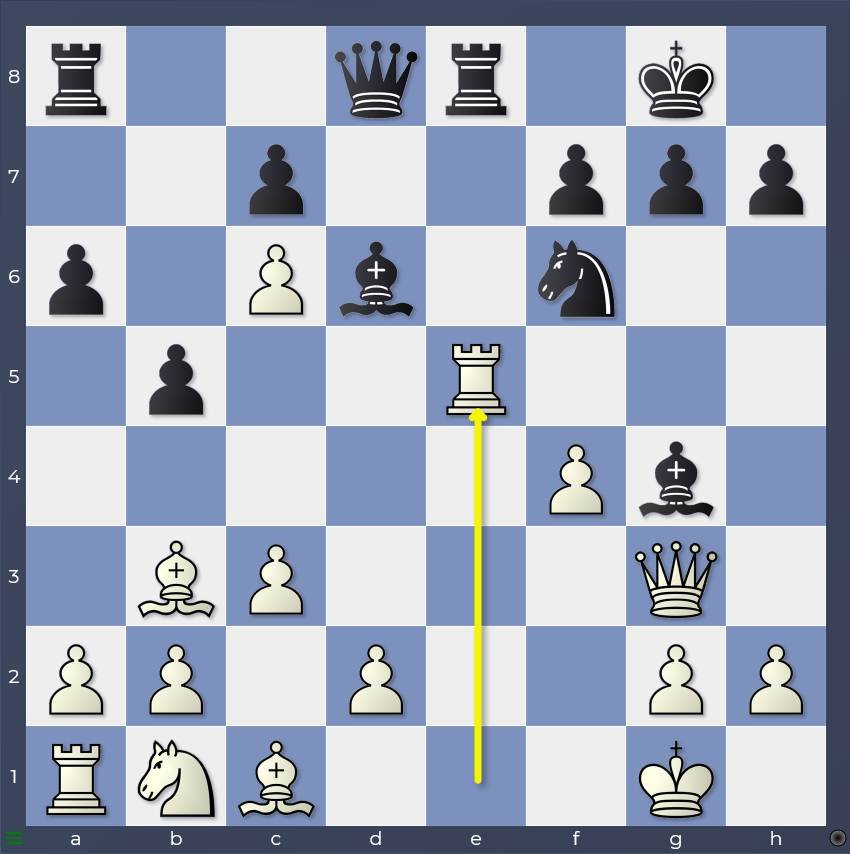
[EB] “A typically brilliant tactical idea from Stoltz but it is doubtful whether it is entirely correct.”
[TfS] “Black gains an advantage against any other move”
[EB] “White should be content with a) 14.d4 Nh5 15.Rxe8+ Qxe8 16.Qf2 Qxc6 17.h3 Be6 18.g4 Nf6 19.Bxe6 fxe6 20.Qg2 [EB] “which leads to an even position” [I think that’s what the translation means!];
b) 14.d3 is the main engine move though 14.d4 is very similar and equivalent in evaluation (0.00) 14…Nh5 15.Rxe8+ Qxe8 16.Qf2 (16.Qxg4 Qe1#) 16…Qe2 17.Qxe2 Bxe2 18.d4 Re8 19.Bd2 Bd3 20.g3 Nf6 21.Bd1 Ne4 22.Be1 g5
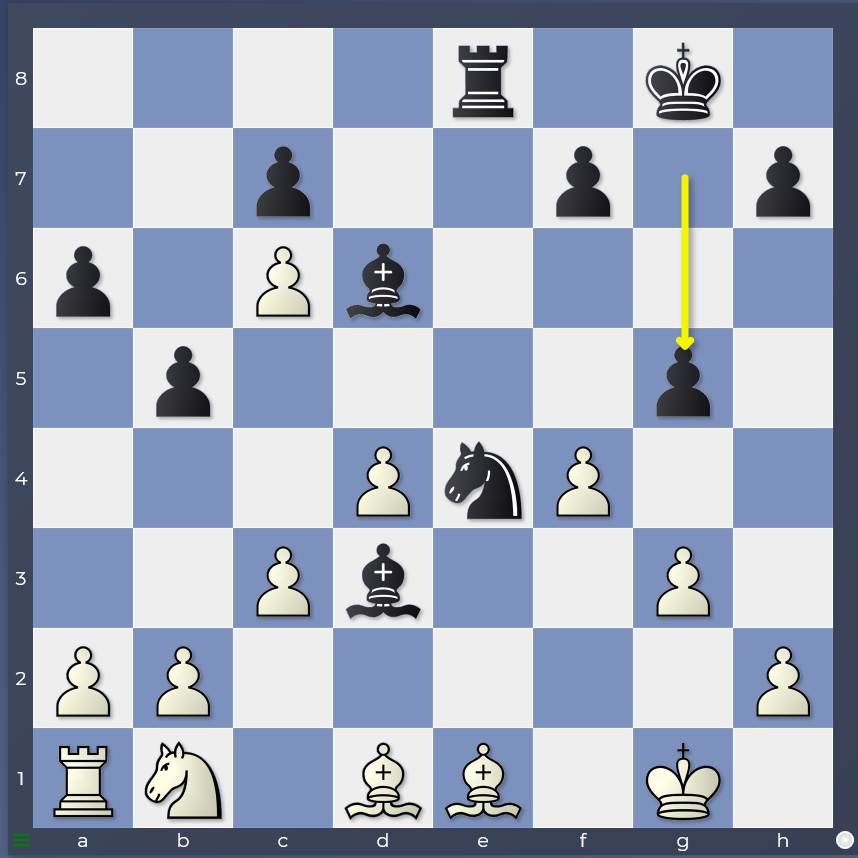
with a lot of activity for Black, albeit for 2(!) pawns!
14…h5
After this error, White is very solidly in control and Stoltz’ dream scenario of cementing the rook on e5 pans out perfectly!
a) 14…Bxe5 15.fxe5
a1) 15…Qe7 16.d4 Bh5
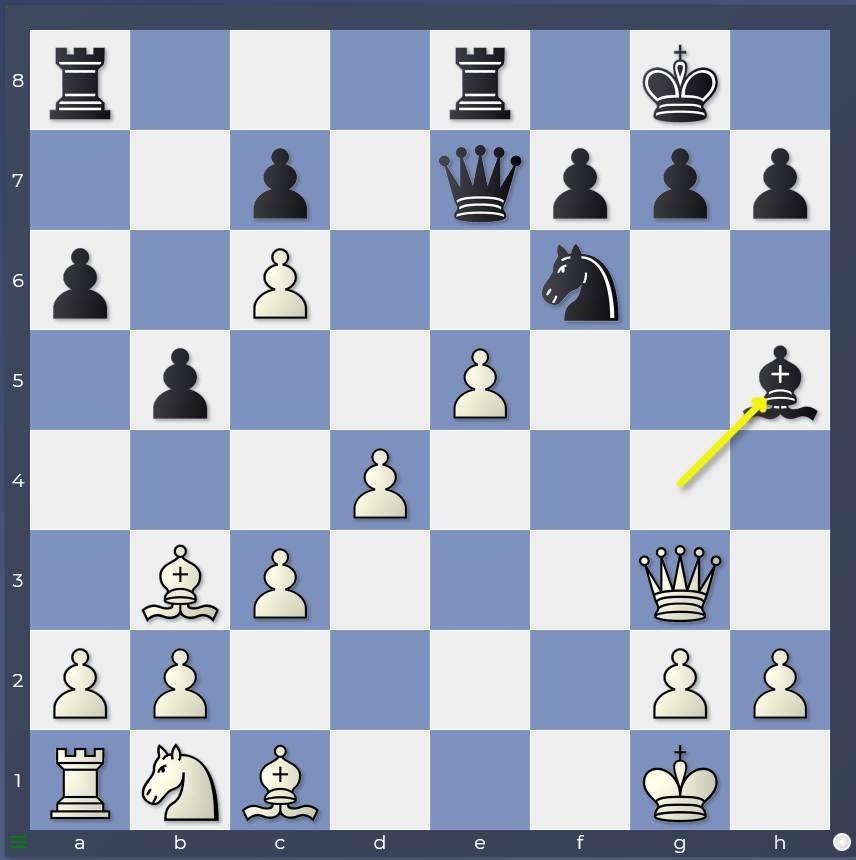
According to the tournament book, cited by AJ Gillam in his book of the 1930 Hamburg Olympiad, this was the refutation proposed by E. Voellmy (A Swiss chess master) 17.Nd2 (17.Bg5 Ne4 was Voellmy’s point) 17…Bg6 18.exf6 Qe1+ 19.Nf1 Qxg3 20.Nxg3 Re1+ 21.Kf2 Rae8 22.d5 [EB] “and the threat of Bf4 decides the game” is the variation given by Book and Stockfish agrees that the position after 18.exf6 is winning for White.
a2) 15…Nh5 16.Qxg4 ([EB] “White should play” 16.Qe3 “instead of accepting the sacrifice”) 16…Rxe5 17.Na3 Re1+ 18.Kf2 Nf6 19.Qf4 Qe7 20.Qf3 Rh1 21.Nc2 Ne4+ 22.Ke2 Nxc3+ 23.Kd3 Rd8+ 24.Nd4 Ne2 0–1 Van den Berg,C-Szabo,L Haifa/Tel Aviv 1958 (6);
I saw this game in Szabo’s excellent collection of Best Games!
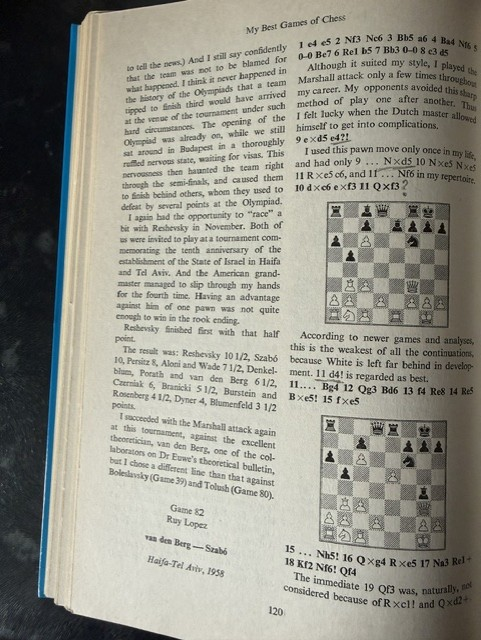
b) 14…Nh5
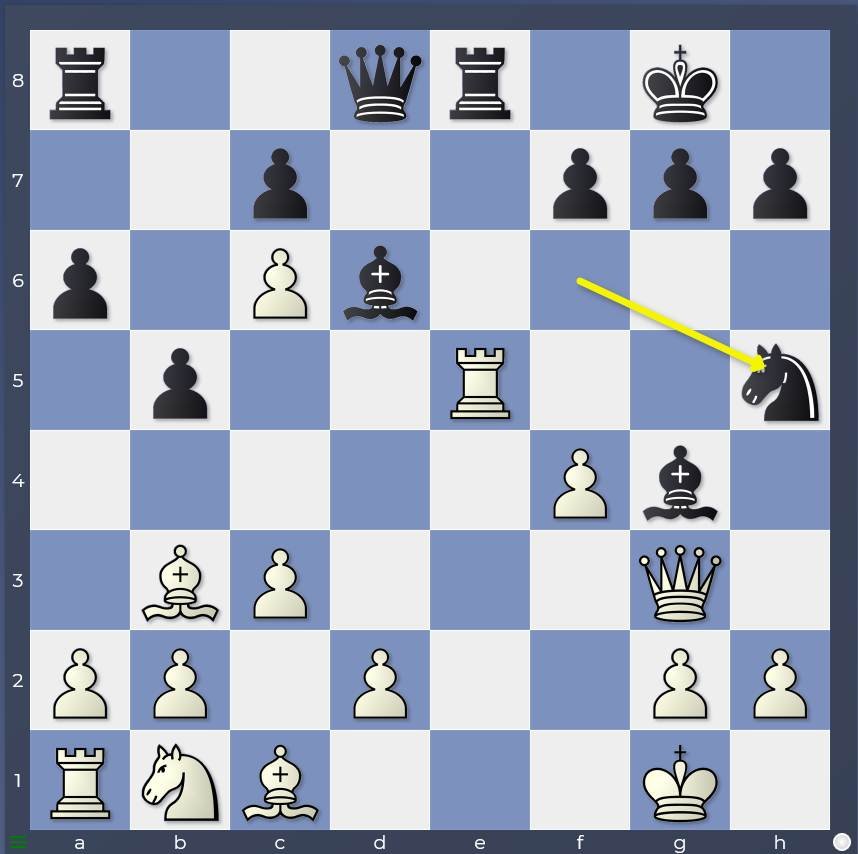
is the engine refutation of Stoltz’ idea and it has a very cool point! 15.Qxg4 Bxe5 16.Qxh5 Bxf4 17.Bxf7+ (17.Qxf7+ Kh8 18.Qxf4 Re1+ 19.Kf2 Rxc1 20.d4 Rh1 and it’s clear that White is in a lot of trouble with …Qe7 and …Rf8 coming!) 17…Kh8 18.Bxe8
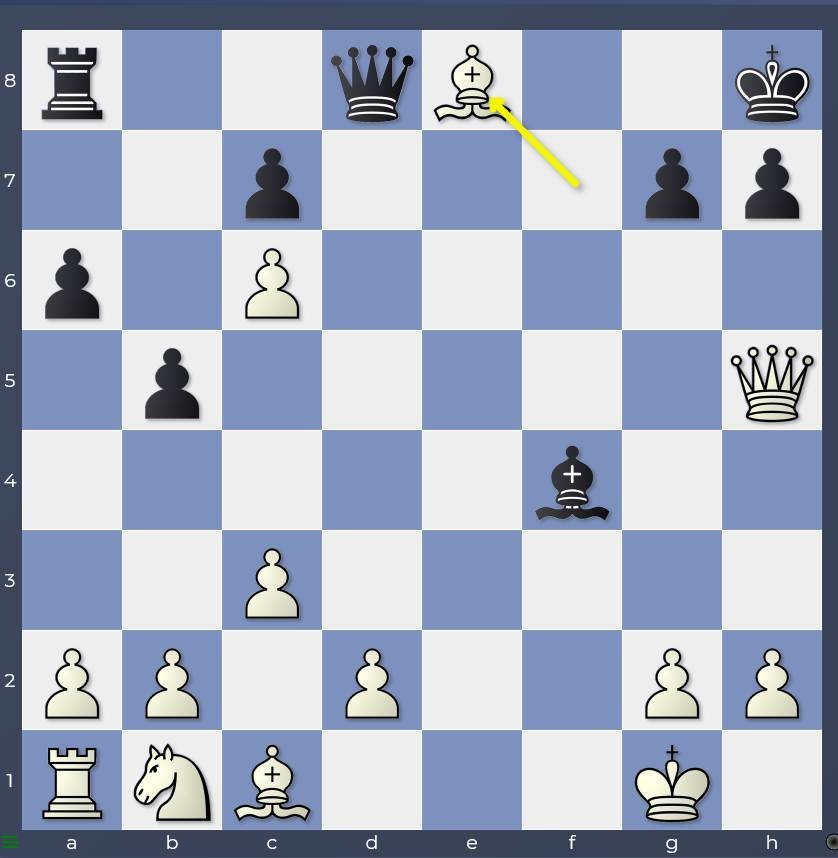
and now an amazing move that I hadn’t spotted! 18…Qe7 19.Qd1 Rxe8 and Black is completely winning! 20.g3
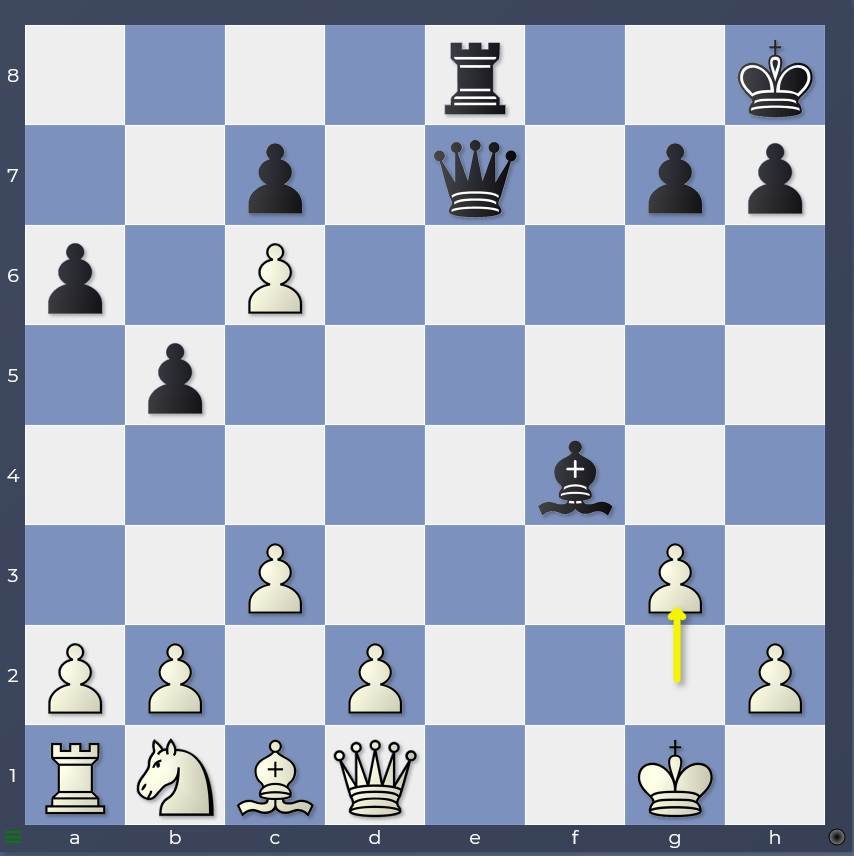
20…Bxg3 21.hxg3 Qe5 22.Kg2 Qd5+ 23.Kh3 Qf5+ 24.Kg2 Qd3
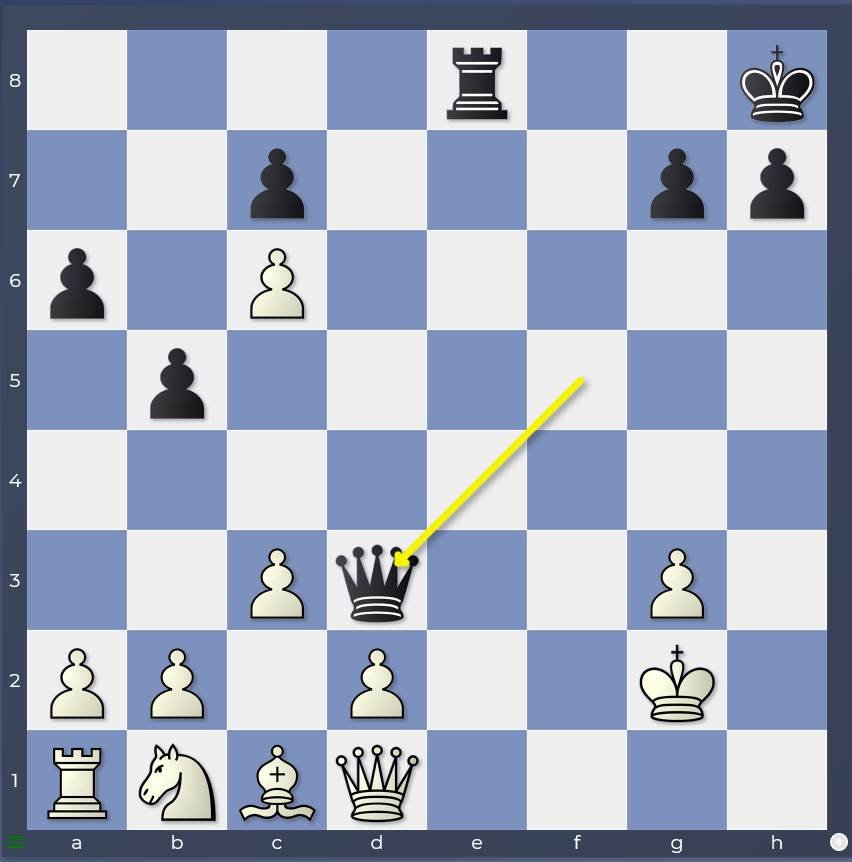
and the rook enters with decisive effect. White’s pieces are too undeveloped to deal with the black queen: 25.Na3 Re2+ 26.Qxe2 Qxe2+ 27.Kg1 Qf3 28.d4 Qxg3+ 29.Kf1 h5 30.Ke2 Qg2+ 31.Kd3 Qf1+ 32.Ke4 h4
15.d4 Bxe5
[TfS] “Perhaps 15…Ne4 is better”
16.fxe5 Nh7 17.h3 Be6 18.Bh6 g6
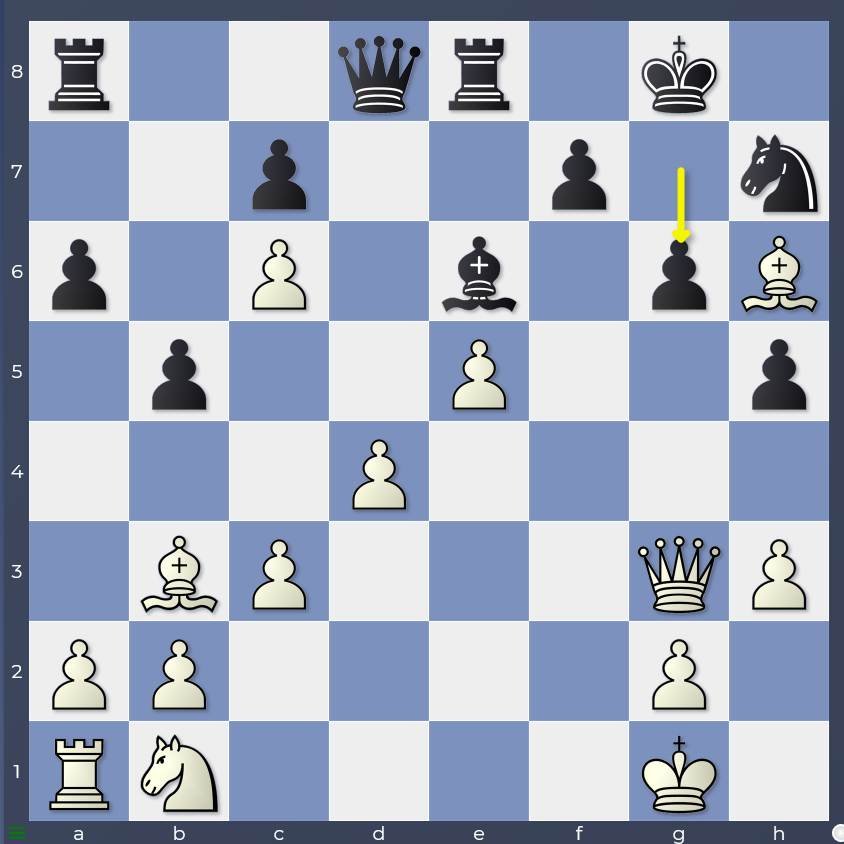
[EB] “With that gaping hole on f6, Black has no prospect of avoiding the coming attack”
19.Bc2 h4 20.Qf4 Bd5 21.Nd2 Re6 22.Nf3 Rxc6 23.Ng5 Nf8
[EB] “Exchanging would have been even more hopeless”
24.Rf1 Qe7 25.Qxh4 f6
[EB] “Forced due to the threat of Bxf8”
26.exf6 Rxf6 27.Rxf6 Qxf6 28.Bxf8 Re8
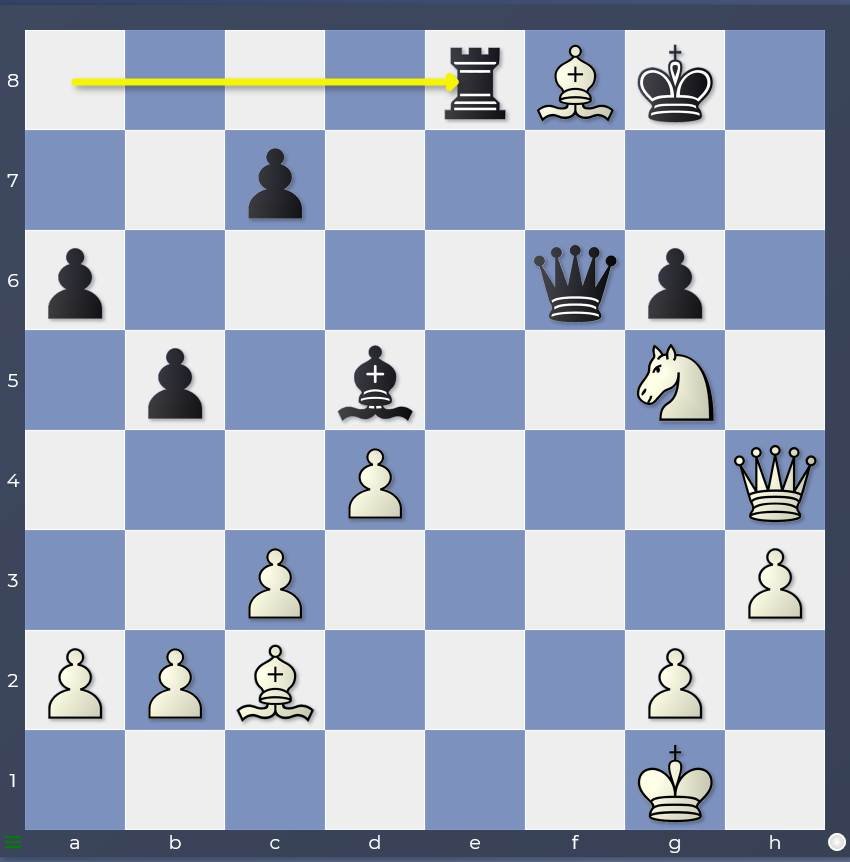
[EB] “The bishop cannot be captured”
[TfS] “Black cannot of course recapture”
29.Bc5 Qg7 30.Ne4 Bxe4
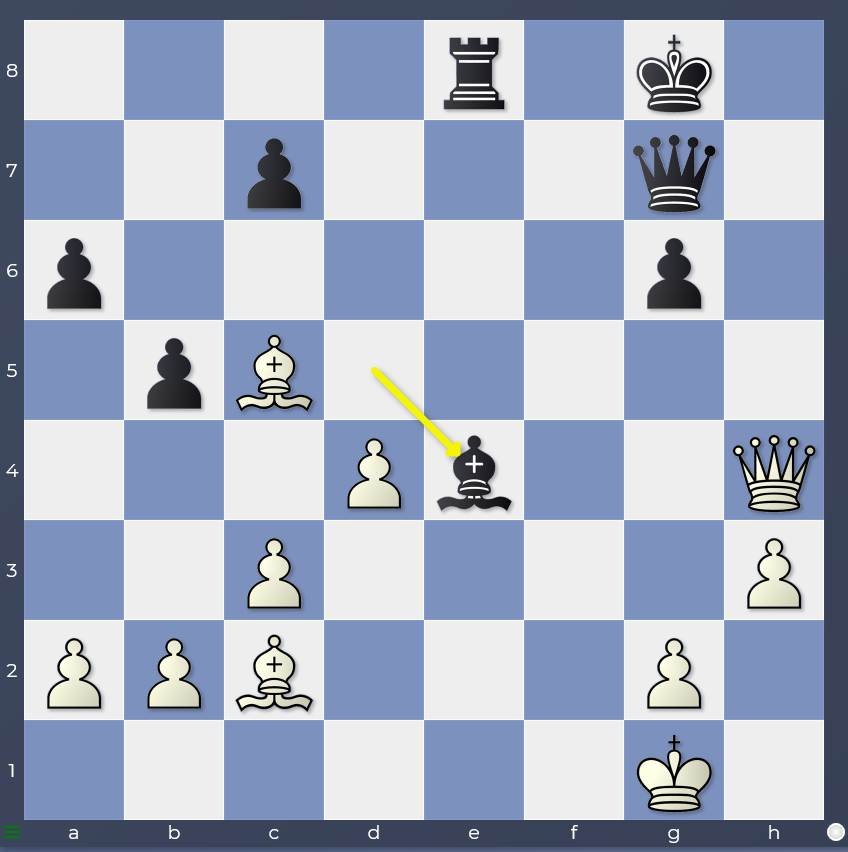
[EB] “Black just as much as White overlooks the immediately decisive 31.Bb3+”
31.Bxe4
[TfS] “The move was 31.Bb3+”
31…Qf7 32.d5 Re5 33.Bd4 Qe7 34.Qxe7 Rxe7 35.Bxg6 Re2 36.h4 1–0
[TfS] “One of Stoltz’ superbly played games