


In Tidskrift för Schack 1952/10-11, Stahlberg is quoted as referring to Stoltz as “an extinct volcano”! However, the volcano still had some danger to it from time to time as this game – which won the beauty prize at the 1952 Interzonal – demonstrates.
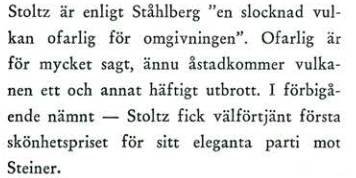
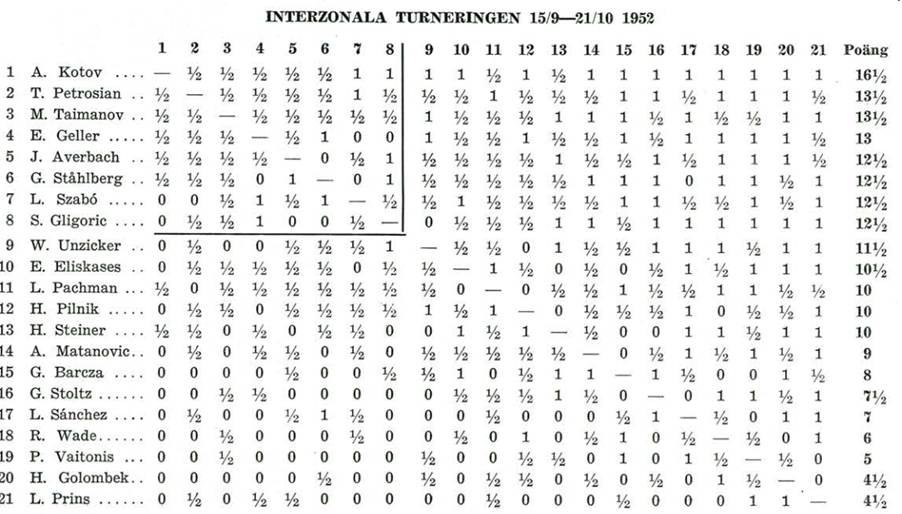
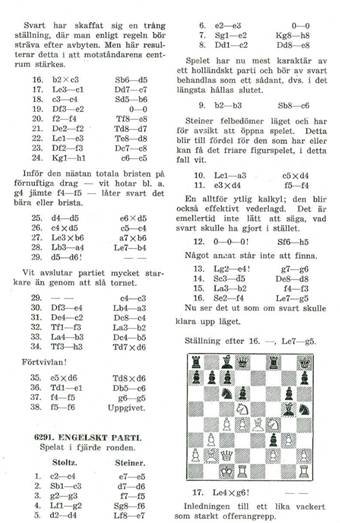
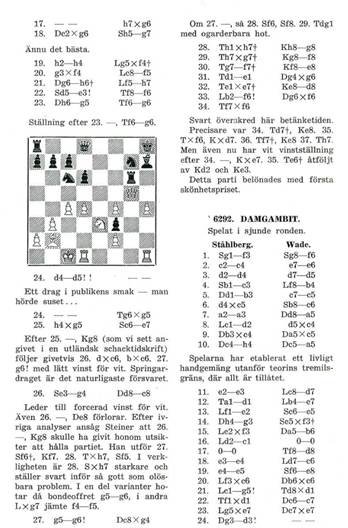
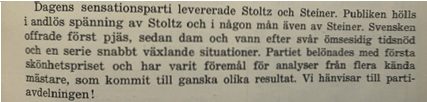
Translation: “Today’s sensational match was provided by Stoltz and Steiner. The crowd was kept in the breathless suspense created by Stoltz and, to some extent, by Steiner as well. The Swede first sacrificed a piece, then a queen, and won after a difficult period of mutual time trouble and a series of rapidly changing situations. The game was rewarded with first the beauty prize and has been the subject of analysis by several well-known masters, who have arrived at quite different conclusions. We refer to the game—department!”
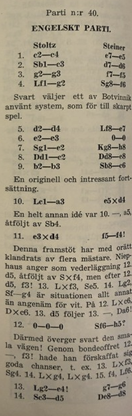
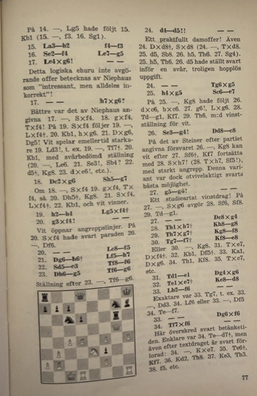
As always, comments marked [EB] are translations of annotations by E. Böök in his “Stormästaren Gösta Stoltz bästa partier”
Comments from Tidskrift för Schack 1952/10-11 are marked [TfS] I’m not sure who the annotator was
Comments by Gideon Stahlberg in his book of the tournament “Interzonala VarldsschackTurneringen Stockholm-Saltsjobaden 1952” are marked [GS]
Stoltz,Gosta – Steiner,Herman [A21]
Interzonal–02 Saltsjobaden (4), 19.09.1952
1.c4
1.c4 was a late experiment for Stoltz: 17 of his 20 games with this opening were played between 1947 and 1952, with excellent results it must be said. This game was his last with the English Opening and he made sure it was a good one!
1…e5
The only game in the databases in which Stoltz faced 1…e5!
2.Nc3 d6 3.g3 f5
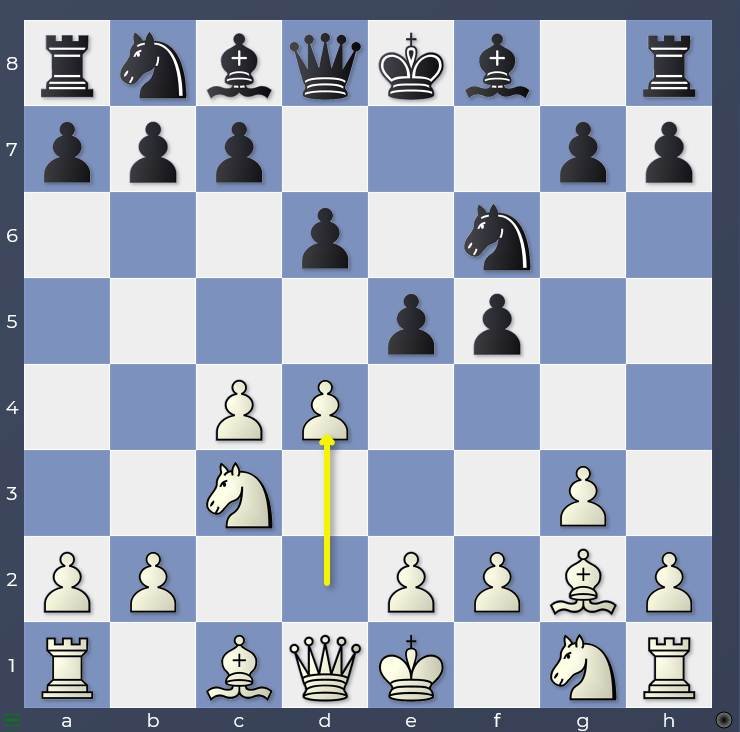
In modern times, this has become a very popular way of meeting the English Opening
(2600 games in the database) even at the elite level. In 1952, it was still virgin territory. Perhaps Steiner was influenced by a game of Botvinnik’s played earlier that year.
4.Bg2 Nf6
[EB] “Black chooses a system that resembles the Closed Sicilian with colours reversed. The game is also similar to the Botvinnik-Bronstein game that began with a Dutch with the slight difference that the black e-pawn went to e5 in two moves.”
[GS] “Black chooses one of Botvinnik’s systems that leads to a lively game”
That game went: 1.d4 e6 2.c4 f5 3.g3 Nf6 4.Bg2 Be7 5.Nc3 0–0 6.e3 d6 7.Nge2 c6 8.0–0 e5 9.d5 Qe8
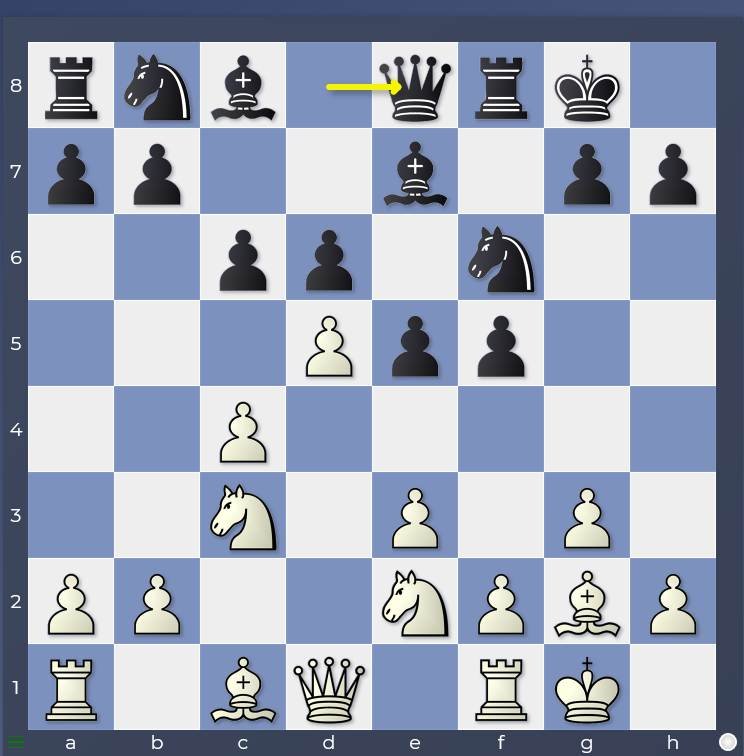
10.e4 Qh5 11.exf5 Bxf5 12.f3 Qg6 13.Be3 Nbd7 14.Qd2 cxd5 15.cxd5 Bd8 16.Rac1 Ba5 17.g4 Bd3 18.Rfd1 Bc4 19.Qc2 Qxc2 20.Rxc2 Nb6 21.Rcd2 Ba6 22.Bf2 Nc4 23.Rc2 Bb6 24.Bxb6 axb6 25.Re1 Ne3 26.Rd2 Nc4 27.Rc2 Ne3 28.Rd2 Nc4½–½ Botvinnik,M-Bronstein,D World-ch18 Botvinnik-Bronstein +5–5=14 Moscow 1951 (1)
5.d4
This had been played just once before and it’s mentioned in a similar position in Simon Williams’ and Richard Palliser’s “Iron English” (Chessable and Everyman) as an important and good alternative.
The afore-mentioned Botvinnik game had continued 5.d3 The most popular choice nowadays 5…g6 (Modern black players tend to play 5…Be7 rather than fianchetto the bishop, but 5…g6 is very sensible as well of course.) 6.Nh3 (6.e4 is recommended in the Simon Williams’ and Richard Palliser’s “Iron English” (Chessable and Everyman). The benefit of playing this against such an early …f5 is that White also gains the possibility of playing exf5 to open the long diagonal for the g2–bishop.) 6…Bg7 7.0–0 0–0 8.Bd2 c6 9.Kh1 Kh8 10.f4 e4 11.dxe4 fxe4 12.Nf2 d5 and now 13.Be3would have been much stronger than 13.cxd5 0–1 (42) Golombek,H-Botvinnik,M Budapest Maroczy Memorial 1952 (3), keeping the c6–square inaccessible for the black knight. White would enjoy a pleasant advantage.
5…Be7
5.d4 dissuades Black from fianchettoing the bishop like Botvinnik since a) 5…g6 6.dxe5 dxe5 7.Qxd8+ Kxd8 8.Bg5 Be7 9.Nf3 e4 10.0–0–0+ Ke8 11.Nd4 Kf7 12.f3 is quite unpleasant for Black due to White’s superior development and the opening of the e-file and the h1–a8 long diagonal.
b) 5…e4 6.f3 exf3 7.Nxf3 is also surprisingly unpleasant for Black: the f5–pawn creates a weakness on e6 and interferes with the active development of Black’s light-squared bishop. 7…Be7 8.0–0 0–0 9.Qd3 Nc6 10.a3 Bd7 11.b4 Kh8 12.Bf4 Qe8 13.d5 is a clear advantage for White
6.e3
The second-most popular move in the position after the more provocative 6.Nf3.
Interestingly enough, the engines’ clear preference is 6.Nh3 followed by 0–0, b3 and Bb2, keeping the central structure flexible for now. It’s relatively not much played (just 20 games) I imagine the key point is that by avoiding e3, an early …e4 can be met by f3 …exf3, exf3 opening the e-file and exposing the weakness of the e6–square caused by 3…f5.
6…0–0 7.Nge2
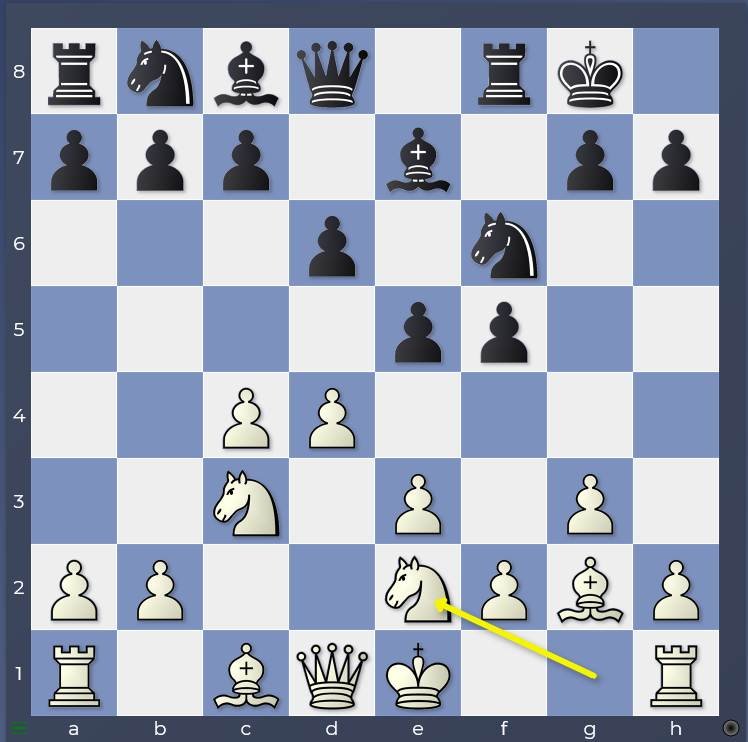
7…Kh8N
A new move – Steiner is trying to keep all his queenside development options open – including placing the knight on c6.
The favourite engine approach is 7…c6 8.0–0 followed by a quick 8…e4 from which White scores just 41%! (8…Kh8 9.b3 Na6 10.Qd2 Qe8 This was also Book’s favourite approach 11.Ba3 Rb8 12.Rad1 b5 13.dxe5 dxe5 14.Bxe7 Qxe7 15.Qd6 Qxd6 16.Rxd6 was pretty good for White in 1–0 Vaitonis,P-Holowach,W CAN-ch Vancouver 1951) 9.f3 is met by 9…d5 and Black maintains his centre solid.
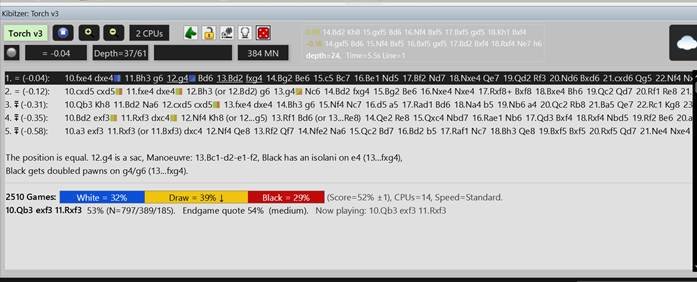
It’s interesting though that while the engine evaluation is slightly favourable to Black, the Monte Carlo simulation on 2500 games is 52% for White. Looking through the games, you can see a fair amount of risk for Black in holding his large centre against White’s sniping with pawns and pieces!
8.Qc2
A slightly strange move. There’s nothing really wrong with it, but it’s far from clear at this stage that the queen really belongs on c2. The queen does eye the f5–pawn and prevent …Nbd7 but Black is far more likely to place the knight on a6 (in combination with …c6) than d7 anyway. In any case, castling kingside or 8.b3 are more normal. Or was Stoltz already half-thinking about castling queenside?
8…Qe8
Steiner expects Stoltz to castle kingside and demonstrates his aggressive intent by bringing the queen into contact with the h5–square.
9.b3 Nc6
[GS] “An original and interesting continuation”
An unexpected delayed development of the knight to c6, I imagine triggered by a desire to exploit concretely White’s 8.Qc2. The knight eyes a jump into b4 and also adds pressure to White’s d4–pawn.
10.Ba3
[EB] “Stoltz follows Botvinnik’s scheme of development in the afore-mentioned game [? – I may have the wrong game then? As Botvinnik’s bishop went to e3!] Black could now have answered with 10…a5 but the American was eager to open the centre to bring about a direct threat to the white king”
The calm 10.a3 was the engine favourite, but Stoltz prefers to defend with development! This was I imagine the opportunity Steiner was waiting for to bring the position to the boil!
10…exd4
10…a5 [EB] and [GS] would also tempt me! The engines award White a slight advantage after 11.Nd5 Nxd5 12.cxd5 Nb4 13.Bxb4 axb4 14.0–0 and now rather than defend the c7–pawn with 14…Bd8 (after which White could try and pick up the b4–pawn with 15.Qc4) the engines go all in with (14.Qxc7 f4 is too risky for White) 14…e4 15.Qxc7 g5 16.Qc4 Qg6 with …f4 in the air! The engines prefer White but a white player would be perfectly entitled to feel a little nervous!
11.exd4 f4
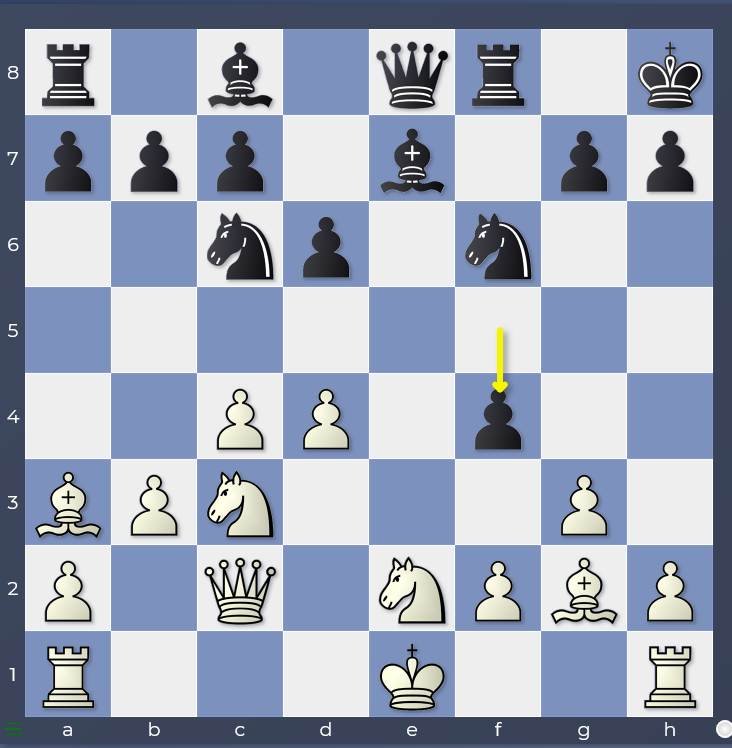
[EB] “An apparently strong pawn sacrifice which opens up the diagonal of the queen’s bishop and the f-file for the rook”
[GS] “This move is unjustifiably criticized by several commentators. Niephaus [A German master] claims 12.d5 followed by 13.Nxf4 as the rebuttal but after 12…f3 13.Bxf3 Ne5 14.Bg2 Nfg4 the situation is anything but favourable for White. 12.Bxc6 Qxc6 13.d5 is met by 13…Qa6”
A sudden and opportunistic attack! Exploiting the fact that 12.Nxd4 allows 12…Nxd4, Black launches his f-pawn against the white kingside and tests White’s appetite for putting himself under attack by castling kingside!
12.0–0–0
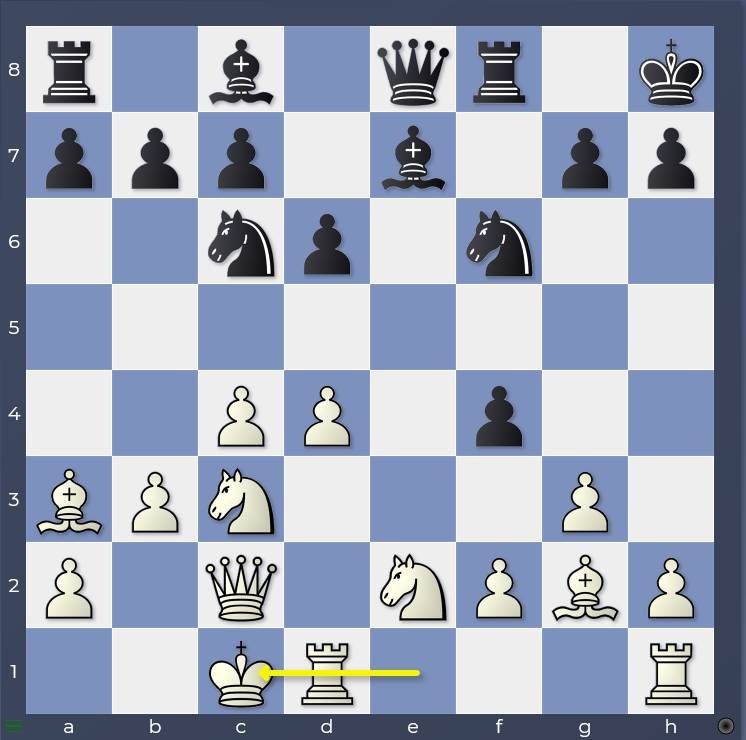
Given ! by [EB] Stoltz is having none of it! The engine doesn’t really like this move, but I guess it must have had a shock effect on his opponent!
a) 12.Nxf4 is the engine top move with still a tiny edge for White according to the engines. 12…d5 is the most challenging line (12…Nxd4 13.Qd1 followed by castles) 13.Bxe7 Qxe7+ 14.Qe2 Qb4 15.Qb2 Re8+ 16.Kf1 dxc4 17.Ncd5 c3 18.Qxc3 Qxc3 19.Nxc3 Nxd4 looks very pleasant for Black to me!;
b) 12.0–0 Nh5 is also a tiny bit better for White according to the engines but I certainly would not be keen on this in a practical game. Having played …f4, all of Black’s pieces have free development and the white king is potentially in the firing line.;
c) [EB] “If White plays 12.d5 “Black continues with 12…f3 13.Bxf3 Ne5 14.Bg2 Nfg4;
d) [EB] “Nor is 12.Bxc6 Qxc6 13.d5 Qa6 14.Bb2 f3 any good for White”
12…Nh5
Supporting the f4–pawn and threatening …f3 forking the bishop and knight.
[EB] “Black cannot of course capture on g3 as the attack on the h-file would decide the outcome in a few moves. Better however was the pawn sacrifice 12…f3 13.Bxf3 Ng4 14.Bxg4 Bxg4 15.f4 Bf6 and Black has some piece play, at least for the time being” [GS] also recommends this pawn sacrifice.
12…f3 is definitely a typical human thought in this position – at least, it occurred to me at once as well! However, instead of 14.Bxg4 in the above line, White has the fraught-looking 14.Nf4
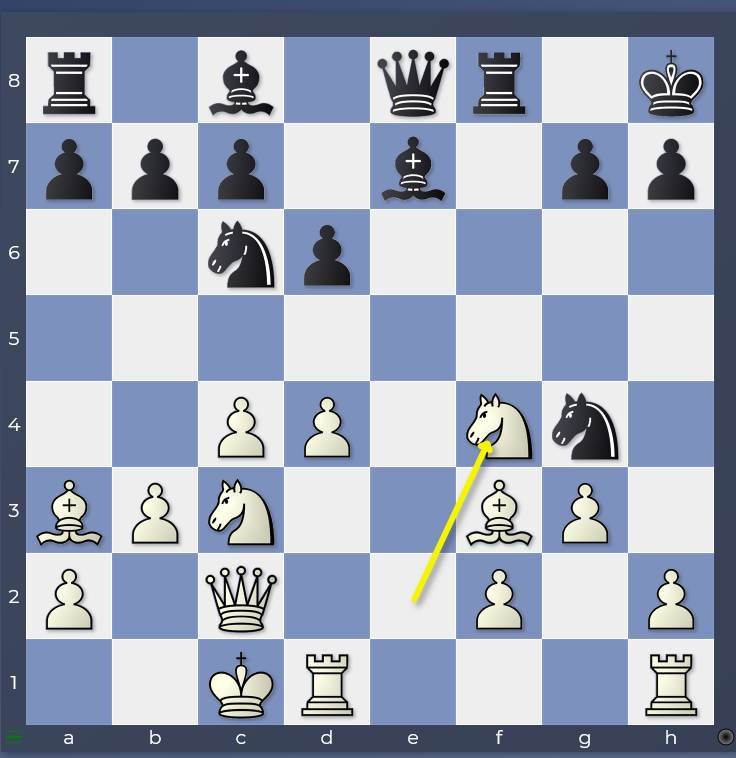
with a big advantage. The key point is that after 14…g5 15.h3 and White will not lose a piece 15…Nh6 16.Bh5
13.Be4
Given ! by [EB]This is definitely the move I would want to play – the bishop steps past the threat of …f3 and counterattacks against the h7–pawn. However, the engines are not impressed and recommend two(!) other moves as 0.00
a) 13.f3 looks really odd, entombing the bishop on g2. However, it has the merit of halting Black’s initiative and White has both Nd5 (hitting c7 and f4) and g4 (chasing away the knight, undermining Black’s defence of the f4–pawn and taking away the f5–square from the black light-squared) as follow-ups. Black will need to play with energy to keep himself standing. The engine line is pretty complex: 13…a5 14.Nd5 Qf7 15.g4 a4 16.b4 Nf6 17.Nxc7 Rb8 18.Nc3 Qxc4 19.Rhe1 Nxb4 20.Bxb4 Qxc7 21.Bf1 Ng8 22.Nb5 Qd8 23.Qxa4 ending in 0.00! Very hard to grasp!
b) 13.Bf3 is another idea. After 13…fxg3 14.Bxh5 Qxh5 15.hxg3 White opens the h-file but Black has better resources to cover the b1–h7 diagonal after gaining White’s light-squared bishop. 15…Qf5 16.Qxf5 Bxf5 17.f4 a5 18.Nd5 Bd8 19.Nec3 is a complicated queenless middlegame that the engine assesses as 0.00 though I would intuitively prefer White a little as the strong knight on d5 is very hard to shift! 19…Bg4 20.Rd3 Bd7 21.Nb5 Rc8 22.Re3 Rf7 23.Rhe1 Kg8 24.Kd2 h5 25.Kc3 g6 26.Re4 Kg7 27.R4e2 Kh7 28.Rh2 Kg8 29.Rhe2 Kh7
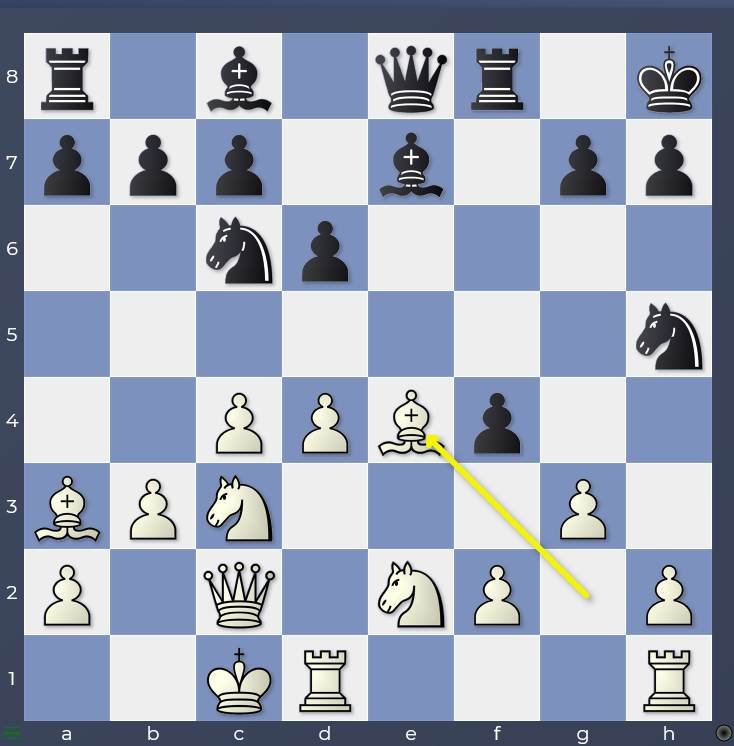
13…g6
A really poor move that throws away all the momentum that Black had in the position. Strangely enough neither [EB] nor [GS] make any comment! I really can’t imagine what Steiner was thinking with this timid defensive move covering the h7–pawn as he had more than one decent way to play.
13…f3 is the most active, forcing back the white pieces to awkward positions at the cost of a pawn 14.Ng1 (14.Nf4 looked more tempting to me but I cannot make it work – and more importantly, neither can the engine! 14…Nxf4 15.gxf4 Rxf4 16.Rhe1 (16.Nd5 Rxe4 17.Qxe4 Bg5+ is the key tactical point) 16…Rh4 is a neat way for Black of protecting the h7–pawn and maintaining pressure on the d4–pawn) 14…Nf6 15.Bxf3 a5
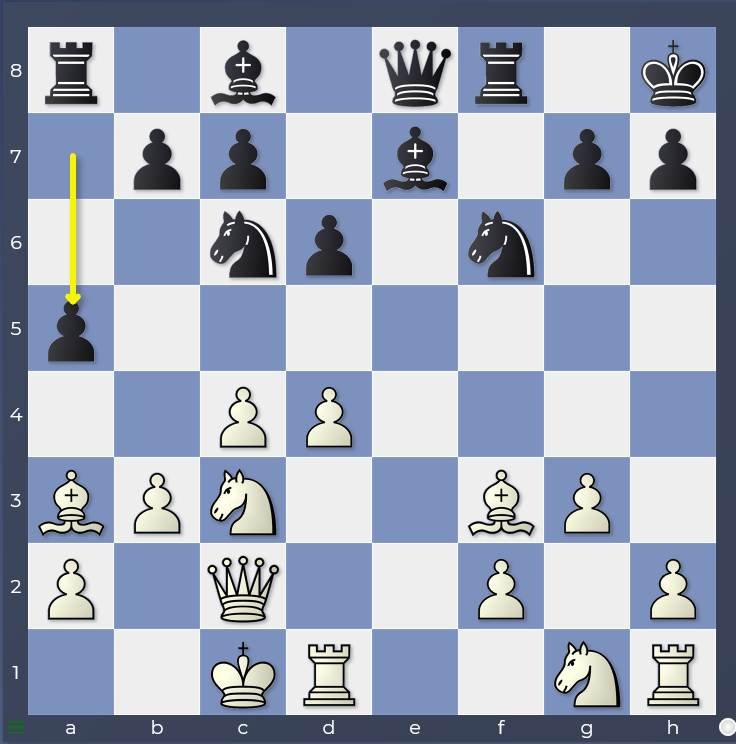
with …Nb4 to follow offers Black excellent compensation for the pawn. Sacrificing the f-pawn has freed f5 for Black’s light-squared bishop while the f-file can be exploited via moves like …Ng4.
14.Nd5
And in one move, everything changes: c7 and f4 are forked, and …f3 can be met by Nec3. Moreover, 13…g6 has weakened the a1–h8 diagonal and after 14.Nd5 Black’s dark-squared bishop cannot move to f6 without being exchanged.
14…Qd8
[GS] 14…Bg5 15.Kb1 f3 16.Ng1
15.Bb2
[EB] “Capturing on f4 was also possible but the text is at least as effective” He gives the text an !
a) 15.Bxg6 hxg6 16.Qxg6 Ng7 17.Qh6+ Kg8 18.gxf4 followed by Rhg1 is the engine top move at +3.6 but there are many good moves!;
b) 15.Nexf4 for example is simple and good.
15…f3 16.Nef4
[EB] “Apparently Stoltz was already thinking about a piece sacrifice at this stage as he did not play to win a pawn with 16.Ng1”
16…Bg5 17.Bxg6
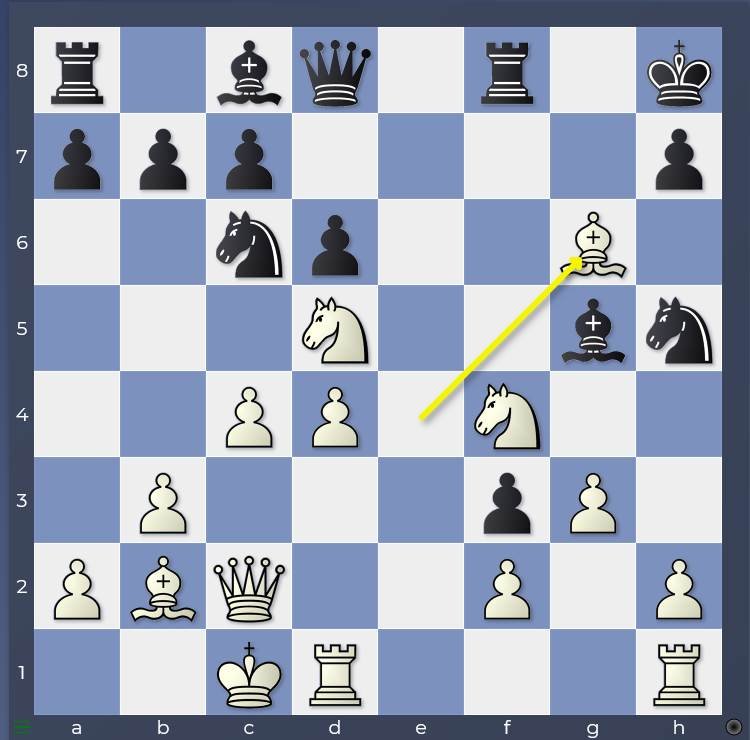
[EB] “A risky choice which should have been replaced with the calm and natural 17.Kb1”
[GS] “Logical but not decisive. The move was described by Niephaus as ‘ Interesting but completely incorrect'”
Indeed, a) 17.Kb1 was a strong move and the engines prefer throwing in b) 17.h4 Bh6 18.Rde1 Qd7 19.Kb1 first and Black’s position is a total mess
17…hxg6
[EB] “Now Black could play” 17…Rxf4 18.gxf4 Nxf4 19.Nxf4 19…Bxf4+ 20.Kb1 hxg6 21.Qxg6 Qg5 22.Qe8+ Qg8
Book’s line is clever, but the engines point out a very subtle flaw! White throws in the zwischenzug 19.h4 and after 19…Bh6 20.Nxf4 Bxf4+ 21.Kb1 hxg6 22.Qxg6 Black no longer has the resource …Qg5! White has a big advantage in this line.
[GS] “Better was Niephaus’ 17…Nxf4 18.gxf4 Rxf4. Whiet however plays a strong move 19.Bd3 e.g. Rf7 20.Kb1 with a situation that is difficult to assess” The engines are at +2.5 and to be honest, so was I 😉
18.Qxg6 Ng7 19.h4 Bxf4+ 20.gxf4
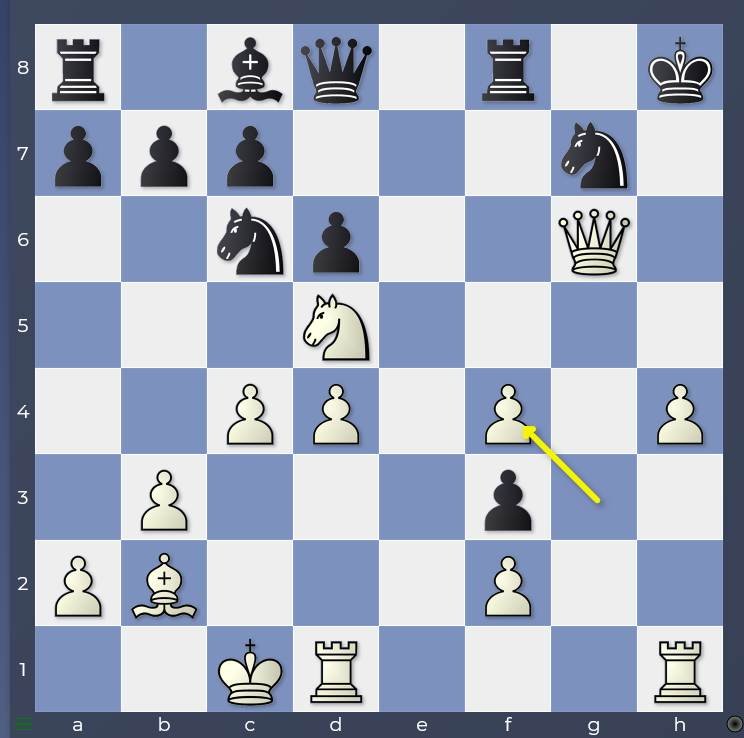
Opening the g-file is extremely dangerous for Black, However, Black is not completely lost yet!
20.Nxf4 Bf5 21.Qh6+ Kg8 22.g4 was also very dangerous, although here too Black should survive… though maybe not in a practical game between human players!
20…Bf5 21.Qh6+ Bh7 22.Ne3
Leaving the path open for d4–d5. Note how the doubled pawn on f4 prevents a knight from establishing itself on e5.
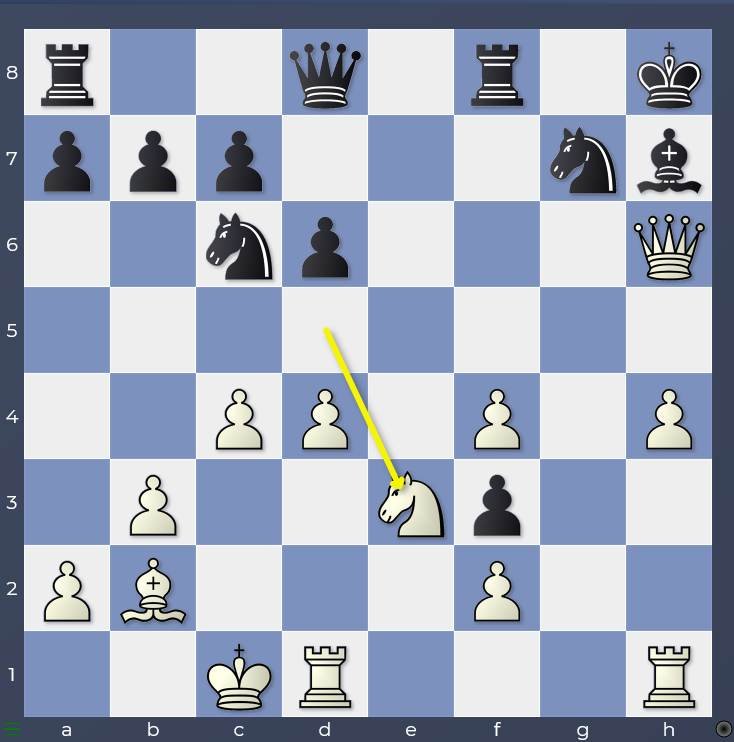
22…Rf6
The decisive mistake. Black could still resist with 22…d5 Blocking the a1–h8 diagonal for another couple of moves 23.Rhg1 Rf7 24.Nxd5 Qd6
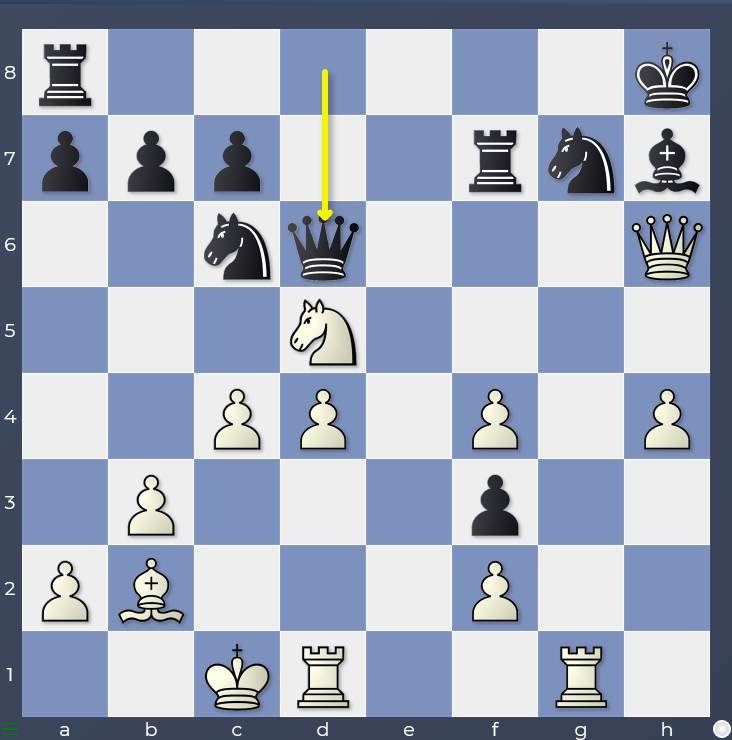
when it’s hard for White to avoid the exchange of queens.
a) 25.Qg5 Rg8 26.Ne3 Nb4 threatening …Nxa2+ and Black is back in it!;
b) 25.Nf6 Nf5 (25…Qxf6 26.Qxf6 Rxf6 27.d5 Rg6 28.Rxg6 Bxg6 29.dxc6 bxc6 30.Rg1 Kh7 31.Bxg7 Kxg7 32.h5 wins) 26.d5 Ncd4 (26…Nxh6 27.Ne8+) 27.Rxd4 Nxh6 28.Ne8 Qg6 holds for Black!;
c) 25.Qxd6 cxd6 26.Nf6 Nb4 27.d5 Black is under a lot of pressure, but has his resources. For example, best engine play is 27…Re7 28.Rd2 To avoid mate by …Nxa2+ and …Re2+! 28…Nd3+ 29.Rxd3 Bxd3 30.Nh5 Rg8 31.c5 Bf5 32.c6
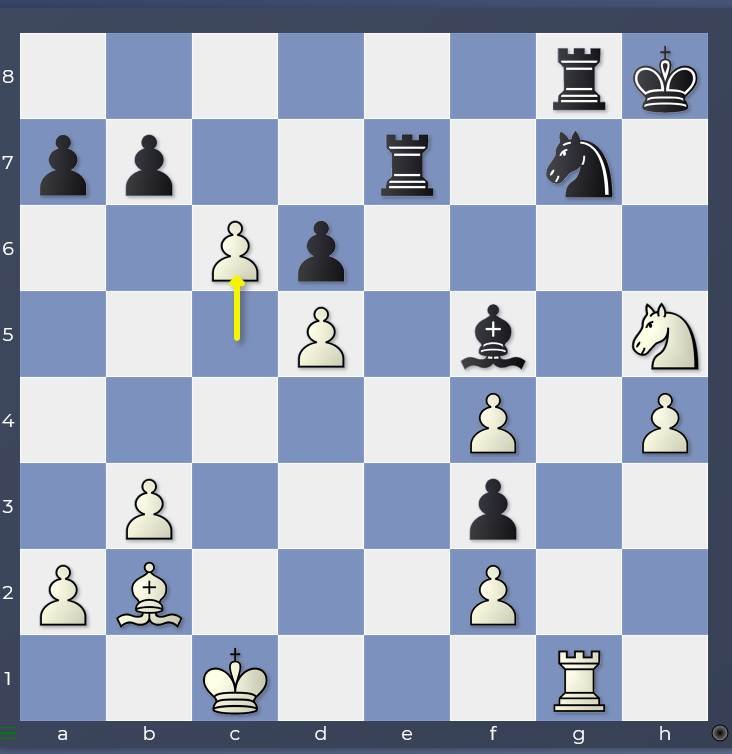
and the madness goes on!
23.Qg5 Rg6
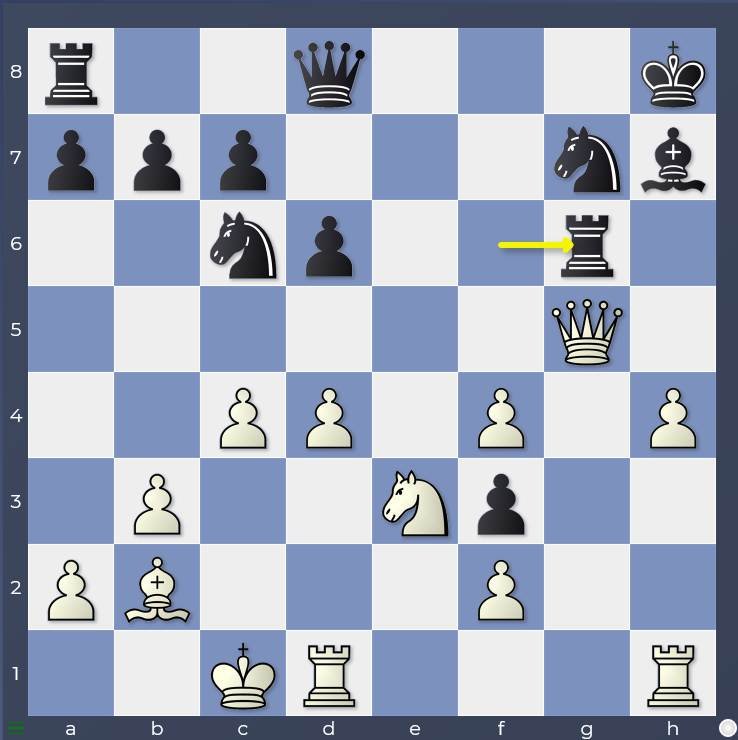
23…d5 was better though less good than on the previous move.
24.d5
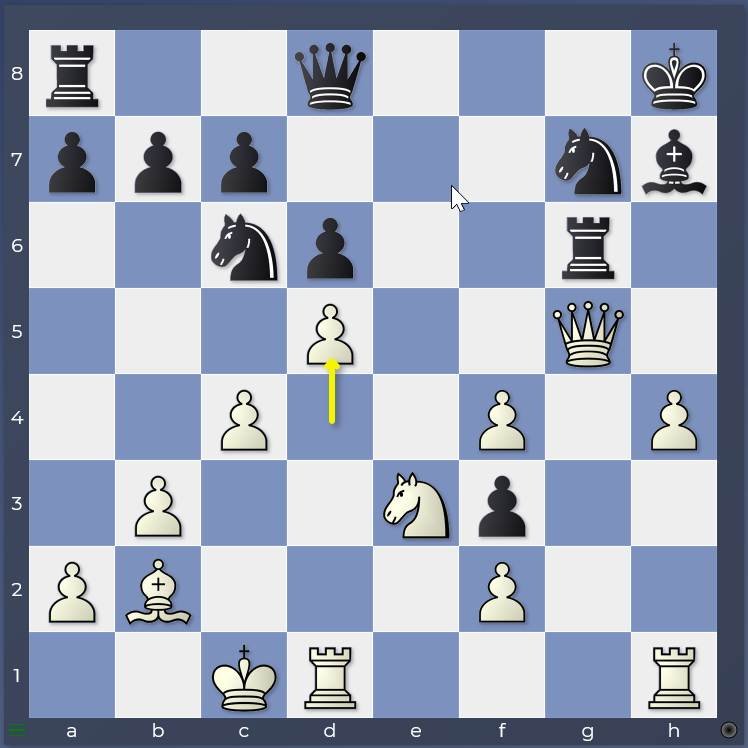
24.Qxd8+ Nxd8 25.h5 would have been a simple win for White with the threats of h6 and d5. The engine best line is 25…Rg2 26.d5 Kg8 27.Rhg1 Nf5 28.Nxg2 fxg2 29.Rxg2+ Kf8 and now the stunning 30.Rg6 when 30…Bxg6 31.hxg6 Ne7 32.f5 Nxf5 33.Rh1 Ne7 34.Rh8+ Ng8 35.f4 wins for White with the push of the f-pawn.
[EB] “Instead Stoltz plays a surprising push of the queen’s pawn which brought him the tournament’s first best game prize. Despite several attempts to refute it, the combination has proved to be correct. The only problem is that it was completely unnecessary”
[GS] “A magnificent queen sacrifice” Stahlberg also points out that the queen exchange would also have won comfortably.
24…Rxg5 25.hxg5 Ne7
[EB] “After the knight move, White has only the exchange for the queen but the pair of pawns on f4 and g5 are crucial”
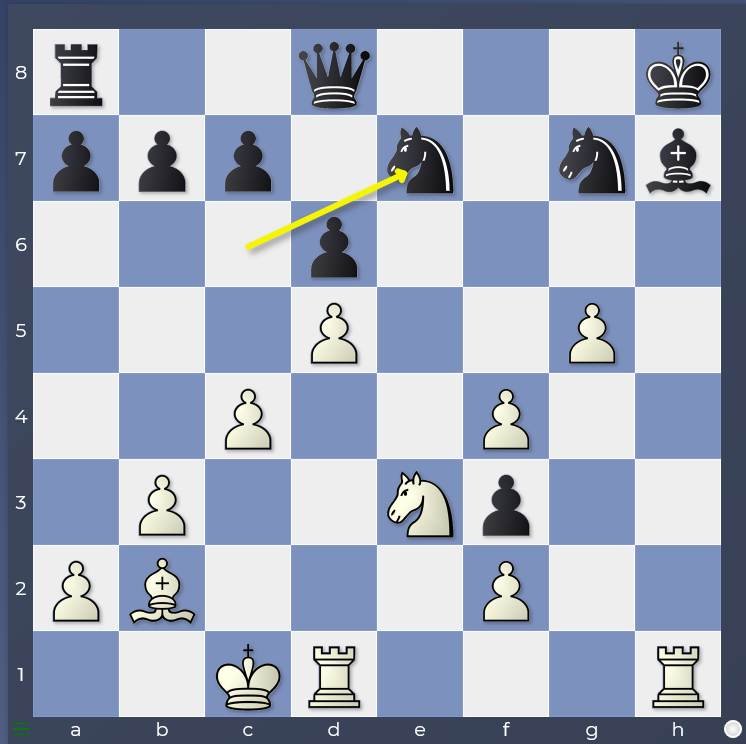
25…Kg8 [EB] “White wins with” 26.dxc6 bxc6 27.g6 Bxg6 28.Rdg1 Kf7 29.Rh6″ This line is also given by [GS]
Possibly [EB] used these comments (the second edition of this book was written in 1968, much after Stahlberg’s tournament book appeared)
26.Ng4
26.f5 [EB] 26…Nexf5 27.g6 Nh4 28.Rdg1 “is easier”
However, 27…Qg5 is the engine defence, bringing the position back to near equality! 28.Rxh7+ Kg8 29.Rdh1 Qxg6 30.Nxf5 Nxf5 31.Rh8+ Kf7 32.R1h7+ Qxh7 33.Rxh7+ Kg6.
26…Qc8
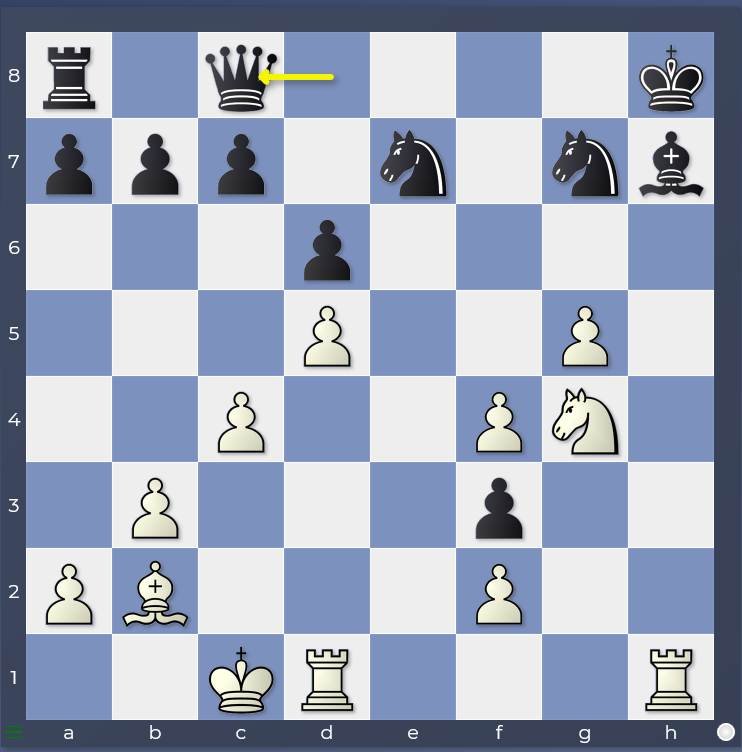
[EB] “Apart from this, Black has two other defences, both inadequate:
a) 26…Qe8 27.Rh6 Nef5 28.Nf6
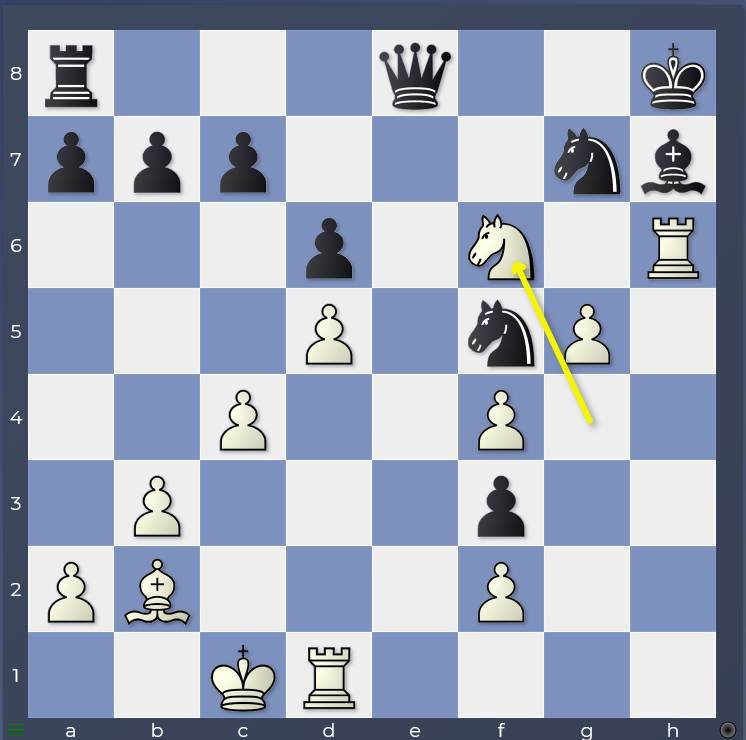
(28.Rdh1 Nxh6 29.gxh6 [EB] is unfortunately not correct! Black escapes with 29…Kg8 30.hxg7 Kf7 31.Nh6+ Kg6 32.f5+ Kg5 33.Bc3 Qe2 34.Bd2+ Kf6 35.Bc3+ with perpetual as 35…Ke7 36.Re1 wins) 28…Nxh6 29.Nxe8 Rxe8 30.gxh6 Re2 31.Bxg7+ Kg8 32.Rd2 Re1+ 33.Kb2;
b) 26…Kg8 27.Nf6+
b2) 27…Kf7 [EB] 28.Rxh7 Nef5 29.Nh5 (29.g6+ Kxg6 30.Rg1+ Kf7 31.Nh5 is the engine preference!) 29…Kg6 30.Nxg7 Kxh7 31.Nxf5 Kg6 32.Ng7 (32.Bf6 Qd7 33.Ne7+ Kf7 34.f5 followed by Rh1 is the engine preference) 32…Qe7 (32…Qh8 is a better defence according to the engines.) 33.Rg1 “These variations are absolutely brilliant!”)
[GS] “As Steiner put it after the game, after 26…Kg8 White continues with 27.Nf6+ Kf7 28.Nxh7 (28.Rxh7 Nef5!) with a strong attack. This variation was undoubtedly Black’s best opportunity” The engine gives 28.Nxh7 as 0.00 with 28…Ng6 29.Bxg7 Kxg7 30.f5 Qd7 31.fxg6 Qg4 32.Rde1 Qd4 and White has nothing better than perpetual with Re7+ and Re6+.
b2) 27…Kf8 28.Nxh7+ Kf7 29.g6+ Nxg6 30.Ng5+ Kg8 31.Rdg1 Nxf4 32.Nf7 Qf8 33.Nh6+ Kh7 34.Bxg7 Ne2+ 35.Kd1 Nxg1 36.Bxf8 Rxf8 37.Ng4+ Kg6 38.Rxg1 is the top engine line.]
27.g6
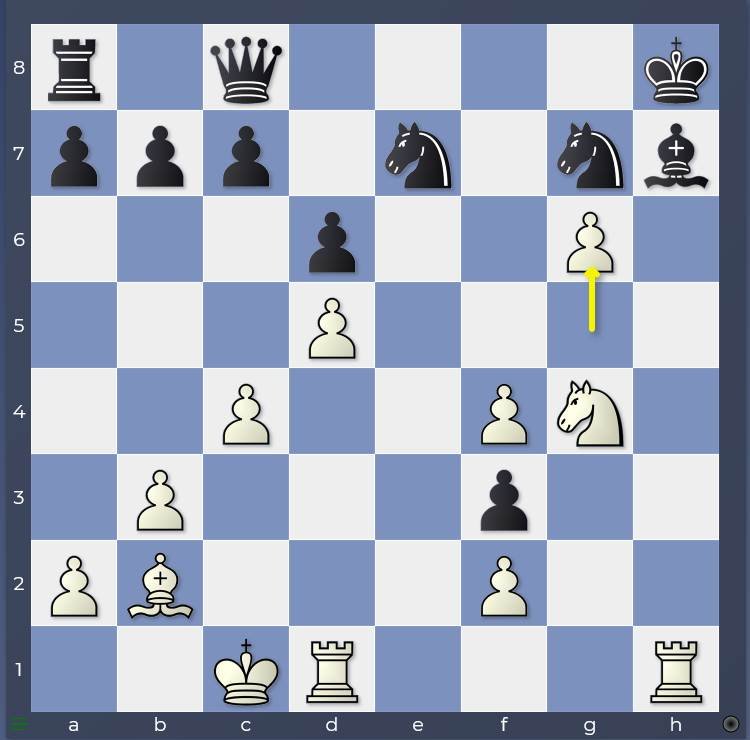
A fantastic move interfering with the defence of the bishop on h7 by the queen on f5
[GS] “A study-like move!”
27.Nf6 Qf5
27…Qxg4
27…Nxg6 28.Nf6 Qg8 (28…Nf8 [EB] 29.Rdg1 with Nxh7 to follow) 29.Rdg1
28.Rxh7+ Kg8 29.Rxg7+ Kf8 30.Rf7+ Ke8
30…Kg8 31.Rxe7 Qxf4+ 32.Kb1 Qf5+ 33.Ka1 Kf8 (33…Qxg6 [GS] 34.Rh1) 34.Rf7+ Qxf7 35.gxf7 Kxf7 36.Re1 a5 37.Bd4 c5 38.dxc6 bxc6 39.Be3
31.Re1
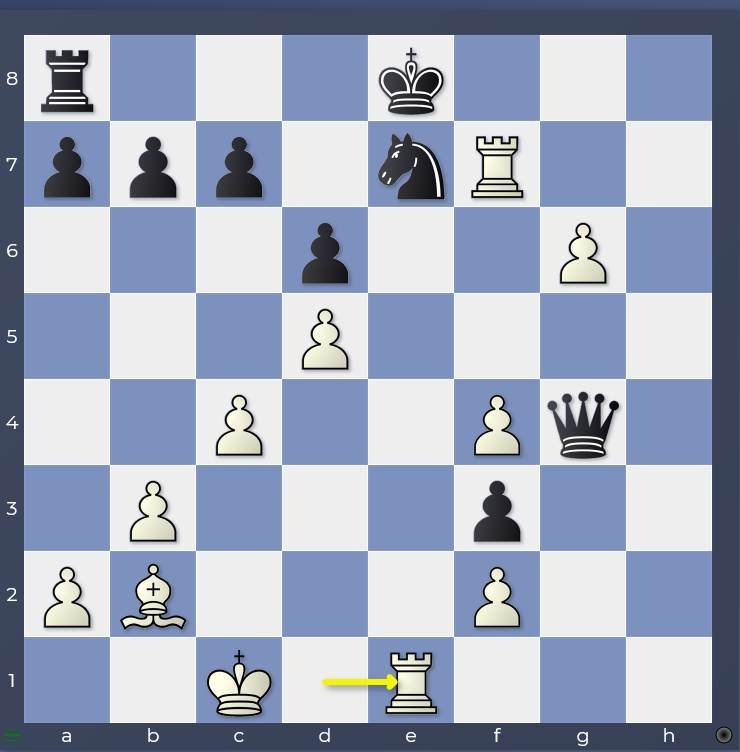
31…Qxg6 32.Rexe7+ Kd8 33.Bf6 Qxf6 34.Rd7+ 1–0
[EB] “And Black exceeded the time limit. An original combinational game with rapid tactical changes”
34.Rd7+ Ke8 35.Rxf6 Kxd7 36.Rf7+ Ke8 37.Rh7 [EB]